Giant Spiders and Walking Machines

Giant Spiders and Walking Machines

Large-scale mechanical art is hard to ignore. Artist engineers are creating some head-turning pieces to provoke dialogue on human energy use.

By Rachel Poliquin, BFA’97, PhD’05
________________________________________________________________________________

Read the full article, including videos and photo slideshows, online at Trek Magazine, a publication of alumni UBC. Jonathan Tippet and Charlie Brinson, as well as other members of eatART, received Mechanical Engineering degrees from UBC.
________________________________________________________________________________

Imagine this: a three-ton steel exoskeleton crouching in the Nevada desert like a behemoth rabbit without a head. It rises and begins loping across the sand. With each stride, the creature covers four- and-a-half metres and gains speed until it is moving as fast as a man at full sprint.

Strapped inside the exoskeleton, dwarfed by his massive quadrupedal creation, is Jonathan Tippett, BASc’99. As he moves his arms, the creature’s two outside legs lunge forward. When he kicks his legs, the two inside legs move. As Tippett pushes his limbs with more force, the creature responds, magnifying each human motion into a wild, mechanical romping gait perfectly suited to the scale of the Black Rock Desert, a 2,600 square‑kilometre expanse. At least this is Tippett’s fantasy. He hopes to finish and unveil his creature – better described as a wearable walking machine called Prosthesis – at the Burning Man festival in Black Rock City in 2014.

So much of what makes art worth making is having somewhere to exhibit it.

Black Rock City is a horseshoe‑shaped city that springs up every August for just one week in the dry lake bed of the Black Rock Desert in northern Nevada, about 175 kilometres north of Reno. The temporary city – the fifth largest in Nevada for the week it exists – is home to the Burning Man festival, a wild, hallucinatory art and music bacchanalia dedicated to radical self‑expression as well as radical communal participation.

Burning Man is many things. It is a place that tests self‑sufficiency, requiring participants to provide for their own basic needs in a desert heat that routinely peaks at over 38°C, and clean up their camp a week later leaving no trace behind. It is a place for experimentation on a massive scale, with 50,000 people arriving each year (attendance was capped in 2011) with the mandate to shed conventions, participate, celebrate, and express themselves in any and every conceivable way. It is also an insanely large gallery space. The crescent of Black Rock City arcs around a 24 metre-tall wooden effigy known as “The Man,” which is set aflame as the culmination of the festival. Dotted around The Man and stretching beyond the city’s arc into the desert beyond are the sort of astounding art installations and interactive spectacles that could only be inspired by the creative spirit of Burning Man and the vastness of the playa. “So much of what makes art worth making is having somewhere to exhibit it,” Tippett explains. Intended to stand more than five metres tall, Prosthesis is certainly designed for big spaces.

Prosthesis is one several projects currently underway in the laboratory of eatART, a radical art collective based in Vancouver. The acronym stands for Energy Awareness Through ART, and their mandate is simple: to foster large-scale technically-sophisticated art that raises questions about the social and environmental impact of energy use. Yet eatART is anything but predictable. Take, for example, the mechanical love story at its origins: in 2007 the Mondo Spider, a 725-kilogram walking spider, and Daisy, a three-and-a-half ton solar power bicycle fell in love at Burning Man and begat eatART. In other words, Tippett, Charlie Brinson, Leigh Christie and Ryan Johnston (co-creators of Mondo Spider) met Rob Cunningham (caretaker of Daisy) through their shared love of mechanical art and Burning Man. But their sense of wild adventure had a purpose: they wanted to start a charitable organization that would promote energy awareness but would not necessarily demonstrate practical implementations of new technology or be conventional in its ways of reaching the public. “We wanted to capture audiences that would otherwise glaze over if you said ‘sustainability.’” Instead they would earn international attention through art – huge-scale, highly-engineered kinetic art.

Located on the Great Northern Way Campus, nestled between the Centre for Digital Media and the train tracks, the eatART lab is described by the artists as “an impossible dream factory,” and is filled with improbably large mechanical creations. To get into the lab, you have to squeeze by Mondo Spider, about the size of a small car, which lurks outside the main doors. In the back corner on a raised platform sits a section of Brinson’s latest project, Titanoboa, a 15-metre electro-mechanical reincarnation of a monstrous primordial snake that slithers with an eerie verisimilitude. (The snake was rendered extinct 60 million years ago by climate change.) In the middle of the space is the only modest-sized project in the lab, gBikes: bicycles retrofitted with hub motors and capable of generating enough electricity to power a laptop. The Alpha Leg, a prototype of one of Prosthesis’ four legs, dominates an entire side of the lab, and it is only two thirds of the planned size.

The artists who work in the lab are mostly engineers with the highly sophisticated technical knowledge required to design, model, and build massive robotics.

The artists who work in the lab are mostly engineers with the highly sophisticated technical knowledge required to design, model, and build massive robotics. Tippett graduated from UBC with a mechanical engineering degree in 1999. Brinson has a bachelor’s in engineering physics (2004) and a master’s in mechanical engineering (2006), both from UBC. For Tippett, large moving machinery lends itself to a richer discussion about energy use than, say, a laser lightshow. “Once you get into large, heavy things moving, you have the inevitable exchange of energy – kinetic energy, stored energy, electrical energy, hydraulic energy, pneumatic energy. With large things moving, you also have issues of efficiency, which you wouldn’t get with a lightshow. Lightshows are dynamic and engaging but they don’t have as many forms of energy to play with as physical systems.” Absurdly large moving parts catch the eye and easily spark conversation about energy awareness and our relationships with technology, and eatART members are involved in educational outreach and mentorship. In 2009, Tippett began sponsoring capstone programs with UBC’s mechanical engineering and engineering physics programs. Brinson also has teams of engineering students working on various aspects of Titanoboa. “Our involvement with students at UBC and SFU has become a hugely rewarding part of the projects,” he says. “Students get involved with all parts of the process. In fact a couple of the team’s core members came as students and then continued on.” Mondo Spider and Titanoboa also make regular appearances at festivals and science events geared towards getting kids excited about science and engineering.

But for all the technology and energy education involved, eatART has the aura of wild adventure, a whiff of Mad Hatter mechanical genius that even took the organisers of Burning Man by surprise when Mondo Spider first scuttled across the sand. Burning Man has long been a showcase for absurdly large-scale mobile art. But unlike most of the art cars that roam the playa, the spider is not simply art mounted on a pre-existing vehicle. The eight-legged electro-mechanical machine is its own creature. The organizers were unsure whether to categorize it as art installation or mutant vehicle – each gets a separate license to exist on the playa. “It was a real feather in our cap to confuse the organisers of Burning Man,” Tippett recalls. “It’s a pretty big achievement to bring something there that they haven’t seen before.”

Eight years on, no one has ever seen anything like Prosthesis before. Tippett’s first sketches date back to 2005. But then along came the spider (Tippett was “Team Leg” leader) and building the eatART Foundation. In 2008 he scaled back his work as a biomedical engineer designing vascular implants to act as Lab Chief for the organization. It was not until 2012 that he stepped down from this position to devote himself to Prosthesis.

The harder the pilot works – his movements will be somewhat like a gorilla’s lope – the faster Prosthesis moves.

What makes Prosthesis unique is not its vast size – although size is crucial to its essence – but how it moves. Prosthesis is not the sort of machine that a human manoeuvres remotely like a radio-controlled aircraft. It has no computerized control system, no remote, and no autonomy to move by itself, which is why Tippett calls Prosthesis the Anti-Robot. With the aim of reuniting humans with machines in the ancient quest of physical mastery and skill, Prosthesis only moves when a human climbs inside, straps himself into a five point harness, attaches hydraulic cylinders to his arms and legs, and begins “walking” four metres above ground. The harder the pilot works – his movements will be somewhat like a gorilla’s lope – the faster Prosthesis moves. Likewise, the exoskeleton relays positional and force feedback to the pilot so that he knows exactly how hard each foot hits the ground. But the engineering required to fine tune the suspension, hydraulics, and communication between man and machine are only half of the project. Tippett then has to fasten himself to three tons of steel and learn to walk, which even he admits will be terrifying. All four legs move independently, which means he must learn to keep the legs in sync and to keep the machine stable particularly over uneven ground, and since Prosthesis’ limbs will mostly be under or behind the pilot, he will be operating the machine mostly by feel alone.

To move a machine as if it were an extension of your own limbs will be a completely unprecedented experience and will require an extraordinary amount of coordination. There will be hundreds of training hours before Tippett and his machine are working together seamlessly, but when at last Prosthesis is finally let loose in the Black Rock Desert, “in its wild place,” that will be a moment of “such glory,” he says, “that I can’t even describe it. That will be my Holy Grail moment.”

Find photos of Prosthesis and more at http://trekmagazine.alumni.ubc.ca/

Applied Science Rising Star: Connor Schellenberg-Beaver, UBC Mechanical Engineering ’13

“There is a way to overcome almost any challenge, but not necessarily by oneself.”
-Connor Schellenberg-Beaver, Class of 2013

As Captain of the UBC Supermileage Team, Connor Schellenberg-Beaver has gained invaluable leadership and managerial skills.

As Captain of the UBC Supermileage Team,
Connor Schellenberg-Beaver has gained
invaluable leadership and managerial skills.


The stars of UBC Applied Science are people passionate about their chosen field–architecture, landscape architecture, community and regional planning, engineering and nursing—and those that inspire others by making meaningful contributions to the betterment of society. UBC Mechanical Engineering student, Connor Schellenberg-Beaver, is a 2013 Applied Science Rising Star.

Destined to a degree in engineering from a very young age, Connor Schellenberg-Beaver’s passion for design and sustainable transportation placed him on apath that led directly to the UBC Supermileage Team. His experiences as a leader and competitor have been invaluable.

Tell me about your experience with Mechanical Engineering. What have you learned that is most valuable?

I have very much enjoyed my time in Mechanical Engineering; it certainly wasn’t easy but I have found it to be incredibly rewarding. I’m fortunate in that I chose exactly the right degree and option for me. I enjoyed almost all my courses and cannot think of anything I would rather have studied. Despite enjoying all my classes and learning many valuable engineering skills, I would have to say the most valuable thing I’ve learned is that there is a way to overcome almost any challenge, but not necessarily by oneself.

Throughout my degree I faced many challenges be it tight project timelines, seemingly impossible homework questions, or reports so long they may as well have been a novel, and at first glance I wasn’t sure I could overcome them. However, with the help of professors, TAs and classmates, I was able to overcome all the challenges, and succeed in a very difficult degree. Thanks to Mechanical Engineering, I feel that I am equipped to tackle any problems that are thrown at me in my future career.

What interested you about engineering initially?

I think my family knew I was destined to become an engineer since I was about two and had to be supervised around rocking chairs as I was determined to figure out how they worked, even if it meant getting my hand crushed. No one was surprised when I turned our sandbox into a crater with my wooden backhoe and humoured me to go look at the trains every time I heard the whistle.

I have always been interested in figuring out how stuff works and designing new devices and I think this is what really drew me to engineering initially. I also saw engineering as a way to develop new, more sustainable technologies and help with the challenges currently facing our society.

How are you applying the skills you learned through your studies at UBC?

The skills I’ve acquired make me more successful in almost everything I do, and ruin almost every movie I watch. The problem solving, interpersonal and communication skills I have gained throughout my degree have helped me be more successful in the endeavors I have undertaken. The technical engineering knowledge has also proven useful on many occasions; however, it also has the unfortunate side effect of making me find faults in every movie and TV show I watch.

What has been your most memorable/valuable non-academic experience studying engineering at UBC?

Hands down my time on the UBC Supermileage Team has been my most memorable and valuable experience. The sense of accomplishment at the end of the year when the car hits the road is unparalleled. As I mentioned earlier, being at competition with a group of people whose sole focus is making the cars run as well as possible and who are all willing to sacrifice sleep, studying and probably a little bit of sanity to make it happen is amazing.

It has been really interesting to see the team grow from about 12 people to more than 60 and watch the cars improve substantially from year to year. It has been incredibly rewarding, and looking back I would say that joining the team in my second year is the single best decision I made at university. I can’t say enough about how much being a part of and leading the team has helped me grow.

How has your extracurricular involvement impacted your experience at UBC?

My extracurricular involvement has been the highlight of my university career. I have gained a lot from my coursework- but the teamwork, technical experience and networking from my extracurricular activities has been incredibly beneficial in terms of my personal and professional development.

What are your plans for the future–immediate? Long-term?

I joined engineering because I enjoy design and want to help create technologies to improve society, and consequently I am very much looking forward to going into the world and working as an engineer for a few years. My goal since high school has been to work on more sustainable forms of transportation and those are the types of companies to which I am applying.

While I feel I chose exactly the right degree for me, my time as Captain on the UBC Supermileage Team has shown me that I enjoy, and can excel in a managerial role. After working as an engineer for a few years I plan to attend one of the more prestigious European schools to complete an MBA.

How do you feel a degree in engineering has benefited you compared to a different field of study?

Engineering has really taught me how to work well in a team and how to approach problems in a logical and systematic manner in order to come up with the best possible solution. Being in a department with a smaller class size has allowed me to get to know not only my fellow classmates but many of my professors as well. Being able to discuss engineering, potential jobs and design and other challenges with them has really helped me develop and grow as a person; I feel like this relationship with classmates and professors and extensive training on problem solving are incredibly useful aspects that many other programs do not offer.

What has made your time at UBC the most memorable?

Throughout my degree I have had the chance to participate in many interesting projects, clubs and competitions, but what has really made all these so memorable is the exceptional people with whom I was able to share the experiences. Mechanical Engineering, and the Mechatronics option in particular, tends to be a very tight knit group, likely due to the challenging nature of the program. My classmates are some of the most talented, interesting people I have ever met, and success in this program would not have been possible without such an amazing group of friends.

On a similar note, I will never forget the experience I have had with the UBC Supermileage Team, particularly at competition. Spending four days working almost non-stop with my team mates and finally seeing the cars we spent all year working on hit the road is just the most tremendous feeling.

Do you have any advice for future/incoming students?

I think the two biggest pieces of advice I have for future mechanical engineering students is to take the program seriously and try hard, and to take advantage of the learning resources that are available to you.

I know many of us are used to getting high marks with minimal effort, but Mech 2 and subsequent years in Mechanical Engineering have a reputation for a reason, and succeeding in this program does require hard work.

There is also no way I could have accomplished everything I have without the support of my classmates and professors. I had a great group of friends with which to study and no matter how smart you are, there are always concepts and problems that other people will figure sooner and more easily than you, and working with them to learn is incredibly helpful. It is also very apparent that the instructors in the Mechanical Engineering department legitimately care about their students and are always willing to help, something that should definitely be taken advantage of.

How will you, Connor Schellenberg-Beaver, go on to make a difference in our world?

My goal going into engineering was to work on technologies which would help make transportation more sustainable, and I fully intend to do this. I intend to work for a company that is working on reducing the impact of transportation on our planet. After working as a design engineer I intend to work my way up the corporate ladder and continue steering companies in a more sustainable direction.

I have always worked on being more sustainable in my personal life as well and I will continue to promote sustainable practices in the workplace as soon as I start.

MECH Prof. Dr. Peter Cripton quoted and featured on Rick Hansen gift to ICORD – Global and CBC news

The Rick Hansen Foundation has invested 20-million dollars into a spinal cord research centre in Vancouver. UBC Mechanical Engineering Professor Peter Cripton speaks on this Global news feature on spinal cord research. Dr. Cripton discusses the PRO-NECK-TOR, a helmet designed to prevent head and neck injuries upon high-impact.
cripton-headshot

Five UBC engineers inducted Fellows of Engineers Canada

Vancouver, Canada—April 8, 2013—UBC engineering professors Yusuf Altintas, Sheldon Cherry, Michael Isaacson, Shahab Sokhansanj and Kevin Smith were inducted Fellows of Engineers Canada (FEC) for their noteworthy achievement and service to the engineering profession in Canada.

Held every two years, the induction ceremony was hosted by the Association of Professional Engineers and Geoscientists of B.C. on March 7, 2013, at the Coast Coal Harbor Hotel in Vancouver.

About Engineers Canada

Engineers Canada is the national organization of the 12 provincial and territorial associations that regulate the practice of engineering in Canada and license the country’s more than 160,000 professional engineers. The Association of Professional Engineers and Geoscientists of B.C. is the constituent association of Engineers Canada that regulates and licenses British Columbia’s professional engineers.

For more information, visit: http://www.engineerscanada.ca

UBC Human Powered Vehicle Team Selects New Leadership

On April 2nd, the incumbent executive team of UBC’s Human Powered Vehicle Team (HPVT) met to select the new group that will lead the team for 2013/2014 academic session. It’s exciting how far the team has come in such a short time. The future looks bright for those who will be involved with HPVT for years to come.

UBC Human Powered Vehicle Team has only been active since September 2012. The dream to have a UBC team compete in ASME’s HPVC, as one of two Canadian competitors, is slowly but surely being realized. Over the past 8 months HPVT has managed to recruit approximately 30 active members from different faculties across campus. HPVT also has a number of sponsors who have contributed resources and donated funds to help get the team to where it is today and allowed them to find their feet as a new team.

In the following weeks, the new executive team will get accustomed to their roles and the tasks they have ahead of them. Amongst those includes wrapping up the designing and building of the first prototype vehicle. Unfortunately, the team is not able to travel to ASME’s HPVC this year, however, HPVT plans to host and in-house competition to put their vehicle to the test this summer. Look out for more to come from this promising team!

Engineering students demo ultra fuel-efficient cars

UBC Supermileage car UBC Supermileage car

Event: The UBC Supermileage Team will demonstrate two cars in advance of the Shell Eco-Marathon Americas competition for ultra energy-efficient vehicles

Date/Time: Tuesday, March 19, 10 a.m. – 12 p.m.

Location: University Hill Secondary School parking lot, south-side
3228 Ross Drive, Vancouver BC

Map: www.maps.ubc.ca/?590

Editors/reporters: Please confirm attendance at media demonstration. Contact Connor Schellenberg-Beaver at 778.987.0440 or info@supermileage.ca


The UBC Supermileage Team has developed two vehicles, the Odysseus and the Mark VIII, to send to the annual Shell Eco-Marathon Americas competition for ultra energy-efficient vehicles on April 4 in Houston, Texas.

Resembling a Smartcar, the 200-lbs Odysseus is a single-passenger, four-wheeled vehicle and is a significant improvement over last year’s entry in the urban concept category, the 288-mile per gallon Argo.

“This year we focused on building a new body to reduce air drag,” says UBC Supermileage Team Captain Connor Schellenberg-Beaver, a fourth-year engineering student. “We also optimized the weight of the vehicle and will be relying on efficient driving habits such as eliminating unnecessary acceleration and braking.”

The futuristic bullet-shaped Mark VIII is entered in the prototype category. It is a remake of the team’s award-winning 2006 vehicle that achieved 3,145 miles per gallon.

UBC will compete against 100 teams from North and South America including California Polytechnic State University, Purdue University and the University of California at Berkeley.

Learn more about the Shell Eco Marathon America competition at: https://www.shell.us/

UBC innovation and industry collaboration earns national accolades

UBC Mechanical Engineering professor Yusuf Altintas and industry partner Pratt & Whitney Canada (P&WC) have won a Synergy Award for Innovation from the Natural Sciences and Engineering Research Council of Canada (NSERC) in recognition of their long-standing and successful university-industry partnership, which has resulted in numerous innovations and breakthroughs over the years to benefit Canada’s manufacturing industry.

Photo caption: Altintas (left) receives his award from Governor General Johnston. (Photo courtesy of Cpl Roxanne Shewchuk, Rideau Hall, OSGG)

In 1986, P&WC approached former employee Altintas to help provide more cost certainty in the machining of parts. The UBC Engineering professor worked with the company to develop mathematical models that simulate parts machining, which removes much of the financial risk of physical trials. By 1992, exceeding all expectations, Altintas’ research had achieved up to 85 per cent cost savings on some machining processes. Today, Altintas’ laboratory is among the best-equipped in North America, producing a steady stream of highly qualified graduates and innovative ideas for P&WC and other industries.  Read more about this partnership.

The award comes with a $200,000 research grant and the opportunity for the industry partner to hire an NSERC Industrial R&D Fellow for two years, with NSERC supporting the industrial portion of the fellow’s salary.

Altintas and P&WC were honoured at a ceremony hosted by His Excellency the Right Honourable David Johnston, Governor General of Canada, at Rideau Hall in Ottawa on Wednesday, February 27, 2013.

“Each advance in our learning has a ripple effect on our society and culture, which makes it all the more important to consider the big picture even while focusing on the details of discovery,” said Governor General Johnston during the ceremony. Read the complete speech.

The Synergy Awards for Innovation were launched by NSERC in 1995 to recognize partnerships between universities and industry in natural sciences and engineering research and development. Since their inception, the Awards have honoured the most outstanding achievements of university-industry collaboration in the natural sciences and engineering.

Spring Department Lab Tours

The Mechanical Engineering Department hosts annually a couple of guided lab tours for high school students, first year students, or anyone interested in mechanical engineering, to show them what the MECH department is all about and to give them an idea of what kind of research mechanical engineers do. Depending on the labs, students will get to see a variety of demos, presentations, cutting-edge technology and cool gadgetry. For those interested, there will be an 30-minute advising session held after the tour where participants can ask questions about the mechanical engineering department, curriculum, programs, enrollment, etc.  The tour is also a good chance to ask current students about their perspective as a student in MECH.

We are now accepting RSVPs! To RSVP for the tour, please send an email to studentassistant@mech.ubc.ca (see RSVP deadlines below).

Three tours are being offered:

    • March 18, 2013 (RSVP deadline: March 14, 2013)
    • March 20, 2013 (RSVP deadline: March 18, 2013)
    • April 3, 2013 (RSVP deadline: April 1, 2013)
Labs Visited
March 18, 2013 Fibre Lab
This lab conducts leading edge research and development for the pulp and paper industry.  Research from this laboratory has enabled the development of high efficiency pulp screen rotors that in recent trials have shown to reduce energy consumption by 50%.
CARIS Lab
The Collaborative Advanced Robotics and Intelligent Systems Laboratory is an undertaking by researchers at the University of British Columbia interested in Human-Robot interaction and intelligent robotics.
March 20, 2013 Aerolab (Wind Tunnel)
The UBC Aerolab specializes in wind tunnel testing.  The wind tunnel allows the effects of air flowing over a body to be studied.  It is also the home of the UBC Supermileage team whose goal is to design and build an urban concept car with a high fuel efficiency and to increase awareness of sustainability.
BioREL
New methods to increase occupant safety through increased vehicle crashworthiness and proper user operation and the development of the UBC powered upper limb orthosis for people with loss of upper limb motor function.
April 3, 2013 Robotics and Control Laboratory
The Robotics and Control Laboratory carries out research in medical image analysis, image guided diagnosis and interventions, telerobotic and robotic control of mobile machines and manipulators.
Fuel Cell and Hydrogen Laboratory
Their current efforts are focused on energy systems, fuel cell technology, and hydrogen infrastructures. They also work on refueling systems for fuel cell vehicles in collaboration with the Institute for Fuel Cell Innovation.

All tours begin at 10:00am and end around 12:00pm.  Guests are to meet at the lobby of the Engineering Design Studio at 9:45am.

Map and directions to the Engineering Design Studio provided in the link below:
http://www.maps.ubc.ca/PROD/index_detail.php?locat1=301

More information about the labs will be provided as it becomes available.

APSC 461 & 462: Global Engineering Leadership & Optional Practicum in Mexico

APSC 461: Global Engineering Leadership

APSC 462: Global Engineering Leadership Practicum (Optional)

Global Engineering Leadership is designed to introduce upper-year students to concepts, theory and practice of engineering leadership in an international service learning context.  Appropriate implementation of engineering projects is not just about a technical solution, it also involves understanding and adapting to the social, cultural, economic context. As such, the course content has been designed from an inter-disciplinary perspective. The course will develop leadership characteristics for engineering projects such as: understanding and respect for individual and cultural differences in team building, service and management contexts; managing change, conflicts, and crises; and understanding real-world ethics and core values.

The goal of this course is to provide students with leadership education, and engineering service experiences to hone their essential skills and enhance the service ethic within their professional development.

*Note that the APSC 461 & 462 designations were previously known as MECH 410E & 410P respectively.  

Students workingStudents working

APSC 461: Global Engineering Leadership

  • May 13 – June 20, 2013; classes in the form of lecture, seminar, or workshops. Includes a community service learning project.

APSC 461 (coursework) is a technical elective in most Engineering disciplines such as:

  • Mechanical Engineering: General “A” list Technical Elective (credit not given to Camosun Bridge transfer students)
  • Engineering Physics
  • Integrated Engineering
  • Mining Engineering
  • Civil Engineering: Please consult with your advisor
  • Others: Please consult with your advisor


APSC462: Global Engineering Leadership Practicum in conjunction with Go Global

  • Pre-requisite: APSC 461
  • July 1 – August 24 2013 placement in Chiapas, Mexico
  • Counts as an Impact of Technology on Society elective in all Engineering disciplines


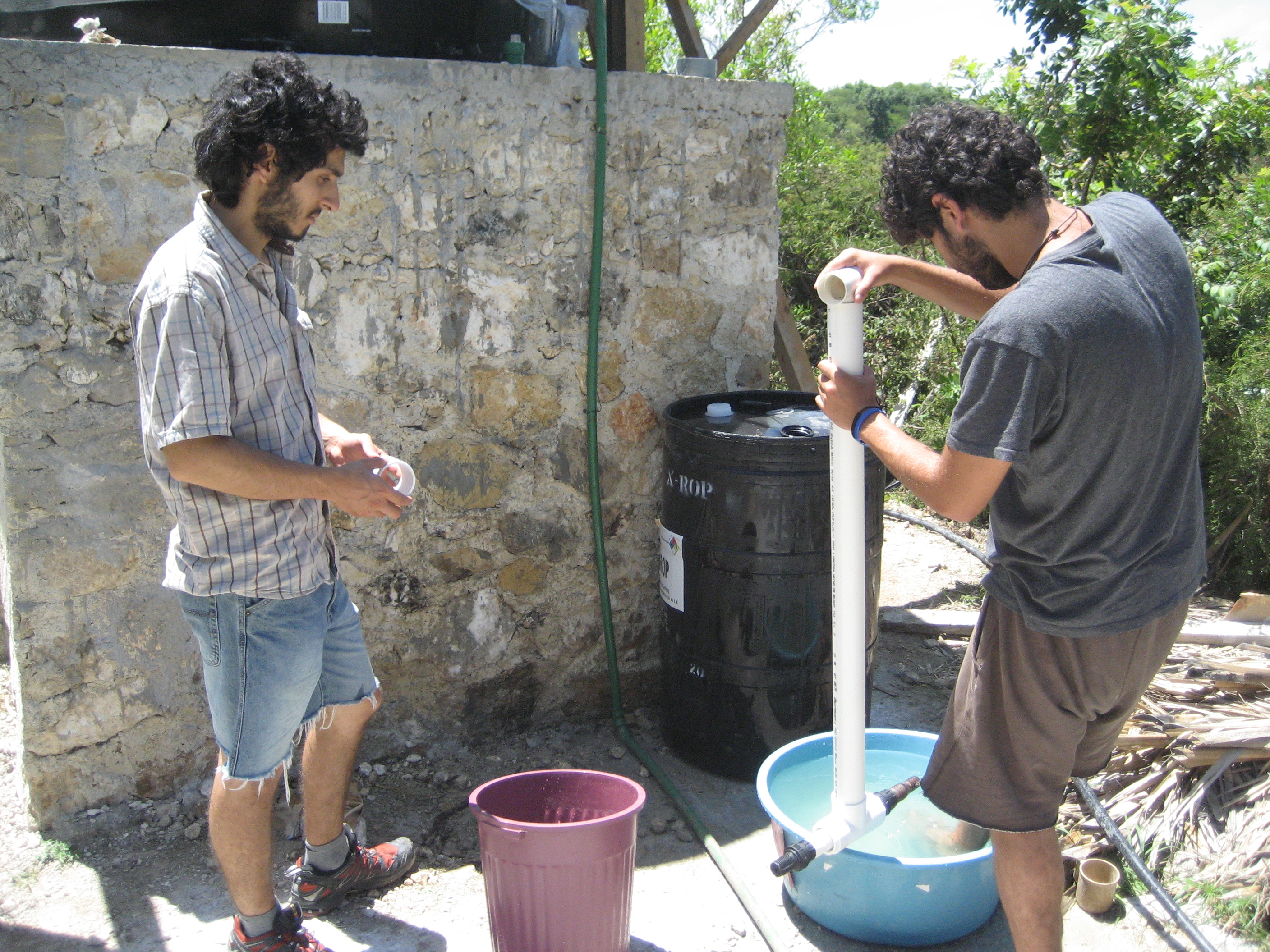
As a part of Global Engineering Leadership, you will participate in an 8 week practicum or International Service Learning placement (practicum) with a community organization, Tsomanotik, in Chiapas State, Mexico. Tsomanotik is an eco-agricultural demonstration centre for just and sustainable community development. Their vision is for solidarity and a more just society where marginalized groups in Chiapas are heard and play an active role in the community development process. All students will work in multi-disciplinary teams of Mexican and Canadian students, under the guidance of Tsomanotik staff. Specific projects for summer 2013 *may include:

  • Solar hot water heater: improving the design of a prototype, installing on a new building.
  • Alternative energy production: feasibility studies, design and potentially building / testing of either a pedal-powered or run-of-river micro-hydro project.
  • Solar evaporator to produce nitrogen-rich fertilizer: feasibility study, design, developing a prototype, building and testing.
  • Sustainability and appropriate technology camps for kids: designing and leading a ‘summer day-camp’ program on-site for children and youth from the nearby community of Tzimol.


APSC 462 application deadline:

Now accepting applications. First Round Deadline- October 15 2012. Second Round Deadline November 16 2012.

You are encouraged to get your application in as soon as possible. We will be offering placements to successful candidates following the first and second round of applications in October / November. Any remaining positions will be filled by a final deadline in March 2013. Programs often fill up quickly so get your application in to avoid disappointment! 

All candidates go through a selection process. For more information and to apply online via: http://www.students.ubc.ca/global/learning-abroad/international-service-learning/mech-410/


APSC 461

Register for APSC 461 through the SSC during regular summer term registration– limited space is available.

UBC "Entrepreneurial Powerhouse" students win at BMO Apex Business Plan Competition

Two student teams from UBC’s New Venture Design course travelled to Fredericton, New Brunswick to compete at the BMO Apex Business Plan Competition, January 23-25. They returned with first and second place prizes respectively in the undergraduate categories.

The two groups also received the “Entrepreneurial Powerhouse” award for UBC for best overall performance from a university at the competition.

The UBC start-up Agile Monitoring Equipment (AME) earned first place and $5000 for winning the competition. The team consists of engineering students Daryl Pritchard (EECE), Brad Bycraft (ENPH) and Nathan Chan (ENPH) and commerce students Michal Luptak, Diana Hu and Shaan Narang.

The engineering and business students have joined forces to develop a technology that reduces the impact of pinhole leaks in the oil pipeline industry. Currently, no technology exists that can accurately detect these small yet damaging leaks. The device will use micro sensors inside the pipeline to map the size of the hole.

Second place and $2000 went UBC’s T5 Analytics team. T5 Analytics comprises engineering students Taggart Jefferson (IGEN), Jordan Balanko (MECH) and Morgan McLean (ENPH), in collaboration with commerce students Lucas Palovic, Peter Haley and Jaime Fletcher. Engineering students Balanko and McLean made the cross country trek to the event.

Their product, LiveShelf is an inventory management system, which uses radio frequency identification (RFID) tags on products within a shelving unit.

“The APEX BMO competition was a fantastic learning experience and an excellent place to start networking and get into the flow of competitions,” says Nathan Chan of AME. “It was really exciting to travel to the other side of the country and see that Canada is trying very hard to foster innovation.”

The students developed their products in the course New Venture Design (APSC 486, COMM 466) which pairs upper-level engineering and commerce students. Students complete the two semester course with the end goal of creating a viable product prototype and business plan that can ensure its success in the marketplace.

More information on the event and results can be found at http://www.unb.ca/fredericton/business/centres/ibec/competitions/apex/index.html