New invention from Professor Hong Ma is a breakthrough in Malaria testing

New invention from Professor Hong Ma is a breakthrough in Malaria testing

Professor Hong Ma along with other colleagues from the UBC campus has designed an accurate and simple microfluidic device for the testing of Malaria. The new device consists of two layers that control the cells so that only a single cell is introduced into a funnel containing a series of different sized constrictions. The pressure required to push the cell through a constriction is measured precisely and used to calculate the deformability.The team used their device to show that the deformability of uninfected red blood cells can be distinguished from cells at various stages of infection. Measuring the deformability of an infected red blood cell can provide vital information about the disease’s mechanism and response to treatment

‘We hope our technique will provide a useful biomechanical assay for the development of new drugs,’ says Professor Ma, who adds that ‘the ability to easily measure the deformability of red blood cells will help researchers study the mechanism of the disease and investigate complex challenges, such as drug resistance.’

Professor Ma’s team plans to further test their device and use it to study the mechanisms of drug resistance.


Congratulations Professor Ma on this major accomplishment.


Event: Hamnavaz Ensemble Concert March 4, 2012

The Hamnavaz Ensemble presents it next major concert on campus this Sunday at 5pm in UBC’s Fredericwood Theater. The ensemble is led by our very own graduate candidate in the department of mechanical engineering, Amir Abbas Aliabadi. If you are interested to join this event please obtain more information from the attached poster.  Spring Concert information poster

Article: "Engineering and Geoscience Practice"

The article “Engineering and Geoscience Practice”, published in the Vancouver Sun on March 1, 2012 discusses the “game change” for engineers and geoscientists because of constant shifts in legislation, climate and social awareness that are “prompting geoscientists and engineers to repackage their skills for the global market”.

“The model is shifting but professional engineers and geoscientists are qualified to do this work”, says Peter Mitchell, P.Eng., director of professional practice, standards and development with APEGBC, the licensing body for B.C.’s professional engineers and geoscientists.

Read the full article here!

Article: "Cool UBC new business venture takes first in Enterprize 2012: MobiChill wins $6000 prize"

Kaizen Biomedical, founded UBC Engineering students, Annelies Tjebbes (ECE), Neal O’Grady (MECH) and Mayank Kalra (MECH), and Sauder School of Business Students Derek Li, Jennifer Vlasiu and Stephanie Wilson, with their product MobiChill. Their product placed first in the Enterprize Canada National Business Plan Competition, and the team was awarded a $6,000 prize along with the People’s Choice Award.

MobiChill is “a medical device used to induce therapeutic hypothermia in cardiac arrest patients – a medical treatment that reduces the risk of devastating side effects. The device is portable and provides rapid and controlled cooling in the pre- and in- hospital settings.”

In third place was another UBC team, founded through New Venture Design, Conisys Electronics, with their product PlugPuck. PlugPuck is a “six-way outlet splitter and surge protector that allows easy access to electric outlets in hard to reach places”, the product is expected to “penetrate the North American accessory electronics market in 2013”.

Read more about Enterprize Canada and other UBC teams who made it to the semi-finals of the competition here.

Ubyssey Article: "Re-inventing the open wheel with Formula UBC"

“Re-inventing the open wheel with Formula UBC”, published in the Ubyssey, takes a closer look at Formula UBC. Composed of 25 UBC students from first-year to graduate, the club is mainly made up of mechanical engineering students. This article explores the challenges, ambitions, and dynamics of Formula UBC.

Read the full article here!

MECH 410E & P: Global Engineering Leadership & Optional Practicum in Mexico 2012

MECH 410E: Global Engineering Leadership

MECH 410P: Global Engineering Leadership Practicum (Optional)

Global Engineering Leadership is designed to introduce senior engineering students to concepts, theory and practice of engineering leadership in a local and international service learning context.  The course will develop engineering leadership characteristics, understanding and respect for individual and cultural differences in team building, service and management contexts, managing change, conflicts, and crises; and understanding real-world ethics and core values.

The goal of this course is to provide students with leadership education, and engineering service experiences to hone their essential skills and enhance the service ethic within their professional development.
MECH 410E: Global Engineering Leadership

  • May 7 – June 15, 2012; classes in the form of lecture, seminar, or workshops.

Counts as a:

  • General List Technical Elective for Mechanical Engineering students (excluding those who came through the Camosun Bridge program)
  • Technical Elective for Engineering Physics students
  • Technical Elective for Integrated Engineering students
  • Technical Elective for Mining Engineering students
  • Civil Engineering students should consult with their advisor to obtain permission to count the course as a technical elective

For students in other programs, please check with your departmental academic advisor to confirm T.E. credit approval. Through guest lectures, tutorial discussions, readings, reflections and community-based project work, students will gain a deepened understanding of the inter-connected nature of global challenges and develop a passion for leadership through service.

Click Here to see the complete schedule of the Distinguished Speaker Series

For more details on each of the speakers or topics in the Speaker Series, Click Here

MECH 410P: Global Engineering Leadership Practicum in conjunction with Go Global

  • Pre-requisite: MECH 410E
  • June 22- August 17, 2012 placement in Chiapas, Mexico
  • Counts as an Impact of Technology on Society elective for Applied Science students

The primary projects in this course will take place with a non-governmental organization called Tsomanotik in Chiapas State, Mexico. Tsomanotik is an eco-agricultural centre for just and sustainable community development. Projects involved may focus on small clean energy development (solar panels and wind power), water and energy usage reduction in agriculture using appropriate technology.
Sign up is available on the UBC GoGlobal website. MECH 410E can be registered for through the SSC – limited space is available.

MECH 410P application deadline: Six spaces remaining.  Posting will close once spaces are full.


For full course information visit: http://www.students.ubc.ca/global/learning-abroad/international-service-learning/current-programs/global-engineering-leadership/

Mechanical Engineering Student, Jayson Bursill, awarded the Frank M. Coda Scholarship

 The Department of Mechanical Engineering would like to congratulate 3rd year Mechanical Engineering student, and President of the UBC ASHRAE Student Branch, Jayson Bursill, on being awarded the Frank M. Coda Scholarship. The Frank M. Coda Scholarship is a one-year, $5,000 undergraduate engineering scholarship. The scholarship was established in memory of ASHRAE’s former Executive Vice President, who served the Society from 1981-2004.

CARIS Lab receives funding for stroke rehab study using social media

The CARIS lab has been awarded a three-year grant by the Peter Wall Solutions Initiative to deliver and evaluate a new type of therapy program that focuses on the return of function for persons who have lost partial use of their upper limbs due to cerebral palsy or stroke.  Working in collaboration with two rehabilitation clinics in the Vancouver area, the researchers will use social media and online games to promote upper extremity return of function for activities of daily living using intensive and long-term exercises. This is a highly interdisciplinary study that also includes the UBC Department of Physical Therapy and School of Kinesiology. 

CARIS has assembled an integrated knowledge/technology/client team to develop a novel robot-based home therapy program for children with hemiplegic cerebral palsy and older persons post-stroke. Our community partners are two large local rehabilitation services institutions.

Stroke rehabilitation professionals acknowledge that about half of upper limb functional recovery after stroke is spontaneous. Any remaining recovery results from intensive, repetitive therapy over months of time, stimulating neuroplastic changes in the brain’s motor control pathways. From a human perspective, this is painful, frustrating and hard work. Sustaining a treatment over months requires significant doses of motivation and funding. Health plans do not provide sufficient coverage; motivation is highly dependent on a person’s support network and inner drive, and is often not adequately tapped. High compliance with exercise regimens predicts significantly more functional return, yet lack of compliance is a problem for over half of recovering persons. Our society needs new approaches to improve the quality of life for millions of Canadians.

We propose to combine low-cost robotic devices, a bimanual training program, social media frameworks such as Facebook Games, and on-line performance sharing between therapy clients and with their therapists. This combination of components represents a best-practices approach to bidirectional knowledge transfer, development of technology and design of well-coordinated home-based therapy. We believe that together these approaches will yield interventions for people with stroke and children with hemiparetic cerebral palsy that significantly improve functional ability and lead to improved quality of life. 


–Mike Van der Loos, CARIS Lab Associate Director ===============


http://caris-ubc.blogspot.com/2012/01/pwsi-grant-feathers-awarded.html

Celebration of Achievement 2011-2012

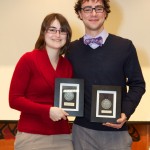
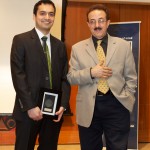
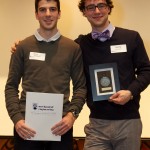
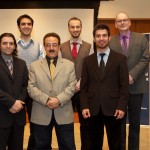
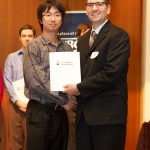
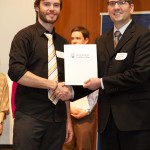
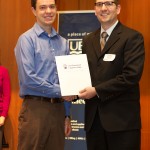
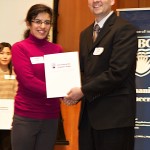
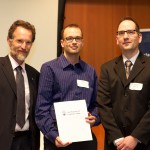
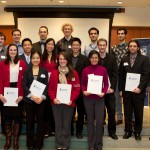
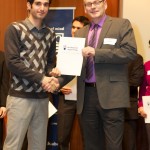
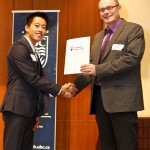
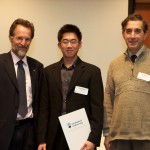
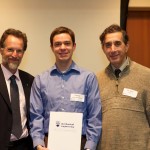
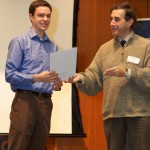
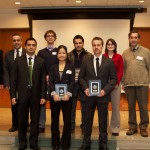
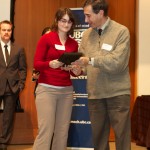
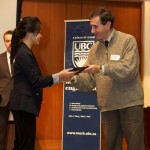
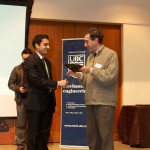
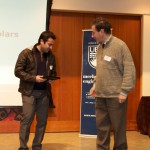
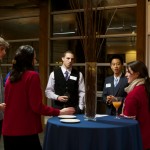
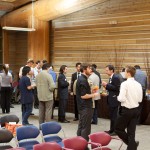
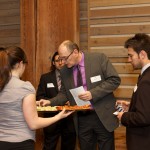
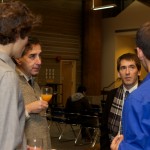
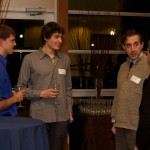
The Department of Mechanical Engineering recently held their annual Celebration of Achievement ceremony. Please take a look at the photos below!

The event was held at the First Nations House of Learning. It was an opportunity to recognize the achievements of exceptional students within the Mech department. Congratulations to all recipients!
2011 Department Scholars  (This honourary designation may be given to a student at any point in their graduate program, and they hold the designation through the remainder of their degree): Ashkan Babaie, Farzad Khademolhosseini, Farbod Khameneifar, Jeremy Kooyman, Kenneth MacLean, Hadi Mansoor, AJung Moon, Marie-Eve Myrand-Lapierre

Wesbrook Scholar, UBC Premier Undergraduate Scholarship: Connor Schellenberg-Beaver

UBC Graduate Teaching Award: Matthew Pan

Student Leadership Award (Students that excel as leaders among their peers): Ryan Beaumont, Jayson Bursill, Ambrose Chan, Thomas Curran, Amy Leson, Amanda Li, Doug McLeod, AJung Moon, Andrea Palmer-Boroski, Matthew Pan, Eric Pospisil, Sina Radmard, Behnam Razavi, Shalaleh Rismani, Richard Schaap, Connor Schellenberg-Beaver, Navid Shirzad

Vinod J. Modi Endowment Travel Award: Rami Mansour, Colin Russell
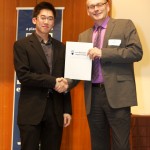
Undergraduate Academic Achievement: Kenard Agbanlog, Kevin Asperin, Eric David Etienne Buckley, Artem Iourievitch Bylinskii, Hung Keat Chua, Thomas Curran, Alexander Dahl, Anton Davydovski, Kristopher Lendl De Asis, Mark Dyck, Stephen Ecklin, Jordan Scott Eichorn, Joshua Fong, Jay Roderick Hope, Derry William Lappin, Robert Wayne Lion, Ryan Loi, Neal Steward O’Grady, Daniel Thomas Paterson, Alistair James Deuchars Pimlott, Andrew Pires, Pimchanok Kwang Pithayachariyakul, Jennifer Candice Reimer, Shalaleh Rismani, Byrom Roehrl, Ian Saari, Connor Schellenberg-Beaver, Colin Lewis Schlosser, Kevin Leong Song, Guy Wilkins, Denise Xiao Wen Wong, Terence Sui-Kit Woo, Yutian Xing, Michael Zhihao Yang, Leon Ching Fung Yuen, Leon King Wah Yuen


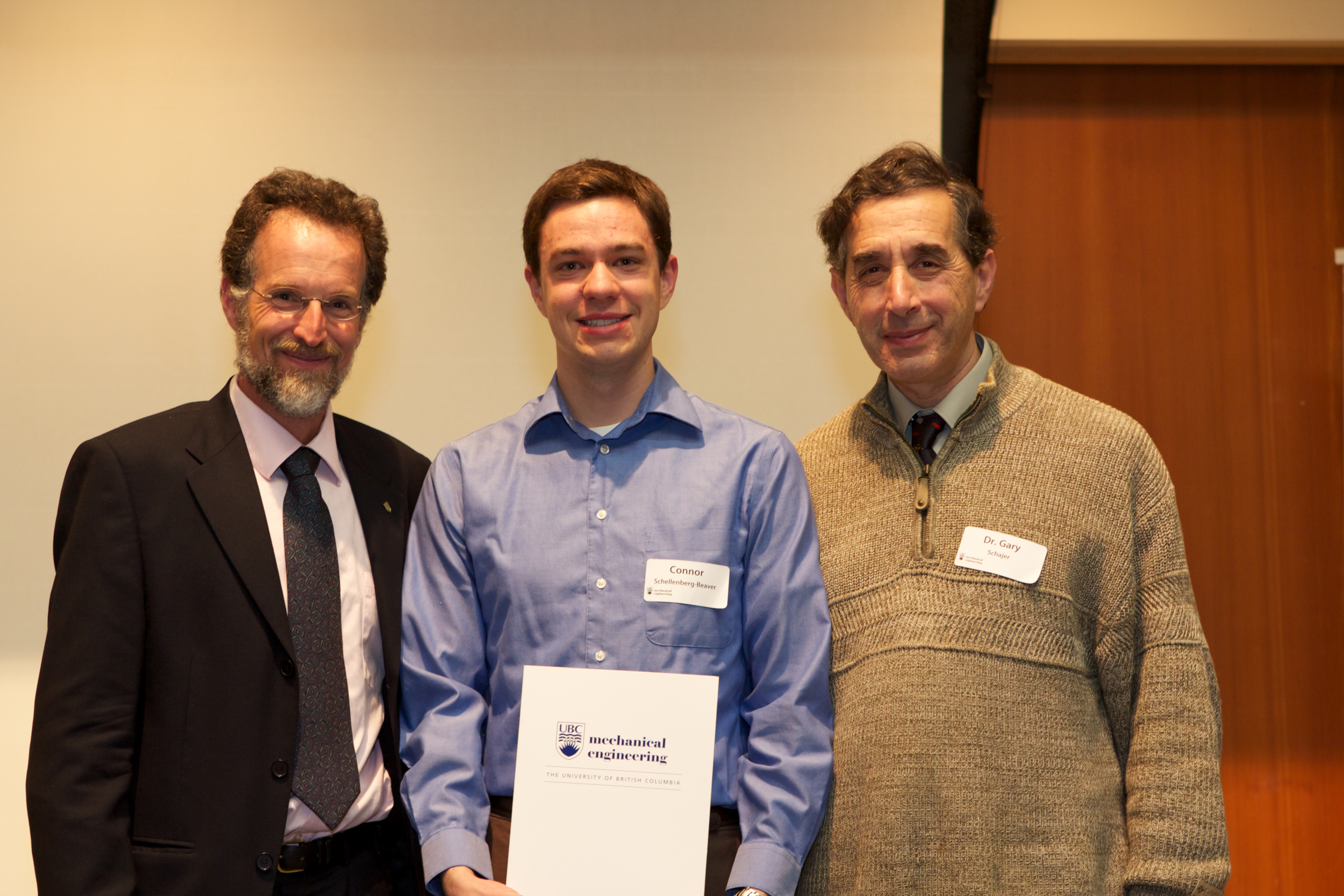
Mechanical Engineering Student, Connor Schellenberg-Beaver, accepts one of UBC’s most prestigious designations

The Department of Mechanical Engineering would like to congratulate Connor Schellenberg-Beaver for his outstanding achievements.  Connor has recently accepted the Wesbrook Scholarship, the Harry Logan Memorial Scholarship, and the Harold B & Nellie Boyes Memorial Scholarship.

The Wesbrook Scholarship is one of UBC’s most prestigious designations. It is given to a maximum of twenty senior students who exhibit outstanding academic performance, leadership, and involvement in student and community activities. In fall of 2010, the first half of Connor’s 3rd year, he was the Engine and Electronics lead in the UBC Supermileage Team, continuing his commitment to the team throughout his Co-op term. In the second half of his 3rd year, Connor maintained an exceptionally high average, rarely seen in our challenging program. Connor is now Team Captain for the UBC Supermileage Team, continuously making impressive changes and improvements to the team.

The Harry Logan Memorial Scholarship and Harold B & Nellie Boyes Memorial Scholarship are 2 scholarships awarded together. They are awarded by the committee to a student who exhibits a good academic standing, achievement in sports, and participation in other student activities. Connor possesses all of these qualities. He stands out as a leader and mentor as captain of the UBC Super mileage Team. Connor actively sought sponsorship from the broader engineering community to support an expanding team, and during his time as captain he more than doubled the number of team members. One of Connor’s teammates who nominated him as a student leader writes:

“Beyond shaping and training 30+ Mech 2 students as the captain of the Supermileage school team, Connor guides my peers and I in our academics, as exemplified by    the helpful exam-tip email he constructed for our benefit during finals.”

Connor is a natural born leader. He organizes his Supermileage Team in such a way that all members are working with a mentor- a senior member with more experience. He encourages questions, focuses on the bigger picture, and fully commits himself to helping his fellow students grow as engineers. Connor is an exceptional student, who is an outstanding example of the leadership, vision, and spirit that UBC inspires.

 Connor Schellenberg-Beaver receiving an award