Sailbot and MECH Celebrate Ada's Return and Future Endeavors

Sailbot and MECH Celebrate Ada’s Return and Future Endeavors

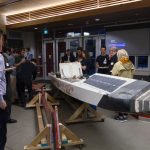
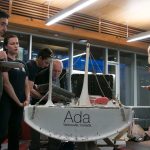
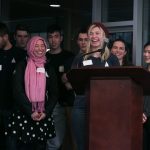
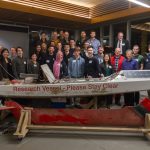
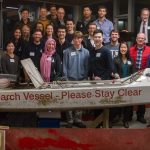
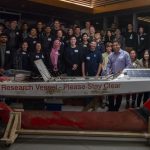
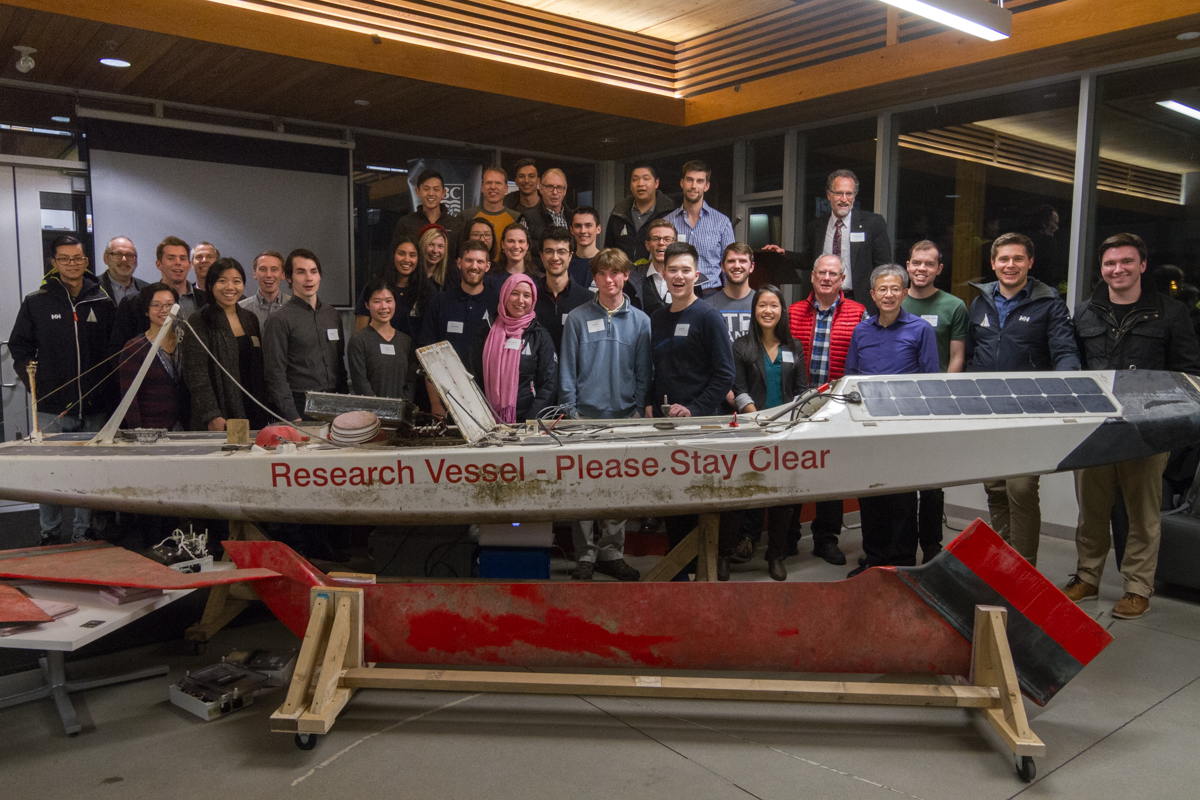
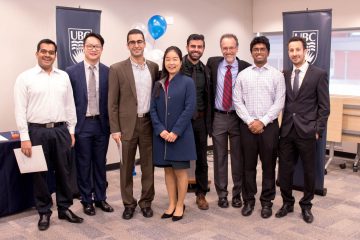
The Ada team and industry supporters and mentors

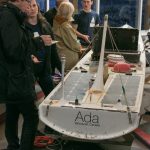
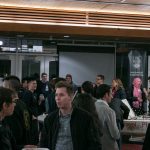
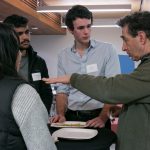
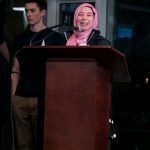
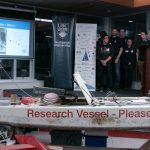
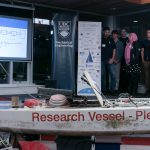
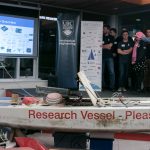
On Monday, March 5, the Department of Mechanical Engineering and Sailbot student design team held a private event for team members (current and alumni), industry supporters and mentors, and faculty members to celebrate the return of Ada, the autonomous sailboat.

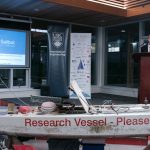
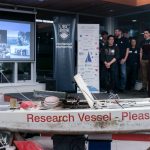
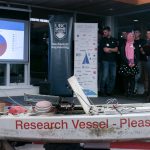
After missing for months at sea, Ada was found by a research vessel off the coast of Florida in December 2017. Thanks to the hard work of the Sailbot team and the Mechanical Engineering department, Ada returned to UBC in mid February, 2018.

At the event, the Sailbot team shared their initial investigation into Ada’s components and the factors that led to her disappearance, as well as the design improvements they plan on making as a result. They announced their ambitious goal for their next autonomous sailboat (named Raye after Raye Montague): to sail in the Victoria-Maui yacht race. The team is currently looking for support in building their next boat, and hope to one day build one that will sail around the world.

Ada‘s story has captured the attention of many audiences, and was featured on many news sources: CTV, CBC (here and here), and in the Globe and MailNational Postand Castanet (also appeared in:  Times Colonist, Metro News and  Chek). Other stories appeared on Global, Breakfast TV, Black Press (here), and the Ubyssey.

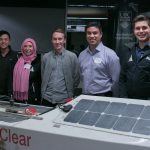
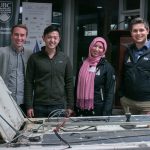
More photos from the event are below:

New Book Published by MECH Professor Gary Schajer

Congratulations to MECH Professor Gary Schajer on his latest publication: Hole-Drilling Method For Measuring Residual Stresses. This book is intended as a practical guide for students and practicing engineers and researchers, and details the history and practice of the adaptable method of drilling holes to measure residual stresses.

Electronic copies of the book can be accessed by UBC students, staff, and faculty at the following link, when connected to the UBC secure wireless network, or when signed in on the UBC Library system.

Steve Feng Named the New Head of UBC Mechanical Engineering

Steve Feng, PEng, has been named the new head of the UBC Department of Mechanical Engineering, effective May 1, 2018.

Professor Feng joined the department as an associate professor in September 2007 and was promoted to full professor in July 2010. From 2009 to 2015, he was chair of the Mechatronics and Manufacturing Research Group, and between 2015 and 2017 he served as the department’s Associate Head, Teaching. Feng is the recipient of a UBC Killam Teaching Prize and is a Fellow of the American Society of Mechanical Engineers.

Before joining UBC, Feng spent 10 years as a faculty member in the University of Western Ontario’s Department of Mechanical and Materials Engineering, where he also served a one-year term as Graduate Chair. He holds a BS in mechanical engineering from National Taiwan University and MS and PhD degrees in mechanical engineering from Ohio State University.

We congratulate Professor Feng on his appointment to this new role and thank Sheldon Green, PEng, the outgoing department head, for his tremendous leadership and contributions to our department over the past 11 years.

Announcement adapted from APSC News

James Olson Appointed the New Dean of the Faculty of Applied Science

The Department of Mechanical Engineering wishes to congratulate James Olson on his appointment as the new Dean of the Faculty of Applied Science. Read the full announcement below:

***

From Deborah Buszard, Deputy Vice-Chancellor and Principal of the UBC Okanagan campus, and Andrew Szeri, Provost and Vice-President Academic at the UBC Vancouver campus:

It is our pleasure to announce that the Board of Governors has accepted the President’s recommendation to appoint Dr. James Olson as the new Dean of the Faculty of Applied Science for a five-year term, commencing March 1, 2018.

Dr. Olson, Professor in the Department of Mechanical Engineering, has been serving as the Interim Dean since July 1, 2017. Prior to this appointment, he has served in several roles, with responsibilities for the leadership and strategic direction in the Faculty, including Associate Dean of Research and Industry Partnerships since 2014 and the director of two UBC research centres.

Dr. Olson cares deeply about the Faculty and the University, greatly values collaborative approaches, and brings a strong commitment to excellence in research and education, while providing direction to six engineering departments, five schools and five research centres, serving 7200 undergraduate and graduate students, at both the Vancouver and Okanagan campuses.

Instrumental in leading the successful expansion of the number of engineering seats at UBC, he is dedicated to providing increased opportunities for BC students to receive an engineering education. He has long been a champion of reimaging professional education to increase diversity, international experience and cultural fluency, business and leadership skills, experiential learning, entrepreneurship and policy and decision making. His recent accomplishments include the successful launch of UBC’s new School of Biomedical Engineering; initiating UBC’s technology venture incubator – HATCH; starting a community engagement event – Innovate; and developing the Faculty’s research goals for its strategic plan – Engage 2020.

Dr. Olson is internationally recognized as an expert in the development of sustainable forest products and for his contributions to developing BC and Canada’s bio-economy transformation strategy. He has extensive experience fostering research success across the university, personally leading the development of UBC’s bioproducts cluster that has recently been awarded a President’s Excellence Chair, a Canada Excellence Research Chair (CERC), $17M in Canadian Foundation for Innovation funding and establishing the BC Bioproducts Alliance – a collaboration between UBC, FPInnovations, Genome BC, Mitacs, the BC Government and the BC forest sector. Dr. Olson continues to make impactful contributions to industry partnerships and collaborations, leading a globally unique industry consortium focused on industrial energy efficiency.

Dr. Olson received his BASc in Engineering Physics and his PhD in Chemical Engineering, both from UBC. He has received a number of awards and distinctions including the FPInnovation Professorship, two NSERC Synergy awards, and the Lieutenant Governor’s Award for Innovation, among others. He is a Fellow of the Canadian Academy of Engineers.

We would like to thank faculty members, staff, students and external stakeholders for participating in the search process, and for providing valuable feedback to the Advisory Committee. We are grateful to the members of the President’s Advisory Committee for their commitment of extensive time and energy throughout the search.

We hope you will join us in congratulating Dr. Olson on this achievement. We are certain that the Faculty will continue to build on its strengths under Dr. Olson’s leadership.


Originally posted on APSC News
After More Than a Year Lost at Sea, Ada Has Been Found

The first day of December brought good news to the UBC Sailbot team – their lost Sailbot was discovered off the coast of Florida.

In August 2016, the UBC Sailbot Ada — an autonomous sailboat designed and built by UBC students — was launched off the coast of Newfoundland with the goal of crossing the Atlantic. This feat has never been accomplished despite the numerous attempts by researchers.

After 800km, the UBC Sailbot team lost contact with Ada when the sailbot was damaged in a storm and lost power. Power briefly returned when sunlight hit the boat’s solar panels a few days later, allowing the team to track Ada to her last known position near the Azures Islands in Portugal. Ada’s journey set the record for the longest distance autonomously sailed across the Atlantic Ocean.

Over 12 months later, Ada was discovered on December 1, 2017 by the research vessel Neil Armstrong off the coast of Florida. The Neil Armstrong was on an expedition led by Jennifer Miksis-Olds, a research scientist in the school of marine science and ocean engineering at the University of New Hampshire. The research team blogged about this discovery.

Efforts are now underway to bring Ada back to B.C.


Ada’s story has been featured on: CTV, CBC, Global (video), Vancouver Sun, Vancouver Courier, Kelowna Capital News and Vernon Morning Star.
Learn more about Ada, and the UBC Sailbot team, at: ubcsailbot.org or facebook.com/ubcsailbot

View more photos of Ada’s launch and rescue here.

Congratulations November 2017 Grads!

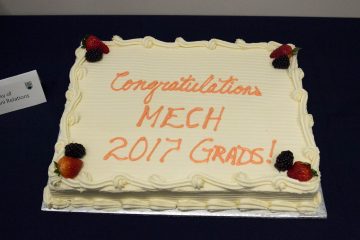
Please join us in congratulating the Mechanical Engineering Fall 2017 graduates, who received their degrees on November 23. The department hosted a reception before the graduation ceremony to recognize some of our outstanding students.

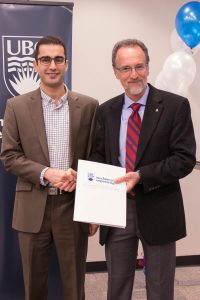
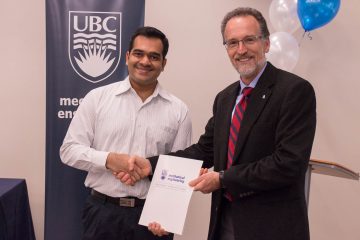
Several of our students received awards based on their academic achievements. Their names are below, in alphabetical order.


Academic Achievement Award

For students who have an average of over 90% during their degree.

  • Mark Terrance Bonar
  • Shujun Gao
  • Chenlu Han
  • Shayan Hoshyari
  • Alexander David Sylvester
  • Min Xia
  • Ehsan Zaman


NAME Design Award

Awarded to the student team who received the highest grade on their design project.

  • Mark Terrance Bonar
  • Saran Deep Singh
  • Cheng Yang


Degree with Distinction

For students who achieved an overall first-class average in second- through fourth-year courses.

  • Cody John Pavel Esau


Photos from the reception are below. For high quality versions, please e-mail communications(at)mech(dot)ubc(dot)ca.


Agnes d’Entremont Featured for Open Problem Library Project

Dr. Agnes d’Entremont, an instructor in Mechanical Engineering, and her colleague Dr. Jonathan Verrett, an instructor in Chemical and Biological Engineering, were featured in a video by BC Campus for their work with an open-source online homework system.

The video highlights how creating problems for the WeBWork Open Problem Library (OPL) improves their students’ learning experience and reduces financial barriers. WeBWork is an open-source online homework system for math and science courses that provides students with immediate, detailed feedback. They are allowed to make changes to their answer, which promotes learning. WeBWorks also has  individualized versions of problems, allowing instructors to encourage students to work together – each student has a similar but unique problem, and much develop their own answer to their individual version of the problem. For instructors, WeBWork has over 30,000 problems in an Open Problem Library that can be used in math and an increasing number of problems that are available for other sciences and economics. At least 5 post-secondary institutions in BC use WeBWork.

d’Entremont and Verrett wanted to create a set of problems that could be used in engineering programs in BC, North America and worldwide. This project received an Open Education Resource grant this year to supplement and extend the UBC Teaching and Learning Enhancement Fund grant that the instructors received. The funding will be used to hire a student to increase the number of problems in the OPL, and adding to the set of open problems available globally for engineering.

“My hope is that we plant a seed on the open problem library” says d’Entrement. “We’re starting several subjects that don’t exist there now. We’re founding certain subject areas on there. And we have the capacity to build 60 – 80 problems, but what we hope is people will see that and say, “Oh, there are like-minded people… engineers using this. I could build a few problems too. And if 10 people build five problems each, suddenly we have this amazing resource that’s available to all of us.”

To read the full article visit bccampus.ca.

Story adapted from APSC News.


Elizabeth Croft Discusses the Future of Robotics in CBC Interview

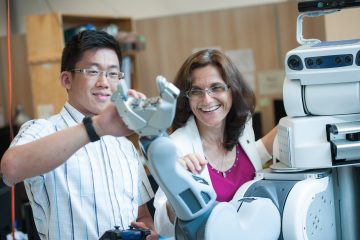
Elizabeth Croft and student making adjustments to “Charlie”.

Following the release of the new Blade Runner movie, MECH professor and Director of the the Collaborative Advanced Robotics and Intelligent Systems Lab (CARIS), Elizabeth Croft gave a short interview with CBC on the future of robotics. In her interview, Croft discusses how to maintain a friendly relationship between robots and humans, especially amid worries that automation means a decline in “human” jobs. The key, she says, is not to lament the loss of low-wage jobs, but embrace how this shift will help to maintain an overall better standard of living and create more “good quality, complex and interesting jobs.” This in turn, will lead to increased Canadian productivity as labour is focused in more complex, higher-value jobs.

The article also explores Canada’s unique stance in the worldwide discussion on roboethics and the current work of Canadian companies that specialize in human robot interaction.


You can read the full article here: These Canadians are helping the world become replicant ready

Dr. Croft was also interviewed by Inc. discussing the ways robots and humans can communicate and work together efficiently. Read the full article here: Yes, the Robots Are Coming for Your Jobs. Here’s How to Work With Them.

APSC 366 – The Art of the Possible: Engineering for Non-Engineers

Interested in the art of engineering but don’t have the tech background? Need to fulfill a science requirement but want something that still allows you to think through social issues? APSC 366 was designed for you.
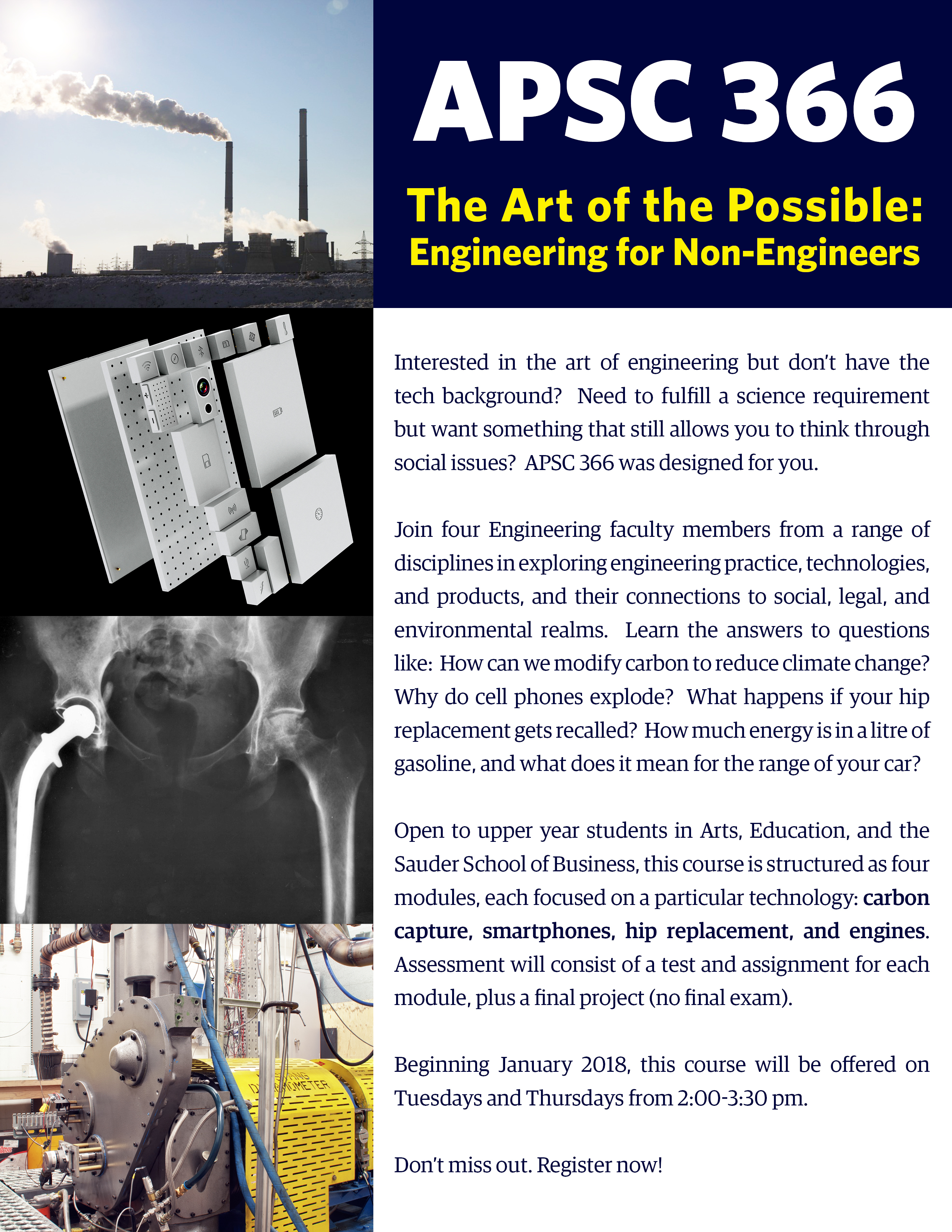
Join four Engineering faculty members from a range of disciplines in exploring engineering practice, technologies, and products, and their connections to social, legal, and environmental realms. Learn the answers to questions like: How can we modify carbon to reduce climate change? Why do cell phones explode? What happens if your hip replacement gets recalled? How much energy is in a litre of gasoline, and what does it mean for the range of your car?

Open to upper year students in Arts, Education, and the Sauder School of Business, this course is structured as four modules, each focused on a particular technology: carbon capture, smartphones, hip replacement, and engines. Assessment will consist of a test and assignment for each module, plus a final project (no final exam).

Beginning January 2018, this course will be offered on Tuesdays and Thursdays from 2:00-3:30 pm.

Don’t miss out. Register now!

MECH Alumni Bring Sustainable Carsharing Alternatives to UBC

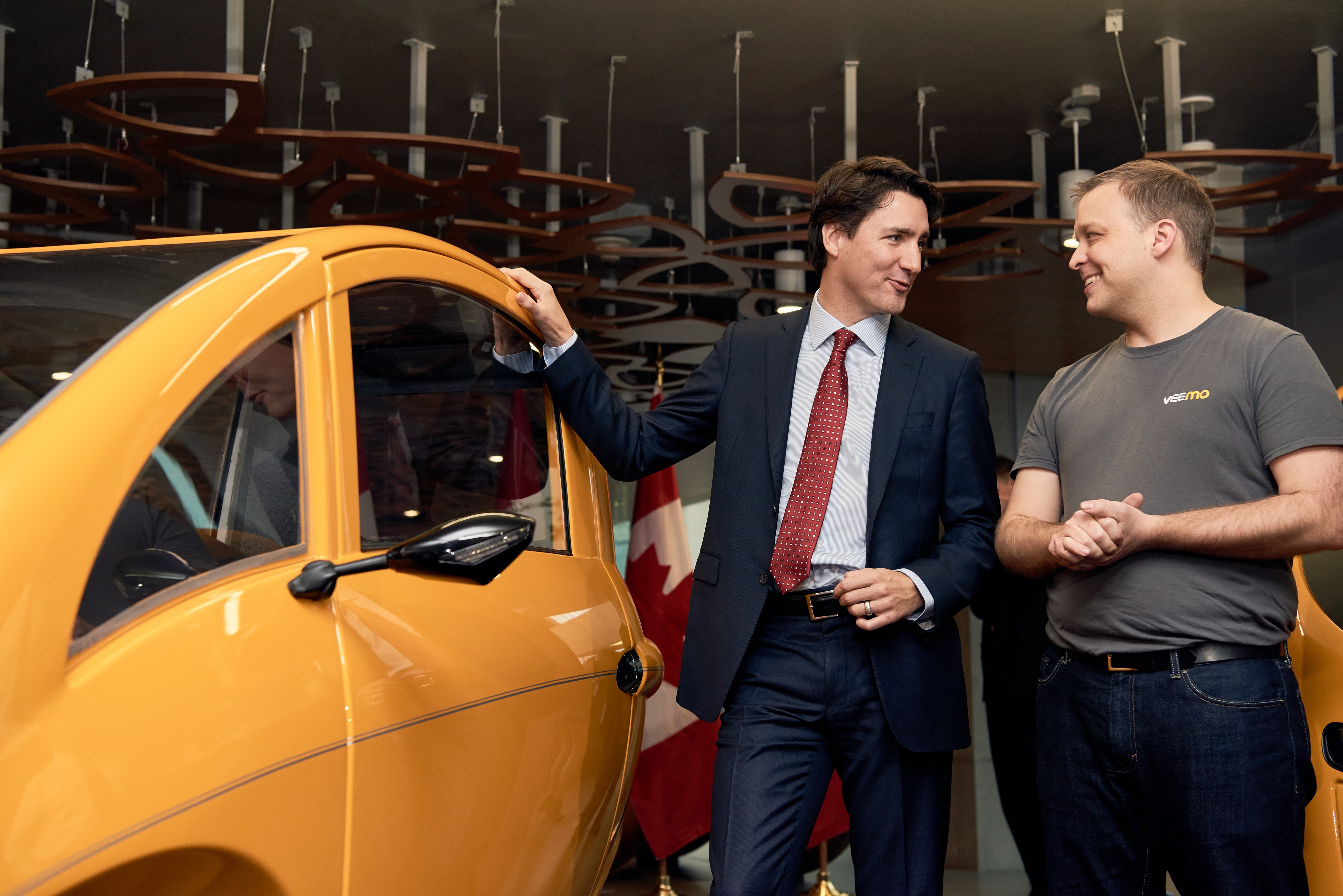
Veemos are coming to UBC! An enclosed, electric-assisted, human-powered bicycle that aims to replace automobiles on campus, Veemos are an innovative way to travel sustainably. VeloMetro is launching a Veemo pilot fleet on the UBC campus in fall of 2017.

Mechanical Engineering is proud to recognize two of VeloMetro’s founders as graduates.

Kody Baker, CEO and co-founder, completed his BASc in Mechanical Engineering in 2001. Kody is an experienced technology manager and entrepreneur with a strong vision for technology trends. With a broad range of deep experience in engineering, project management, and manufacturing within several cleantech and high-tech companies, he has brought products to market such as electric vehicles, biomass energy systems, and process control systems. Kody is also a certified professional engineer.

Jonathan Faille, CTO and co-founder received his MENG in Mechanical Engineering in 2012. His degree centered on mechatronics; the marriage of mechanical and electrical engineering. He also holds a Master of Science in Sustainable Energy Engineering from The Royal Institute of Technology in Stockholm, Sweden and a Mechanical Engineering degree from McGill University.

To learn more about Veemo, VeloMetro and the team behind this unique innovation, visit their website. Interested in Kody’s work? Read more about his career path and his experience at UBC here: Kody Baker Alumni Profile

Story adapted from: APSC News