Dr. Hongshen Ma’s project “Immune profiling using single cell cytokine secretome and transcriptome analysis” has been awarded funding from the New Frontiers in Research Fund’s (NFRF) Exploration Stream. The NFRF supports world-leading interdisciplinary, transformative and rapid-response Canadian-led research.
Millions of Kitchens – Are they Safe: PhD student explores energy use and air pollution through photography

A new photography exhibit by Mechanical Engineering PhD student and Liu Scholar Mrinmoy Chakraborty explores the kinds of residential energy sources used in rural India and their effect on indoor air pollution. Usually, he investigates this issue using numerical simulations and field studies under the co-supervision of Dr. Amanda Giang and Dr. Naomi Zimmerman, but for two weeks in the Liu Lobby Gallery he will be sharing his subject through a camera lens.
His photographs document a field study in rural India undertaken by the research team to look at the types of cooking fuels commonly being used and measuring their effects on indoor air quality. With support from a local NGO, the team created a pollution monitoring network using mobile and cost-effective sensors to measure cooking and fuel usage patterns. The project found that “the range of pollutant concentrations experienced daily by rural Indian households is often similar to or greater than what Vancouver observes during severe wildfire pollution episodes.” Chakraborty notes that this disproportionately exposes women and children to heath hazards like Black Carbon, while also contributing to climate change. The photography exhibit shares the team’s findings and experiences during the study.
As a Liu Scholar with the School of Public Policy and Global Affairs, Chakraborty is mentored by Dr. Milind Kandlikar. The SPPGA Liu Scholar program supports PhD students of any discipline in undertaking a project that addresses public policy and global issues.
Visit Millions of kitchens – are they safe?
When: February 8- 24, 2023
Where: Lobby Gallery, Liu Institute for Global Issues (6476 NW Marine Drive, Vancouver)
Cost: Free
Details: read the Liu Lobby Gallery event description
To learn more about the exhibit and the research behind it, visit the Liu Lobby Gallery on February 23 at 5:30 PM, for an artist’s walk-through and informal discussion session.
Research Assistant, Concussion MRI Analysis – SimPL lab
This is an undergraduate research position, made available through either the NSERC USRA or the Work Learn IUA program.
Role Details
Project Name: Research Assistant, Concussion Magnetic Resonance Imaging (MRI) Analysis – SimPL lab
Supervisor Name: Lyndia Wu, Adam Clansey | Preferred Contact: adam.clansey@ubc.ca
Deadline to Apply: Application procedures and timelines are different for NSERC USRA or WLIURA – visit our undergraduate Research Opportunities page for application details.
- NSERC USRA: If you are interested and eligible, please contact Dr. Clansey as soon as possible, at the latest by Feb. 15, 2023.
- WL IUA: The position will be posted to UBC CareersOnline from March 13 – 26, 2023. Interested students can also contact Dr. Clansey directly with resume and transcript by Mar 26.
Project Description
We have a multidisciplinary project investigating the relationship between head impact exposure, concussion biomechanics, and brain structural as well as functional changes at the University of British Columbia (UBC). This is a multi-year project funded by the Canadian Institutes of Health Research (CIHR) Project Grant led by principal investigator Dr. Lyndia Wu. We are recruiting a research student to assist in Magnetic Resonance Imaging (MRI) data processing and analysis.
Concussion, or mild traumatic brain injury, is a major public health concern. The injury mechanism and pathology are poorly understood, resulting in ineffective prevention, diagnosis and treatment. Alarmingly, mounting evidence indicates that even subconcussive / subclinical head impacts may be associated with long-term brain changes. In this project, our goal is to prospectively and longitudinally investigate the effects of both concussions and subconcussive head impacts in varsity competitive ice hockey players. We will apply state-of-the-art wearable head impact sensors, novel UBC-developed myelin water imaging techniques, award-winning quantitative susceptibility mapping methods, and unique sensitive neurocognitive tests in a rigorous study design where we will gather pre-injury baseline data as well as monitor brain structural / functional changes longitudinally.
The MRI methods applied in the current study allows for investigation for both microstructural and functional changes in the brain after head impacts or concussions. For example, the myelin water imaging protocol applied will provide data on the integrity of the myelin sheath around neurons in the brain, and the functional MRI protocol can provide information on brain activation patterns and networks. The research student will help with MRI data processing and extraction of key structural and functional parameters, which will be compared between pre-season/post-season and pre-concussion/post-concussion time points to shed light on brain changes due to ice hockey head impacts.
Duties and Responsibilities May Include
- Processing of MRI data
- Extraction of key MRI parameters of brain structure and function
- Analyzing the correlation between head impact exposure and MRI parameters
- Assistance in ongoing study activities (e.g., facilitating MRI scans)
- Documentation and presentation of research processes and results
Supervision
The student will be supervised by the faculty lead (Dr. Lyndia Wu) and research associate (Dr. Adam Clansey), with weekly team meetings. The student will also work closely with graduate students in SimPL, with the opportunities for daily interactions and communication. Training for research tasks will be provided to the student. In addition, the student will be offered laboratory (i.e. lab access, lab computers/equipment) to complete their project.
Special requirements (department, GPA, specific courses, year level, skills)
Preferred skills/knowledge
Python, signal processing, image processing, knowledge in medical imaging. Motivated students with willingness to learn new skills would be preferred.
Fit
Students who are interested in concussion research and/or brain MRI imaging would be a good fit.
Other Information
Position duration: May-August 2023, possible to start early on part-time basis or extend beyond this timeframe.
Total pay including award: $9K for the summer
Will you still hire for position if the student does not receive the WL IURA or NSERC USRA award?: Possible, if a good fit is demonstrated.
Lab website: Home Page | Sensing in Biomechanical Processes Lab (SimPL) (ubc.ca)
Research Assistant, Head Impact Analysis – SimPL lab
This is an undergraduate research position, made available through either the NSERC USRA or the Work Learn IUA program.
Role Details
Project Name: Research Assistant, Head Impact Analysis – SimPL lab
Supervisor Name: Lyndia Wu, Zaryan Masood | Preferred Contact: zaryanm@student.ubc.ca
Deadline to Apply: Application procedures and timelines are different for NSERC USRA or WLIURA – visit our undergraduate Research Opportunities page for application details.
- NSERC USRA: If you are interested and eligible, please contact Zaryan as soon as possible, at the latest by Feb. 15, 2023.
- WL IUA: The position will be posted to UBC CareersOnline from March 13 – 26, 2023. Interested students can also contact Zaryan directly with resume and transcript by Mar 26.
Project Description
Concussions are a major public health concern, and are highly prevalent in sports participants due to repetitive head impact exposure. Athletes in contact sports such as ice hockey and American football may sustain hundreds to thousands of head impacts over each season. These impacts may not only cause acute concussions, but also may contribute to long-term neurological deficit. At the Sensing in Biomechanical Processes Lab (SimPL), we develop and apply wearable sensor technologies to collect sports head impact exposure data. By analyzing the correlation between the frequency/severity of head impacts and injury risk, we may develop injury screening/diagnostic tools to aid in prevention of brain trauma. Currently, we have established collaborations with multiple UBC sports teams and collected a head impact dataset. We are looking for a research student to process and analyze the head impact data. The student will help establish data processing pipelines and accelerate the process of identifying potential risk functions relating head impact exposure to brain injury risk.
Duties and Responsibilities May Include
- Processing of head impact sensor data
- Extraction of key biomechanical parameters from head impact data
- Identifying and mitigating noise in the data
- Analyzing the correlation between impact data and concussion risk
- Documenting and presenting research methods and results
Supervision
The student will be supervised by Dr. Lyndia Wu and senior graduate student Zaryan Masood. The student will work closely with a number of graduate students in SimPL, with the opportunities for daily interactions and communication. Students will be trained to use sensor tools and any pre-existing code for the project. In addition, the student will have access to lab computers and equipment during their work.
Special requirements (department, GPA, specific courses, year level, skills)
Preferred skills/knowledge
- Solid background in mechanical, electrical, and software engineering. Experience with programming with MATLAB.
- Strong organizational, communication (oral and written English) and interpersonal skills
- Highly motivated and detail oriented
- Experience with data collection and analysis is an asset
Fit
Students who are interested in concussion research, data analysis, and biomechanics would be a good fit for the project.
Other Information
Position duration: May-August 2023, possible to start early on volunteer/part-time basis or extend beyond this timeframe.
Total pay including award: $9K for the summer
Will you still hire for position if the student does not receive the WL IURA or NSERC USRA award?: Possible, if a good fit is demonstrated.
Lab website: Home Page | Sensing in Biomechanical Processes Lab (SimPL) (ubc.ca)
Laboratory Research Assistant, Bubble formation and Emissions Study – Complex Fluid Lab
This is an undergraduate research position, made available through either the NSERC USRA or the Work Learn IUA program.
Role Details
Project Name: Laboratory Research Assistant, Bubble formation and Emissions Study | Complex Fluid Lab, UBC Vancouver
Supervisor Name: Masoud Daneshi | Preferred Contact: masoud.daneshi@ubc.ca
Deadline to Apply: Application procedures are different for these two programs – visit our undergraduate Research Opportunities page for application details.
- NSERC USRA: Send your application Package to Mechanical Engineering Student Services (students@mech.ubc.ca) by March 8th,2023 at 11:59 PM.
- WL IUA: The position will be posted to UBC CareersOnline from March 13 – 26, 2023. Interested students can also contact Masoud Daneshi (masoud.daneshi@ubc.ca) with resume and transcript.
Project Description
Bubble formation and consequent gas emission are common in natural geological materials such as flooded soils and terrestrial sediments via biodegradation, but also in man-made ponds such as oil sands tailings ponds. Recent data suggests that in 2020 around 7 megatonnes of methane and carbon dioxide were released from oil sands tailings ponds in Canada. The tailings ponds consist of the FFT and MFT layers, which include water, sand, anaerobic microorganisms and naphtha. In these layers, degradation of the naphtha by the microorganisms leads to the production of methane and carbon dioxide, both potential causes of GHG emissions. The complex fluids group at UBC has been studying this process in a lab setting, using lab experiments, models and computations, from a fluid mechanics perspective. The MFT/FFT layers can be categorized as time-dependent yield stress fluids. These materials behave like a solid when the applied stresses are below a threshold, i.e. the yield stress, while above the threshold they deform and flow like a liquid. This suggests the ability of these layers to retain gas bubbles. Our interest is in the entrapment and release of bubbles, understanding the physical processes and eventually how the fluid rheology might be used as a means to entrap the bubbles and potentially control GHG emission from the ponds.
To date, we studied the onset of motion of a single bubble as well as the effect of interactions of bubbles and eventually the stability of bubble clouds by small-scale lab experiments. We are interested in extending our experiments to study bubble entrapment/entrainment and stability in multi-layered fluid systems as well as bubbles’ propagation and stability in materials with non-uniform rheology where networks of low viscous layers control the bubble motion and propagation. We plan to use a large-scale pressurized vertical flow loop equipped with an imaging system to study gas-liquid flows of interest. We are seeking 1-2 students to work on the project. The students will assist in all operations related to the experiment: fluid preparation, rheometry measurements of the fluids, running experiments and image processing. The students will learn the physical background of the experiments and may help in the design of new components and implementation of changes to the apparatus.
Interested students should contact Masoud Daneshi (masoud.daneshi@ubc.ca) with their resume and transcripts. The intention is that the successful students be funded under the NSERC USRA or WLIURA program.
Special requirements (department, GPA, specific courses, year level, skills)
The student will be supervised by a team of graduate students working on the same projects, interacting daily with the team. The students will assist in all operations related with the experiments: fluid preparation, rheometry measurements of the fluids, running experiments and image processing. The students will learn the physical background to the experiments and may help in design of new components and implement changes to the current apparatus.
This position would perhaps suit a student in Mechanical or Chemical Engineering, Engineering Physics, Physics or Chemistry with hands on laboratory experience who wishes to gain research experience in fluid mechanics and rheology, plus associated areas.
Other Information
Position duration (ie. May to Aug, 2023): May-August 2023, possibly extendable.
Total pay including award: $9K
Will you still hire for position if the student does not receive the WL IURA 0r NSERC USRA award?: Possibly.
Tackling urban freight emissions with improved measurements & models
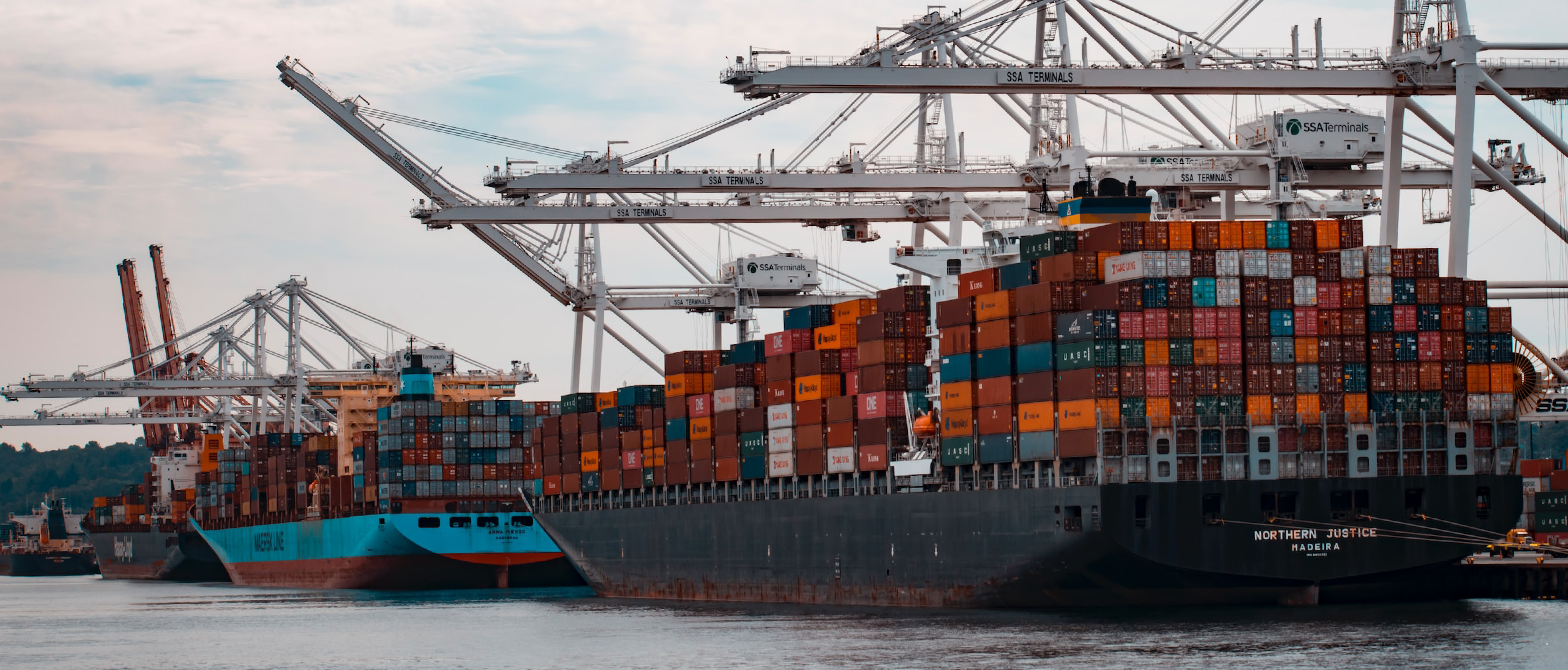
Researchers Dr. Amanda Giang and Dr. Patrick Kirchen are working to improve urban freight systems emissions through mitigation planning in a new five-year project. Looking at marine, road and rail freight transport, they will develop planning tools that integrate real-world data, allowing government and industry to make informed decisions that reduce greenhouse gasses. The project has received $2,433,660 in funding from the Government of Canada.
As well as being Mechanical Engineering faculty members, both work with UBC’s Clean Energy Research Centre. Jointly appointed with UBC’s Institute for Resources, Environment and Sustainability, Dr. Giang is an expert in environmental modeling of air quality and pollution. Dr. Kirchen’s expertise is in reducing emissions caused by internal combustion engines. They are joined by fellow MECH investigators Drs. Naomi Zimmerman and Steve Rogak, as well as Drs. Bhushan Gopaluni (UBC Chemical and Biological Engineering), Allan Bertram (UBC Chemistry), and Chris Carlsten (UBC Medicine). Dr. Kirchen explains their collaboration:
“Government and industry need improved data and tools to support planning for freight decarbonization in the near (2030) and long term (2050)… In this project, real-world data integrated into decision-support tools will inform which new technologies and future fuels are best at reducing emissions, and worth investing in to scale upwards.”
Dr. Giang highlights the multiple impacts of their work, which will not only enable planners to address climate change through reduced emissions but also to improve air quality for Canadians:
“People who live along key transport routes are exposed to more pollution, which can have serious long-term consequences for their health… Addressing freight transportation isn’t only a question about addressing climate change, it’s also an issue of local air pollution and disparities in human exposure.”
The project involves nine government and industry partners, and is supported by the Government of Canada’s Environmental Damages Fund, via Environment and Climate Change Canada – one of 24 announced by the Honourable Steven Guilbeault, Minister of Environment and Climate Change in November.
Read the full announcement by the Faculty of Applied Science.
Applications are open for CREATE-U 2023
Apply now to Combining Research Experience and Technical Electives for Undergraduates (CREATE-U), an immersive, cohort-based summer experience featuring paid research education opportunities in MECH labs.
Open to Mechanical Engineering undergraduates, CREATE-U is a unique opportunity to complete 6 credits of course work + a research project in the summer. Students are paid a minimum of $6000 for the summer work term and can count it towards co-op. The applicants are chosen based off a diverse selection criteria – it’s not just about grades. There are up to 5 spaces available in the summer cohort!