UBC Sailbot Ada relocated near the Azores islands

UBC Sailbot Ada relocated near the Azores islands

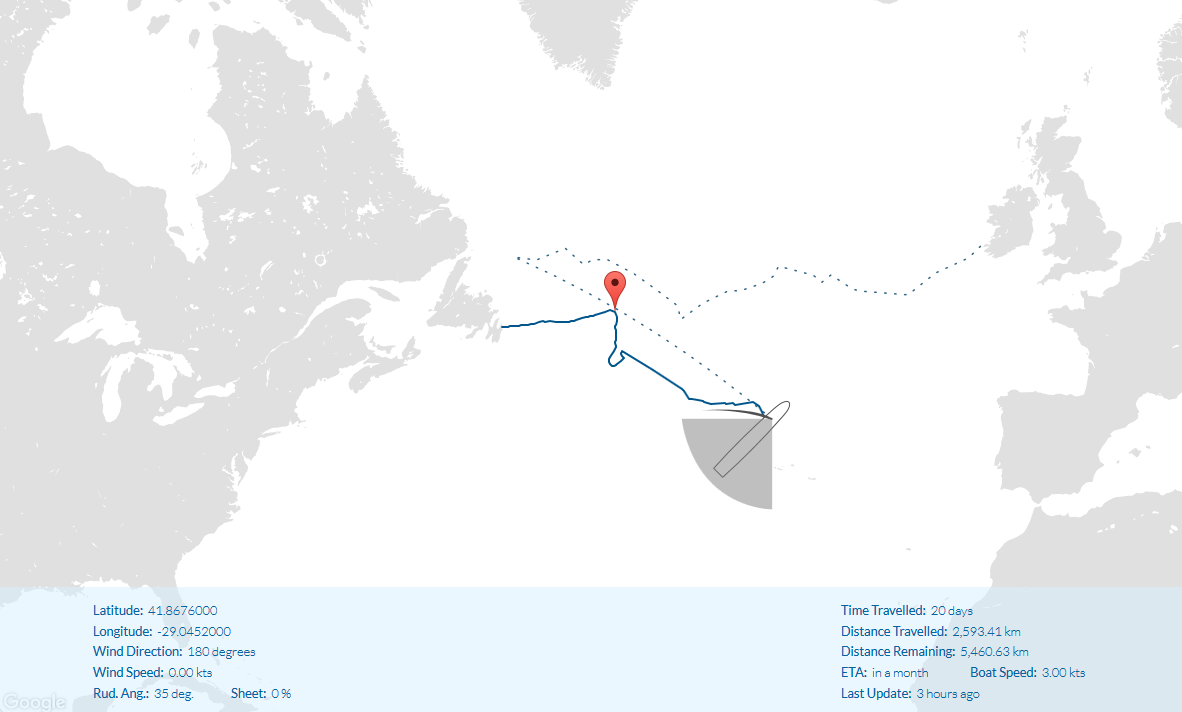
Sailbot progress from September 9th, 2016

Ada’s progress data from September 9th, 2016

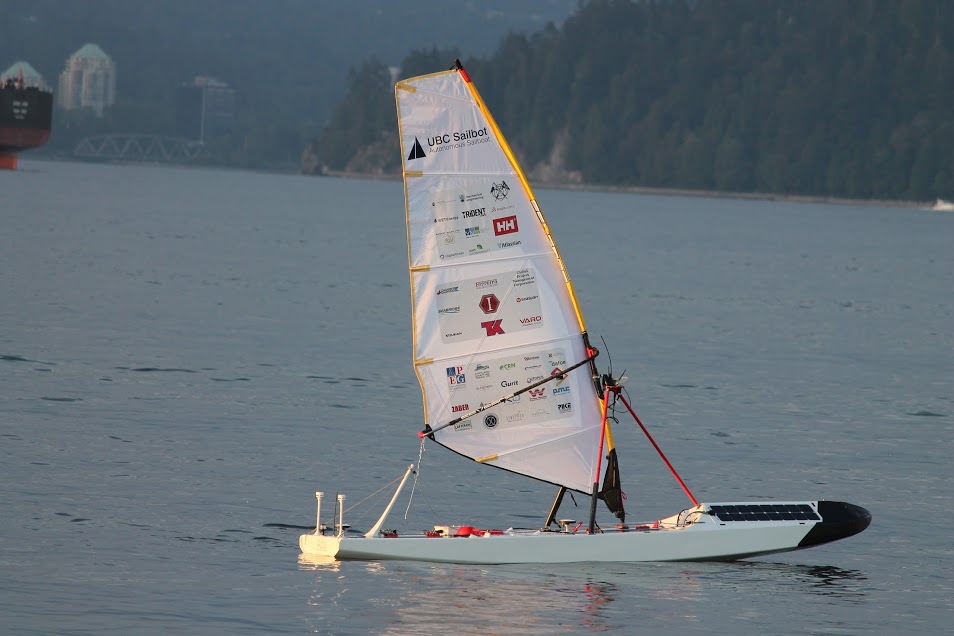
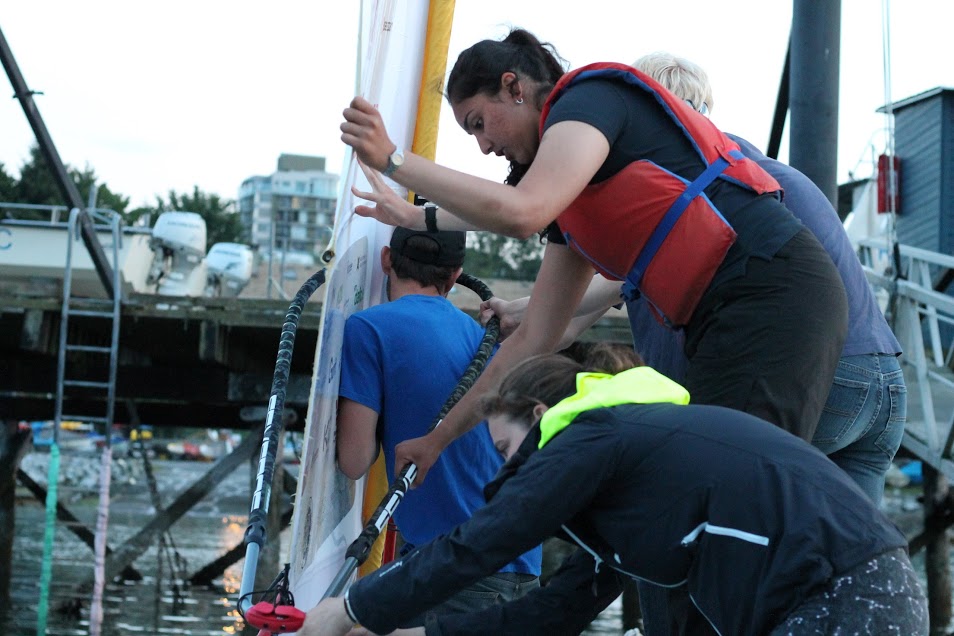
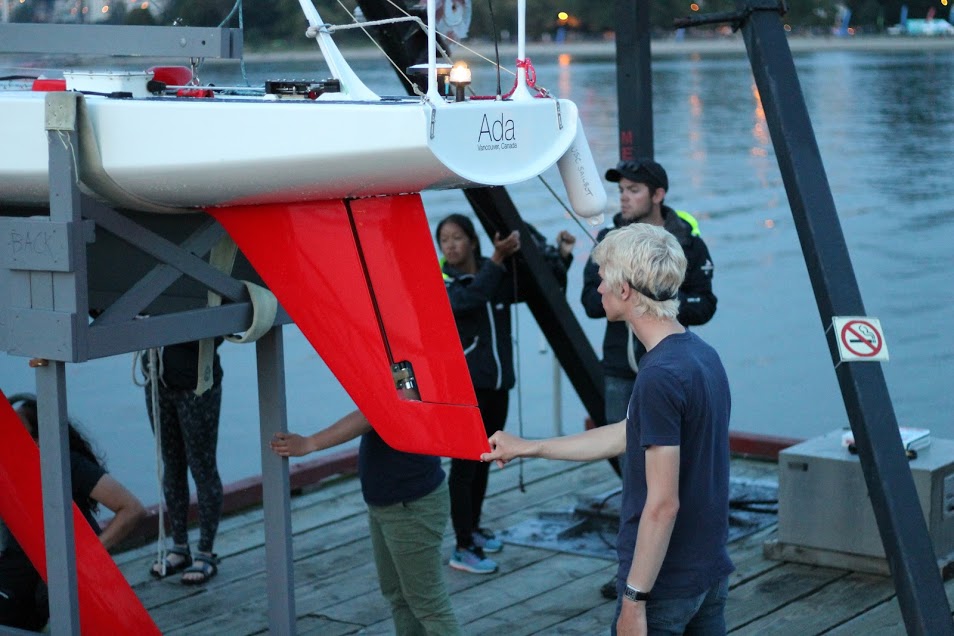
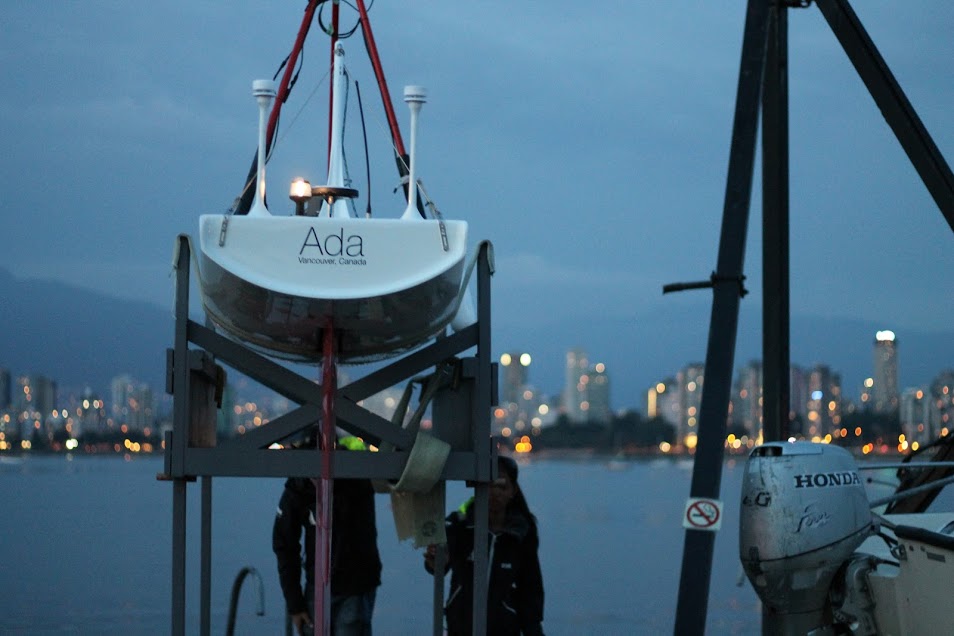
The UBC Sailbot Ada — an autonomous sailboat designed and built by UBC students — was launched off the coast of Newfoundland with the goal of crossing the Atlantic, a feat which has been attempted by many researchers, but never accomplished. Ada made it about 800 km before being damaged in a storm on August 30th, 2016, when she lost power and was temporarily lost.

However, in a recent update, the UBC Sailbot team announced that Ada had regained life when direct sunlight hit the boat’s solar panels on Tuesday. Through the use of a satellite network, the team was then able to locate Ada near the Azores islands, an autonomous region of Portugal located in the mid-Atlantic, and about 500 km east of her last known location prior to the power failure.

The team is now hopeful that they will be able to retrieve the sailbot, however it is not yet clear how this will be achieved. On their Facebook page, the team has reached out for help, but are attempting to get a visual update on her condition before trying to orchestrate a retrieval.

Despite the damage to Ada, the team is not considering her voyage a failure, having made it further across the Atlantic and toward her goal than any other autonomous sailboat. In addition, the team plans to use the information gained from this experience to craft a new vessel.  “As a team, we have decided that we are going to build on what we learned with Ada, and build a new vessel of similar scope, an Ada 2.0, if you will,” the team said in a statement to CBC, “this boat will give us an opportunity to surpass what we achieved with Ada, and will continue UBC Sailbot’s history of achievement and excellence.”

Read the full story at CBC News Newfoundland and Labrador.

Find out more about Ada, and the UBC Sailbot team, at: ubcsailbot.org or facebook.com/ubcsailbot
Dr. Yusuf Altintas named first Canadian president of CIRP!

dsc_1921

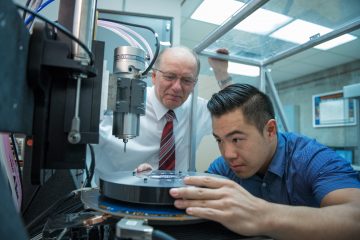
Dr. Altintas with a student in his Manufacturing Automation Lab.

MECH Professor Yusuf Altintas, has been named the first Canadian president of the International Academy for Production Engineering (CIRP).

CIRP takes its abbreviated name from the French acronym of College International pour la Recherche en Productique (CIRP) and is an organization that aims to promote scientific research through co-operation, as well as address issues related to modern production science and technology.

Dr. Altintas will act as the president from September 2016 to August 2017. Presidents of CIRP are elected annually in order to ensure continuous improvement and to reflect the changing needs of manufacturing science and technology.

Professor Altintas was also recently awarded the ASME William T. Ennor Manufacturing Technology Award and the NSERC Strategic Research Network in Virtual Machining Grant.

Congratulations Dr. Altintas!

Student Blog Post: “UBC AeroDesign Flies Heavy in SAE Aero Design West Regular Class”

By Siddhant Malik, UBC AeroDesign

The UBC AeroDesign Team (formerly known as The UBC Heavy Lift Team) was founded twenty-three years ago at UBC to learn the process of aircraft design and develop competitive radio-controlled airplanes for collegiate competitions.

The team recently competed at the SAE Aero Design West Competition from April 22nd – 24th in Van Nuys, California. The mission: to lift as much payload as possible in a 10”x4”x4” compartment, while consuming only 1000 Watts of power and taking off within 200 feet. The team placed 11th overall in the Regular Class Division against 37 international teams and was very proud to receive a 3rd place award from SAE and Lockheed Martin for the design report.

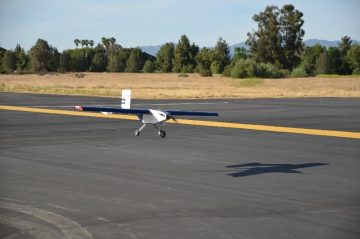
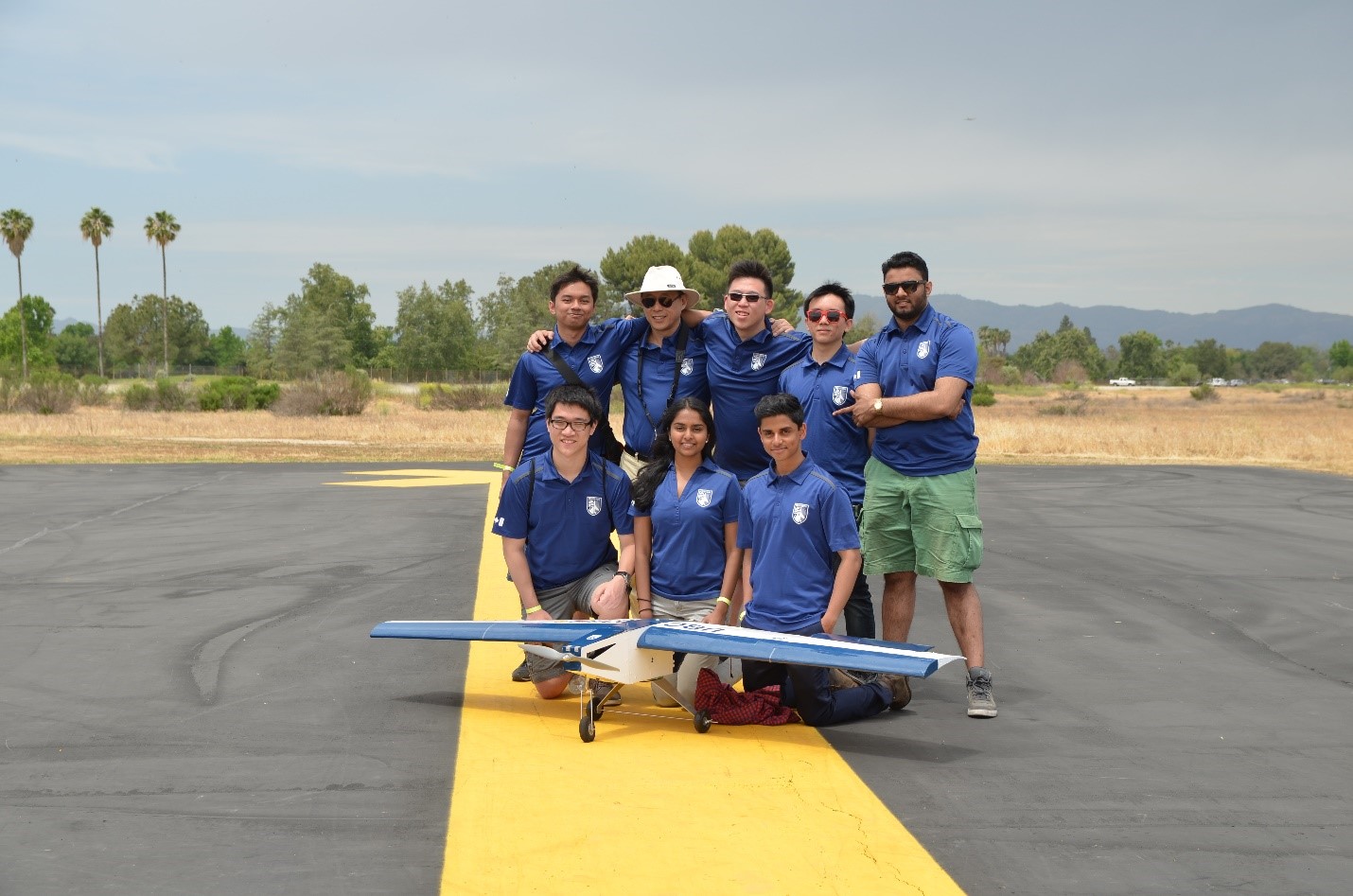
submitted-by-aerodesign-july-7The competition plane, named North Star, featured a rear cargo hatch for loading and unloading the payload within one minute to meet SAE’s requirement. The team members also integrated 3D printed components into the plane which provided a tremendous amount of design flexibility. The Boundary Layer Wind Tunnel at the Mechanical Engineering Aerodynamics Laboratory was extensively used to collect motor data and test each subsystem of the plane for airworthiness. The propulsion subteam also pioneered a prototype power regulator to control the power consumption. This project will be fully tested and integrated in future missions.
At the competition, UBC AeroDesign passed all static events and the technical inspection easily because of thorough preparation. North Star flew in three out of the four rounds of flight and lifted a total of 27.1 pounds. During the fourth round of flight, the plane spiraled down from several hundred feet and crashed (spectacularly) because the power limiter was triggered. This put the team just four points short of finishing in the top ten.

The team of 32 members are very proud of their efforts in designing and building an entirely new plane design. Already, the team has begun assessing the competition plane and repaired it for test flights. These test flights in the summer will be used to benchmark for next year’s design.

Team members at the 2016 competition from top left to bottom right: Ichsan Ausri (3rd Year MECH), John Siu (Team Pilot), Walter Teo (3rd Year MECH), Angus Wong (3rd Year MECH), Siddhant Malik (3rd Year MECH), Nicholas Hui (3rd Year MECH), Arthi Muniyappan (Team Captain, 3rd Year MECH), and Tharesh Liyanage (3rd Year IGEN).

Team members at the 2016 competition from top left to bottom right: Ichsan Ausri (3rd Year MECH), John Siu (Team Pilot), Walter Teo (3rd Year MECH), Angus Wong (3rd Year MECH), Siddhant Malik (3rd Year MECH), Nicholas Hui (3rd Year MECH), Arthi Muniyappan (Team Captain, 3rd Year MECH), and Tharesh Liyanage (3rd Year IGEN).

The UBC AeroDesign Team would like to thank Dr. Carl Ollivier-Gooch (Team Faculty Advisor) for his support and Mr. John Siu (Team Pilot) for flying the plane at the competition. The team is also grateful for sponsorship from: UBC Mechanical Engineering, UBC Engineering Professional Activities Fund, Walter H. Gage Memorial Fund, Association of Professional Engineers and Geoscientists of British Columbia, Society of Automotive Engineers British Columbia, and many other corporate companies.

For more information, please visit www.ubcaerodesign.com, or email ubcaerodesign@gmail.com to get in touch.

Dr. Peter Cripton teaches kids about helmets and brain health

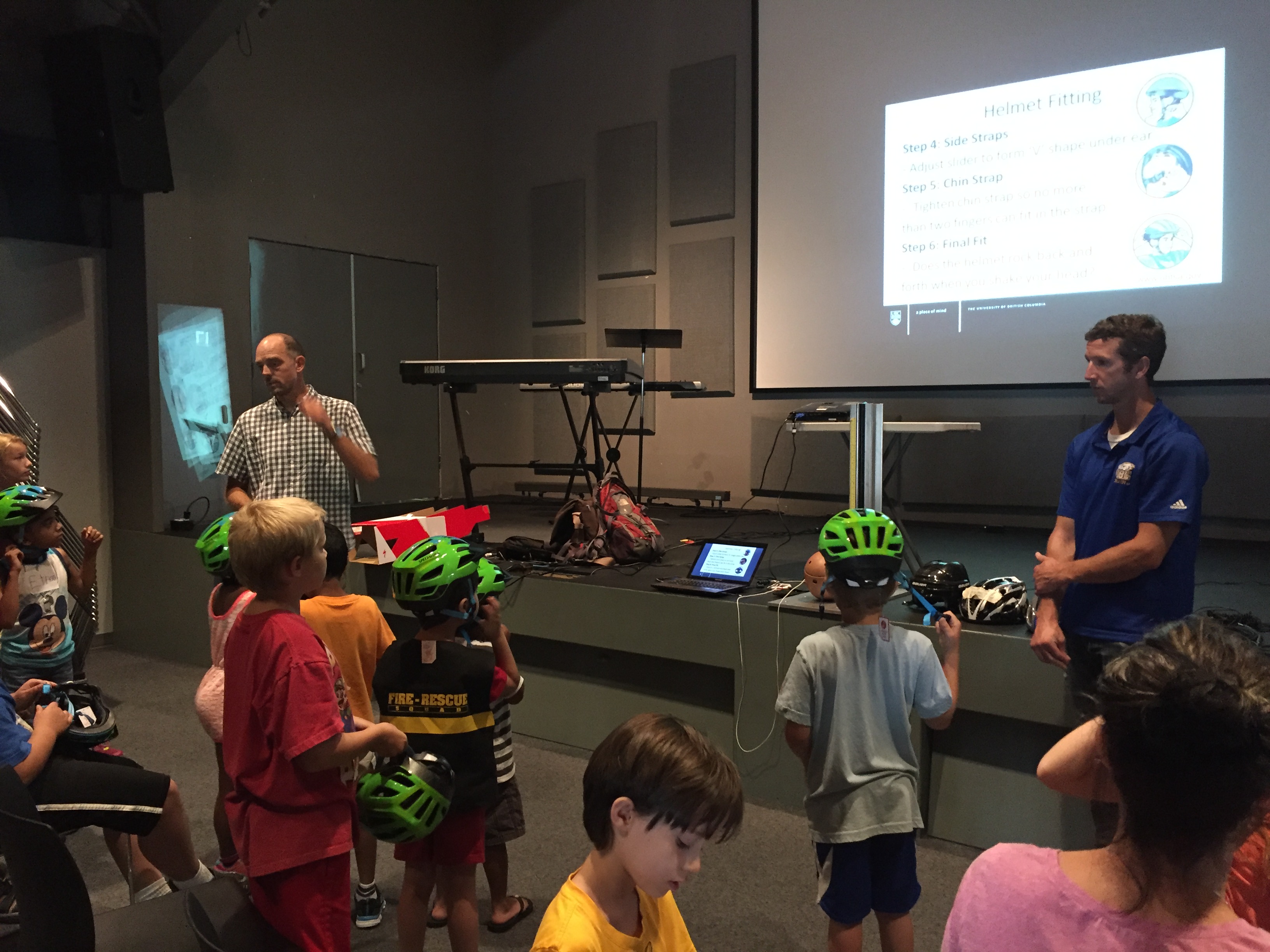
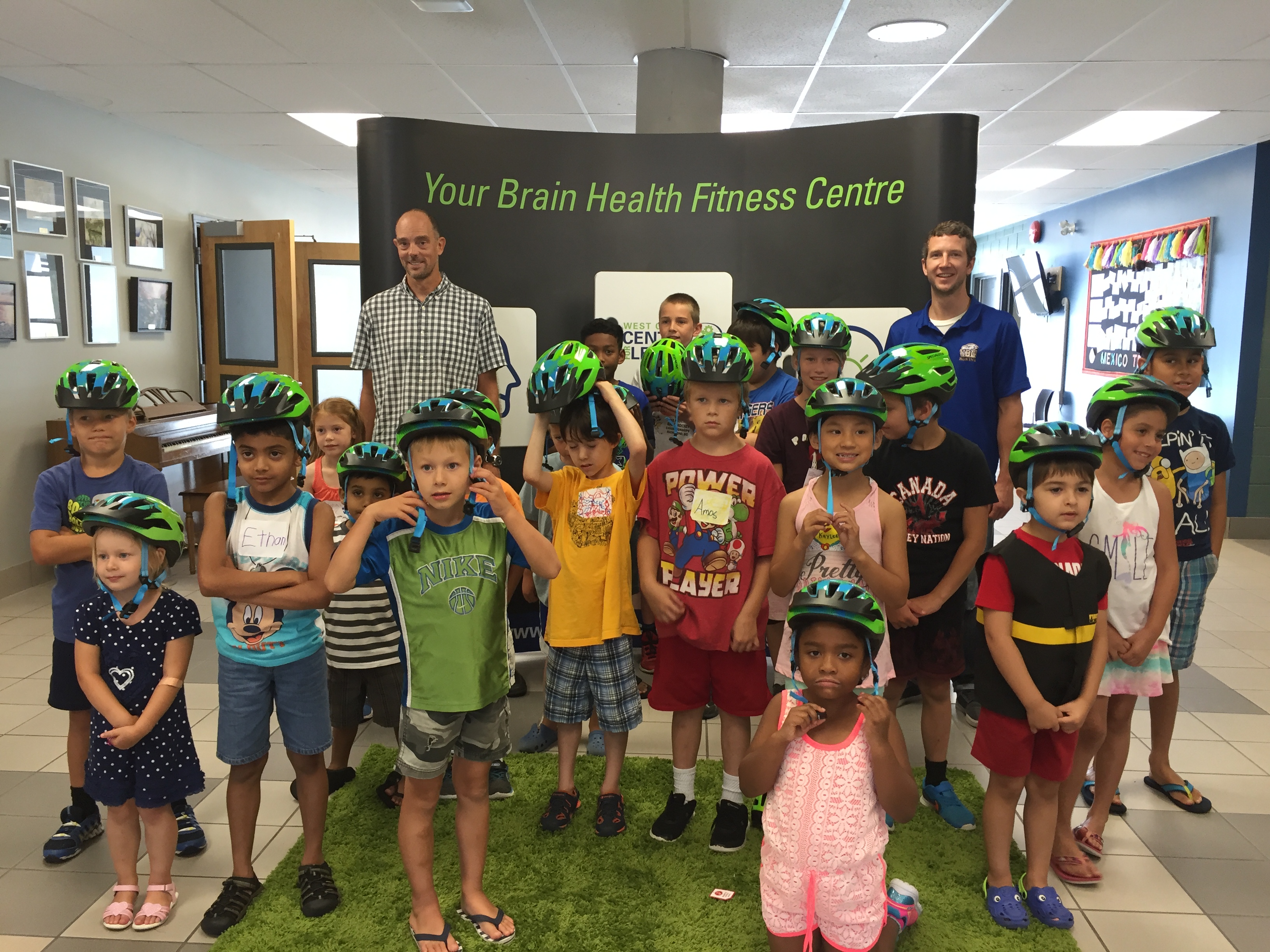
Dr. Peter Cripton and Biomedical Engineering student (and MECH alumnus) Cameron Stuart shared important information on helmets and brain health with kids in the inaugural Brain Booster Summer Camp earlier this month. The Brain Booster camp is one of many programs offered by the West Coast Centre for Learning, a multi-disciplinary education facility that brings together education professionals (like Dr. Cripton) and brain training coaches from the scientific and academic community to provide “customiz[ed,] successful learning approaches for children, youth, adults and older adults with learning difficulties and memory challenges affecting personal choice and equal access to quality educational opportunities.”

Dr. Cripton and Cameron are pictured below with the kids at the camp, who are all sporting some very safe and stylish helmets!

Information on Dr. Cripton’s lab and his research can be found at injury.mech.ubc.ca.

IMG_2207

IMG_2204

Sailbot arrives in NFLD, prepares for trans-Atlantic crossing

2016 7 16 UBC Sailbot Sponsorship Appreciation Night_Clare_Kiernan 211

Ada during her last evening in Vancouver

After three years of hard work, the UBC Sailbot team is almost ready to send their boat across the Atlantic, in what will be the first ever trans-Atlantic journey by an autonomous sailboat. Named Ada, after Ada Lovelace, the five-metre vessel was completely designed and built by UBC students in Vancouver, where she underwent extensive testing before being shipped to Newfoundland. She is currently parked at the Royal Newfoundland Yacht Club, where the team is finishing the last bits of work of her before she sets out on her own for Ireland.

[The boat] makes all of its decisions on its own,” student Cody Smith told CBC News in Newfoundland, “There’s no control, there’s no [remote control], we don’t follow behind it. We just say, ‘You’re here and you need to go here,’ and she’ll do the rest. She’ll take care of all the sailing.”

Although the journey has been attempted a number of times by others, no one has ever succeeded. UBC’s Sailbot team hopes to be the first. They plan to launch her this week, and hope to see her in Ireland in five to six weeks.

Read the full story at CBC News Newfoundland and Labrador.

See below photos of Ada and the UBC Sailbot team just before they set out for the east coast.

2016 7 16 UBC Sailbot Sponsorship Appreciation Night_Clare_Kiernan 265

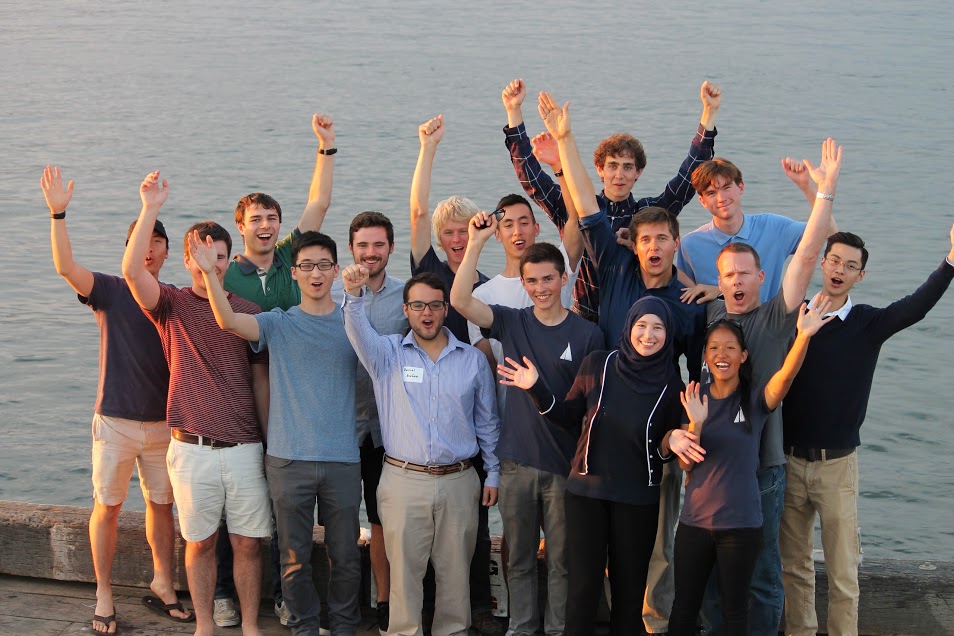
The UBC Sailbot team before departing for NFLD

2016 7 16 UBC Sailbot Sponsorship Appreciation Night_Clare_Kiernan 331

2016 7 16 UBC Sailbot Sponsorship Appreciation Night_Clare_Kiernan 457

2016 7 16 UBC Sailbot Sponsorship Appreciation Night_Clare_Kiernan 506


Arbutus Medical receives $1 million to expand in Asia and Africa

Arbutus-Medical

A social venture out of UBC has received $1-million investment from Grand Challenges Canada to pursue market expansion across Africa and India.

The venture, Arbutus Medical, was co-founded by MECH alumnus Florin Gheorghe and a group of UBC biomedical engineering graduates. Arbutus Medical makes a sterilizable Drill Cover system that allows the use of inexpensive hardware store drills in bone surgery. The Drill Cover has been used to treat more than 10,000 patients across 14 countries and has been listed with the U.S. Food and Drug Administration.

“Surgical drills can cost up to $30,000 and are a significant investment for medical care providers in developing countries,” said Gheorghe. “Our Drill Cover transforms an ordinary drill into one suitable for surgery, for a very low cost.”

Arbutus is one of six innovations recognized by Grand Challenges Canada for showing early promise for improving global health. It has previously received support from Coast Capital Savings Innovation Hub, a social venture accelerator operated by the UBC Sauder School of Business, and the Lean Launch Pad Accelerator program offered by entrepreneurship@UBC.

“We conducted clinical trials in East Africa and found that by using the Drill Cover on a power drill, surgeons reduced surgical time, tool cost and infection risks,” noted Gheorghe. “The next step is to grow our partnerships, like the one with Crown Healthcare Africa, a leading distributor in the region. We want to scale our market efforts, operations and impact for the Drill Cover across Africa and India. This will support hospitals in reducing infection and preventing permanent disability for thousands of patients.”

Read more about Gheorghe’s success with Arbutus Medical here.

UBC researchers develop painless and inexpensive microneedle to monitor drugs

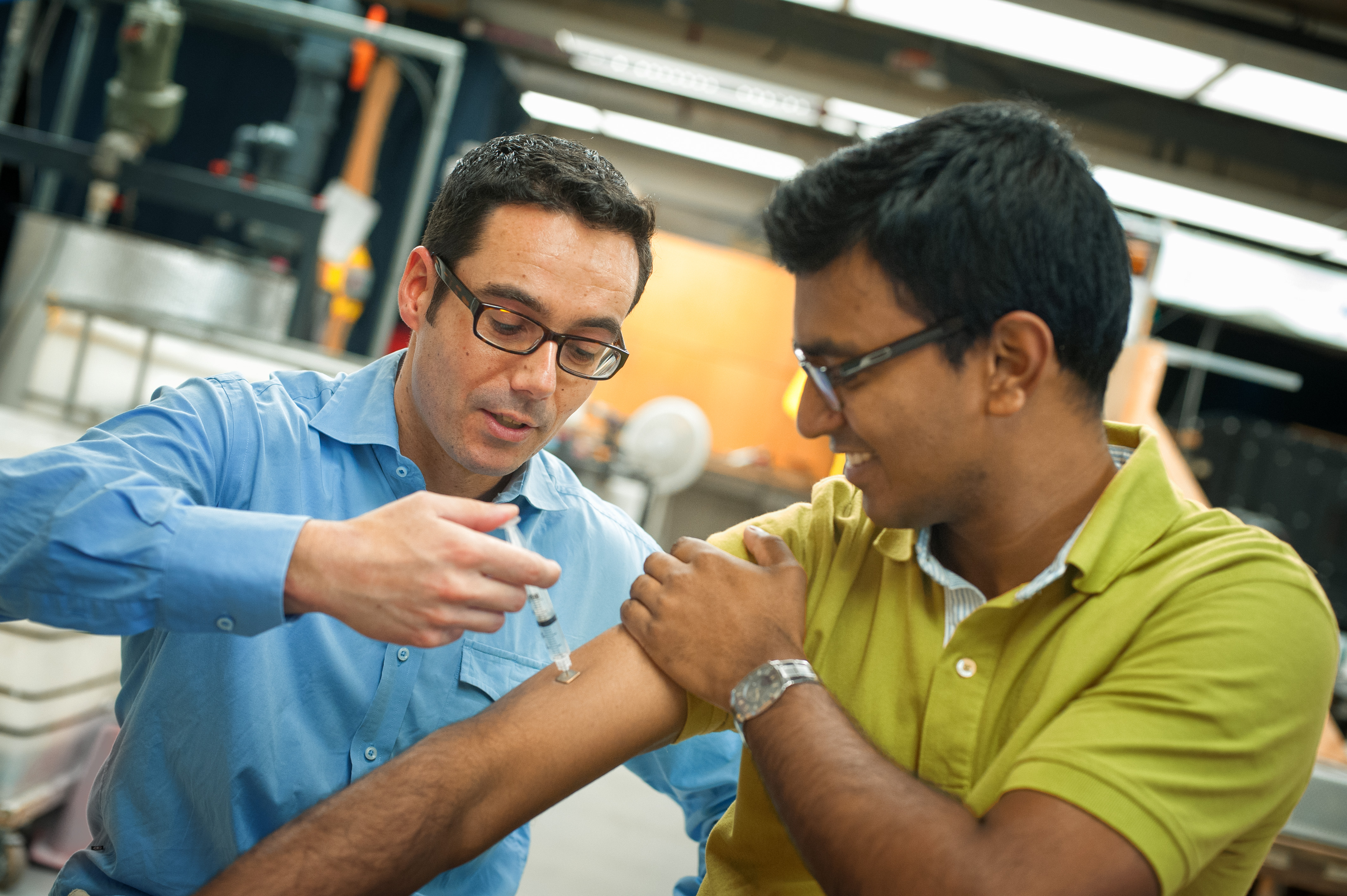
Dr. Stoeber with his microneedle patch. Photo credit: Martin Dee

Dr. Stoeber with his microneedle patch. Photo credit: Martin Dee

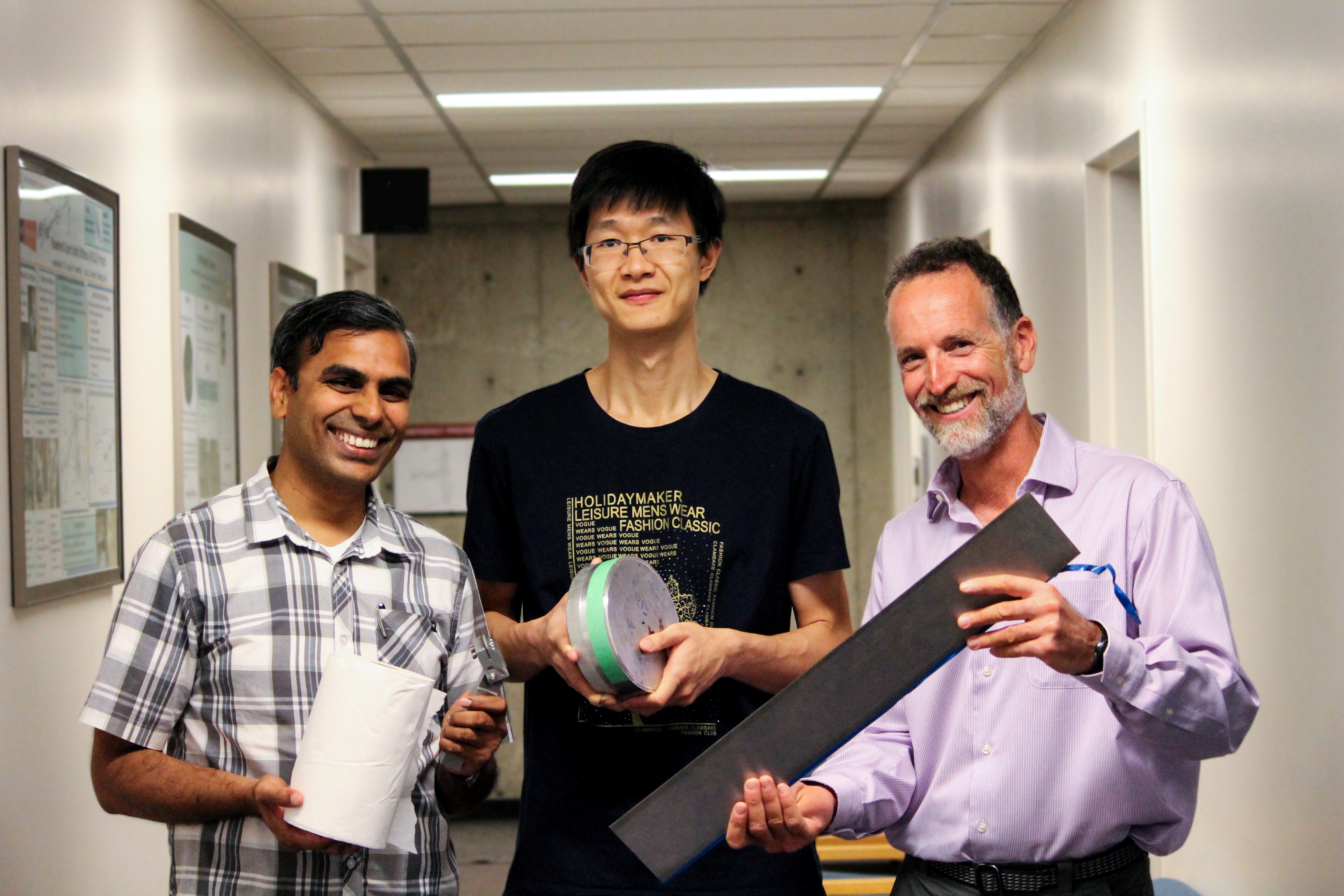
Mechanical Engineering professor Dr. Boris Stoeber, together with his PhD student Sahan Ranamukhaarachchi, researchers in UBC’s faculty of pharmaceutical sciences, and researchers at the Paul Scherrer Institut (PSI) in Switzerland, have created a microneedle drug monitoring system that could one day replace costly, invasive blood draws and improve patient comfort.

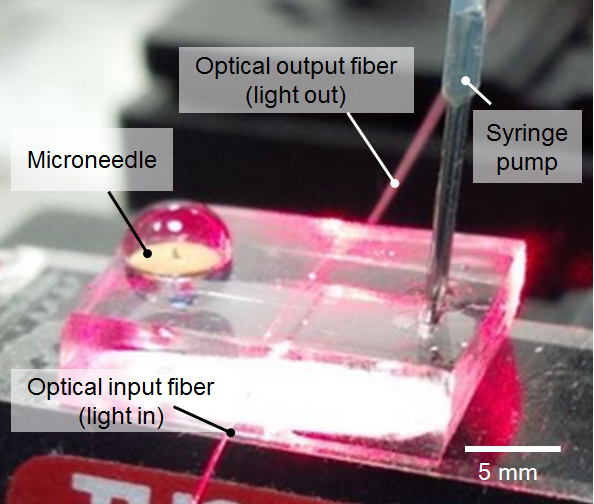
The new system consists of a small, thin patch that is pressed against a patient’s arm during medical treatment and measures drugs in their bloodstream painlessly without drawing any blood. The tiny needle-like projection, less than half a millimetre long, resembles a hollow cone and doesn’t pierce the skin like a standard hypodermic needle.

“Many groups are researching microneedle technology for painless vaccines and drug delivery,” said Ranamukhaarachchi, “Using them to painlessly monitor drugs is a newer idea.”

Microneedles are designed to puncture the outer layer of skin, which acts as a protective shield, but not the next layers of epidermis and the dermis, which house nerves, blood vessels and active immune cells.

The microneedle created by Stoeber, Ranamukhaarachchi and colleagues was developed to monitor the antibiotic vancomycin, which is used to treat serious infections and is administered through an intravenous line. Patients taking the antibiotic undergo three to four blood draws per day and need to be closely monitored because vancomycin can cause life-threatening toxic side effects.

The researchers discovered that they could use the fluid found just below the outer layer of skin, instead of blood, to monitor levels of vancomycin in the bloodstream. The microneedle collects just a tiny bit of this fluid, less than a millionth of a millilitre, and a reaction occurs on the inside of the microneedle that researchers can detect using an optical sensor. This technique allows researchers to quickly and easily determine the concentration of vancomycin.

“This is probably one of the smallest probe volumes ever recorded for a medically relevant analysis,” said Urs Hafeli, associate professor in UBC’s faculty of pharmaceutical sciences.

“The combination of knowhow from UBC and PSI, bringing together microneedles, microfluidics, optics and biotechnology, allowed us to create such a device capable of both collecting the fluid and performing the analysis in one device,” said Victor Cadarso, a research scientist and Ambizione Fellow at PSI.

The microneedle monitoring system, described in a paper published earlier this month in Scientific Reports, was developed out of a research collaboration between Hafeli and Stoeber, and is being commercialized by the UBC spin-off Microdermics Inc.

The research appeared in CBC News earlier this week. Read the story here.

For more information on the Stoeber lab, visit stoeberlab.mech.ubc.ca

An image of the microneedle device

An image of the microneedle device


Original post from UBC News.

Dr. Dana Grecov receives 2016 Peter Wall Research Award!

Grecov8119Congratulations to Mechanical Engineering professor Dr. Dana Grecov on receiving a Peter Wall Institute for Advanced Studies Wall Scholars Research Award for 2016!

Each year, the institute appoints up to twelve UBC scholars at various stages of their careers. They are individuals with excellent research records, who appreciate the possibilities of intellectual and interdisciplinary exchange with outstanding scholars in very different areas of research. This award is aimed at enhancing opportunities for scholars to have regular and meaningful exchange of ideas, serving as catalyst for new research advances and collaborations.

Dr. Grecov received her B.Eng. degree in Mechanical Engineering from University Politehnica in Bucharest and her Ph.D. in Fluid Mechanics from Institut National Polytechnique de Grenoble. After a postdoctoral research fellow position at McGill University Montreal, she joined the University of British Columbia in 2005.

Her expertise is in biofluid mechanics, non-Newtonian fluid mechanics, rheology and mathematical modeling. She has 20 years of experience in complex fluids research, constitutive modeling development, and numerical simulations. She received the CFI (Canada Foundation for Innovation) Leaders Opportunity Award in 2007, a Peter Wall Early Career Scholar Award in 2007 and the NSERC (Natural Sci. & Eng. Res. Council) Discovery Accelerator Award in 2016.

Grecov has published over 100 conference and journal papers, many of which are in prestigious journals. Her published papers are the outcome of the combination of analytical or/and experimental with numerical simulations. She has chaired many sessions at international conferences and advised more than 40 graduate and undergraduate students. She has directed industry sponsored research and several NSERC funded research projects as Principal Investigator. Grecov’s work has been highly interdisciplinary, involving collaborations with clinicians, but also chemical engineering, computer science, material science, physics.

For her year in residence at the Institute, she plans to carry out modeling and development of new thoracic aortic stents using innovative computational methods and analysing different stent implantation failures. Working in collaboration with a number of researchers (faculty members and graduate students) at UBC, she also plans to organize a Wall-sponsored workshop that will bring together international, Canadian and UBC experts in the critically important area of vascular stents.


Original article from APSC News.

UBC students win ASHRAE Design Competition

ASHRAE President Tim Wentz awarding our students first prize for the Design Calculations Competition.

ASHRAE President Tim Wentz awarding our students first prize for the Design Calculations Competition.

A team of UBC MECH students, Samarth Joshi, Sylvia Odaya, Zander Brosky, Aubrey McNeil, Kathy Yang and Tammy Yu, won first place in this year’s American Association of Heating, Refrigeration and Air Conditioning Engineers (ASHRAE) Design Calculations Competition, beating out 18 other teams from around the world.

The ASHRAE Design Calculations Competition is an international competition to prepare a complete Heating, Ventilation and Air Conditioning (HVAC) system design for a complex building. Students are required to determine the heating and cooling loads of a building in a specific location–this year, Beijing China–and design the system used to heat, cool and ventilate the building. The submission package includes drawings, supporting calculations (by hand and with building modelling packages), and a report, all of which is evaluated by a panel of senior engineers for technical accuracy, innovation and presentation clarity.

The UBC team completed the design as a MECH 457 capstone project, supervised by MECH professor Dr. Nima Atabaki and Ali Nazari from the Integral Group, with Dr. Steven Rogak as the client. The team will receive their award at the ASHRAE 2017 Winter Conference in Las Vegas next January.