New UBC research facility accelerates innovation in B.C.’s hydrogen energy sector

APSC Rising Star: PhD graduate Dr. Pranav Shrestha

This article is from APSC Student and Alumni Stars.

Pranav Shrestha

Combining Interests in Engineering and Global Health

“Get involved in meaningful initiatives, work with people that inspire you, and treat challenges as opportunities for growth and learning.”

Pranav Shrestha

Growing up, me and my twin brother always found joy in learning. The sciences peaked our curiosity early on and it was wonderful to discuss and observe how science so beautifully explained much of what we saw and experienced. My interest in physics and mathematics led me to engineering, and my curiosity to ask deeper questions and to try uncovering those answers led me to pursue research.

Although fundamental research brought immense joy, especially during new discoveries and explorations, there was still a part of me that wanted to actively work on projects that aimed at directly improving people’s lives. This aspiration likely stemmed from the altruistic role models in my family that I always look up to.

While in grad school, I kept being drawn to one pivotal experience I had in my undergraduate journey, where me and my twin helped deploy a sustainable 3D printing facility in Nepal and fit five upper-limb amputees with 3D printed prostheses (called the Victoria Hand) which had a profound impact not just in the lives of the amputees, but also ourselves. As luck would have it, there were a few pathways in UBC that encouraged PhD students to pursue such untraditional community-based research projects. UBC also served as the right platform to initiate a multidisciplinary and international research collaboration.

What was really transformative in my PhD was getting the support from phenomenal initiatives like the Public Scholar’s Initiative and the Global Health Initiative at UBC—both of which have a core fundamental philosophy of actively engaging in scholarly activities that have direct positive impact on communities, often that are most underserved. Not only did I get critical research funding from both of these initiatives to run two international clinical studies but also was empowered and encouraged by the champions of such initiatives (in particular, Dr. Serbulant Turan and Dr. Videsh Kapoor) to initiate a multidisciplinary collaboration between UBC, Stanford, BC Children’s Hospital, St. Paul’s Hospital and Bheri Hospital in Nepal.


Why did you choose UBC Mechanical Engineering for your PhD?

The main reason for choosing UBC for my Masters and then continuing on for a PhD was my supervisor, Dr. Boris Stoeber. He introduced me to microneedles, which are promising biomedical devices for drug/vaccine delivery and biosensing. Over the years, we got to discover some interesting mechanics related to microneedles, and then got to initiate an unrelated, but equally exciting, project exploring automated detection of a blood-based disease called sickle cell disease. Other strong factors that made me stay in UBC for my PhD were the diverse student body and faculty, the beautiful campus and the opportunity to engage with a multidisciplinary research team.

Pranav and Dr. Boris Stoeber at the 2024 UBC Engineering Convocation.
Image credit: apsc.ubc.ca

What has made your time at UBC memorable?

What stand out most for me are my interactions and connections with the incredibly talented and diverse set of individuals I got to meet and work with, while at UBC. I have learnt countless lessons from mentors and mentees alike, and with them, have enjoyed evolving simple ideas to large-scale studies and exploring new research directions. I was also lucky to have friends from all over the world, within and beyond our lab, to bounce off ideas, hang out with and even have unforgettable musical jam sessions with.

The opportunity to collaborate with so many experts from various fields in Canada, Nepal and the US, especially for the sickle cell disease detection studies, made my experience really meaningful and rewarding. I am extremely grateful that this international team was inspired by the potential and need for such a project, and helped make the clinical studies a reality.

Preliminary conversations with a health worker and technician at a rural health post in Nepal
Preliminary conversations with a health worker and technician at a rural health post in Nepal regarding current methods used for sample preparation and for diagnosing sickle cell disease in such health posts using microscopy.
Image credit: apsc.ubc.ca

What valuable skills did you learn during your time at UBC?

Aside from research-related skills like critical thinking, I found that “soft skills” such as communication, persistence, patience and time-management were equally valuable, especially in grad school. Learning to convey ideas and opinions effectively and coherently helped in written communication (including ethics applications, funding proposals, journal publications) and verbal communication (including presentations, seminars and team meetings). I particularly enjoyed my experience with the Three Minute Thesis (3MT) competition and highly encourage graduate students to try it out.


What advice would you give to other students?

Undergrad is usually a rollercoaster with multiple courses and projects going on simultaneously, so try to learn quickly and execute efficiently, while also carving out time for rest and reflection. In grad school, prepare to slow down a bit to allow yourself to think deeply about your research topic and your research trajectory. It is valuable to get a good grasp of fundamentals, existing literature and research gaps to formulate a meaningful research question. Try to take initiative and lead projects—those are the most rewarding experiences. But, also make sure it’s a project you are passionate about or care deeply for and take it one small step at a time. For example, for the sickle cell studies, it started with one conversation with a member from the UBC sickle cell team, to getting support from the Public Scholar’s Initiative, and then assembling and collaborating with an incredible team around the world.

The student community at UBC was really diverse, welcoming and inclusive. The talented students I met in our lab, MEGA (Mechanical Engineering Graduate Association), and from other departments at UBC made my experience enriching.


What challenges did you face and overcome?

My initial transition to grad school was difficult—going from following a structured layout of learning outcomes in undergrad to exploring open-ended research topics was initially a challenge, which in hindsight was a blessing in disguise and helped me grow. Learning to prioritize what to learn, how deeply to explore a topic (without going into a rabbit hole) and to manage time was valuable.


Where do you find your inspiration for using your degree to make an impact?

Often, you do not need to look far to find inspiration. For me, a core of my inspiration comes from my family, including my parents, grandparents, siblings, wife and kids. My family has helped shape my values that guide much of my actions, and now my kids motivate me to try to bring positive change with the work I do. I am also inspired by the incredible mentors that I have encountered, including my supervisor and research collaborators.

I hope to continue developing technologies focused on global health and to deploy these technologies in resource-constrained settings in a sustainable and equitable manner.

APSC Rising Star: MASc graduate Jessica Wolf

This article is from APSC Student and Alumni Stars.

Jessica Wolf

Bridging the Gap Between Engineering and Social Science

“The best motivator is knowing that my work has a positive impact on others – finding ways to make that human connection with my research has been so important.”

Jessica Wolf

My name is Jessica Wolf. I’m a first year PhD student and recent MASc graduate in Mechanical Engineering, and I do engineering education research. I have a passion for social justice and community and I pursue meaningful change in these areas through my research and my roles in the TA union on campus, CUPE 2278, and our departmental graduate student club, Mechanical Engineering Graduate Association (MEGA).

When I graduated with my bachelor’s degree from Harvey Mudd College, I was still quite unsure of what I wanted to do with my life and career, and that uncertainty continued into my time at UBC. As I got more involved with the grad student community, however, I realized that the times I felt the most driven and inspired were those in which I was fighting for change, both for and alongside my peers. At the same time in my academic journey, I pivoted into engineering education in my search for a clear human-facing research impact.

My master’s thesis explored how equity, diversity, inclusion and Indigeneity content is taught and assessed in engineering courses, and the barriers and supports that engineering faculty experience in implementing such content. My PhD research focuses on the impacts of STEM outreach on students from underrepresented groups in engineering, a topic that is especially important to me given my personal experiences as a racialized woman in STEM.


Why did you choose to go into your field of study at UBC?

I originally began my MASc in Mechanical Engineering because I had studied general engineering in undergrad, spent a year working as a mechanical engineer, and decided I wanted to try out research. I chose UBC mainly because I had lived in the United States until then and wanted to branch out, and had heard really positive things about UBC Engineering from my undergraduate professors and mentors.

A few months into my master’s program, I made the switch over from engineering research to engineering education research. From graduating into the beginning of the pandemic to working in the US aerospace-defense industry to ultra-specific technical lab work, I had long been seeking a sense of fulfillment from my engineering work—I wanted to be able to feel every day that I was contributing positively to society. I finally found that in engineering education research, inspired by the equity-minded pedagogical research that I witnessed my undergraduate professors and the UBC Educational Leadership faculty conduct.


Have you acquired any particularly useful skills?

One of the most useful skills I’ve learned through my graduate studies at UBC is that of interdisciplinary work. My research in engineering education is inherently interdisciplinary—throughout my time here I have collaborated with students and faculty across all of the engineering departments, as well as sociology, psychology and education. I’ve had the opportunity to take graduate courses in not only mechanical engineering, but also civil engineering, education, sociology, and gender, race, sexuality and social justice (GRSJ). These learning experiences have helped me contextualize my research on equity, diversity and inclusion in engineering, within the broader context of systems of oppression that are present in society and in the engineering field. I’ve also gained valuable skills in communicating about these topics with engineers (both faculty and students), who are and will be instrumental in enacting meaningful change in engineering education.


What advice would you give a student entering your degree program?

I started my degree program knowing virtually nothing about grad school—just how different it is from undergrad, how important your supervisor relationship can be and the nature of grad school imposter syndrome. The best decision I made during my program was changing my research area, project and supervisor, to focus on equity in engineering education with Dr. Agnes d’Entremont. I would encourage any engineering student entering grad school to do so with an open mind and heart to the different possibilities and paths that they can take. For most of my education, I was following a very specific and expected path towards a STEM degree, and then towards a high-paying and secure engineering job, and so on. Grad school can certainly be part of that path if that’s what you want, but it’s also an incredible opportunity to explore different research directions, make connections with people in different fields, and ask (and answer) questions that you might not have the opportunity to do so elsewhere.


How would you describe the student community?

I think, in general, grad school as a MASc or PhD student in engineering can be a bit isolating. Many people spend the majority of their time in their lab oroffice, and thus have much less opportunity to form community with their peers. Luckily I got involved with MEGA soon after I started my program, which was the starting point for many of my connections. Through MEGA I found like-minded peers who cared about advocating for grad students’ needs, and during my time as MEGA president I was able to help usher in more student participation in the club after a lull during the virtual years of the pandemic.

Jessica Wolf with UBC Engineering faculty and peers at the Canadian Engineering Education Association 2023 conference
Jessica Wolf with UBC Engineering faculty and peers at the Canadian Engineering Education Association 2023 conference.
Image credit: apsc.ubc.ca

Through my research as well, I’ve had the pleasure of meeting so many other students doing important equity work in engineering education, such as Debalina Saha (previous Rising Star) and Jess Tran.


What are your future plans to make a difference in our world?

After defending my MASc thesis last term, I jumped straight into the PhD program, still with Dr. d’Entremont. I am continuing in the field of engineering education and focusing now on the impacts of STEM outreach programs, such as Geering Up, on equity and diversity in engineering. I’m particularly interested in learning about the experiences of students from underrepresented backgrounds in engineering and exploring the ways in which STEM outreach can be used as a tool to disrupt colonial systems of oppression in engineering education, and contribute to marginalized students’ sense of agency, community and belonging in engineering spaces.


How did your studies in the Faculty of Applied Science prepare you for the future of work?

Research at the intersection of engineering education and EDI is relatively new and constantly changing as our world and social context changes. Throughout my studies in the Faculty of Applied Science, I’ve been fortunate to be able to work closely with an amazing group of researchers who care about advancing equity in engineering, and have had the opportunity to contribute to EDI.I initiatives in my department and the Faculty with the support of people like Dr. Sheryl Staub-French and Jennifer Pelletier. These communities and connections have been an invaluable part of my research and learning experience at UBC, and have helped me foster the collaborative and justice-oriented skills I will need to continue this work in the future.

“In the male-dominated field of mechanical engineering, I’ve had the unique experience of working with a research group that is primarily women (including Dr. Agnes d’Entremont, Dr. Karen Cheung, Dr. Jenna Usprech, Dr. Robyn Newell, Dr. Negar Harandi and Dr. Katherine Lyon), as well as with many inspiring women engineers and scientists beyond my research group (such as Dr. Sheryl Staub-French and Dr. Jaclyn Stewart). As a mixed woman of colour, I know a little bit of the struggle of finding role models in engineering who share my identities. Being surrounded by such a supportive and diverse group of women in my graduate studies has been a breath of fresh air, to say the least. At the same time, knowing how rare my experience is, and how predominantly white engineering still is, I am constantly reminded of the importance of my work and motivated to continue pressing on.”

Congratulations to the Class of 2024!

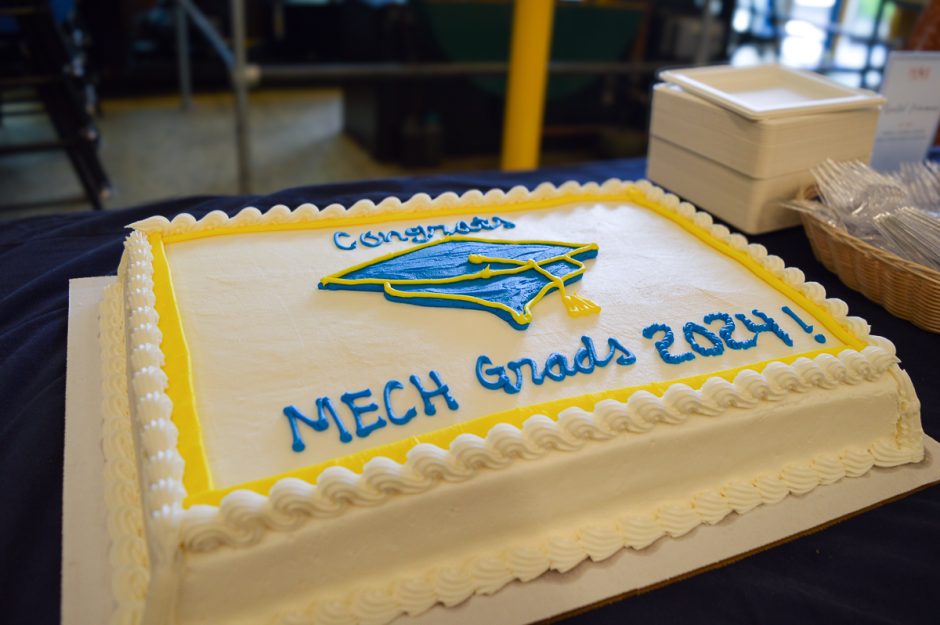
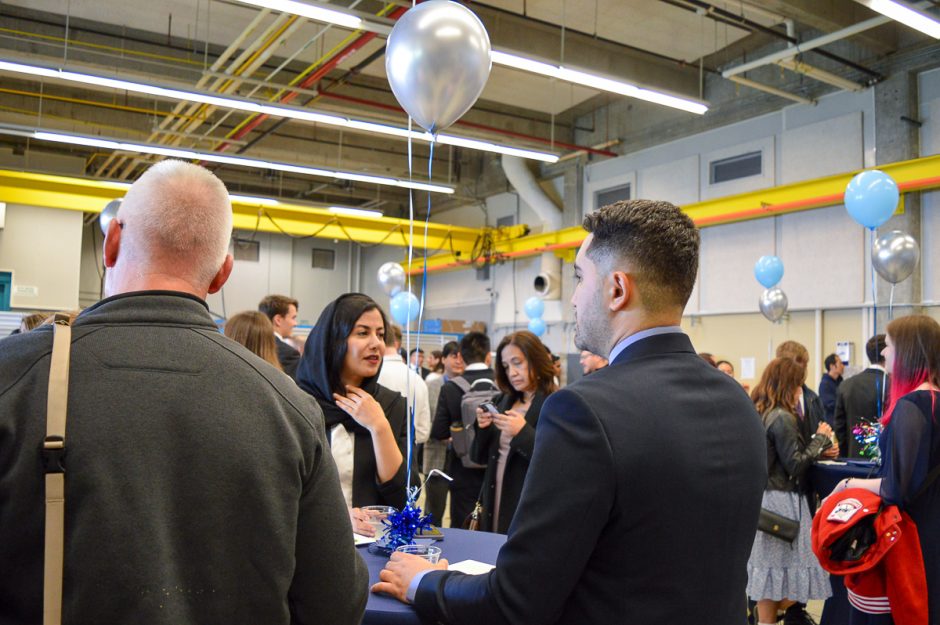
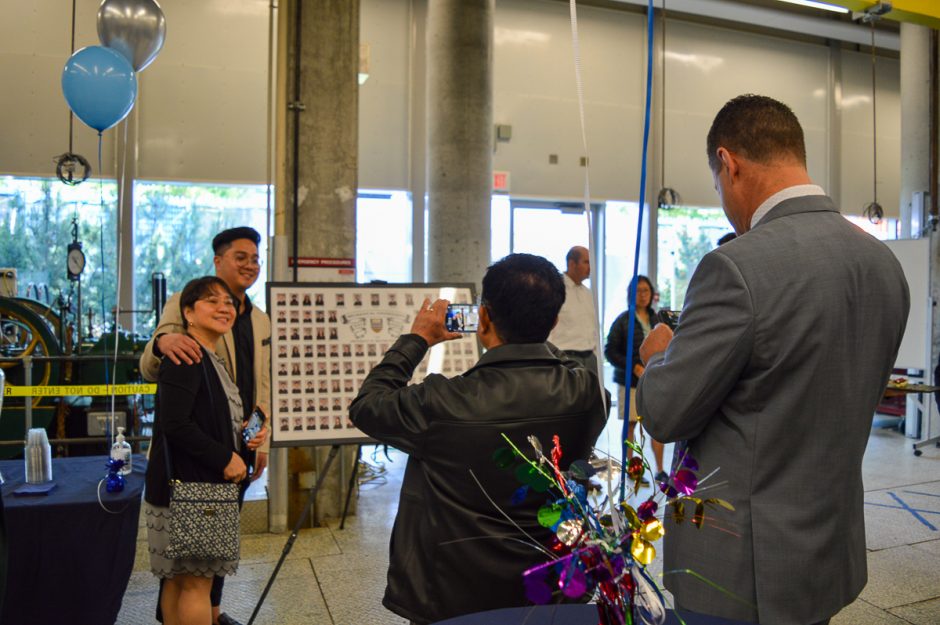
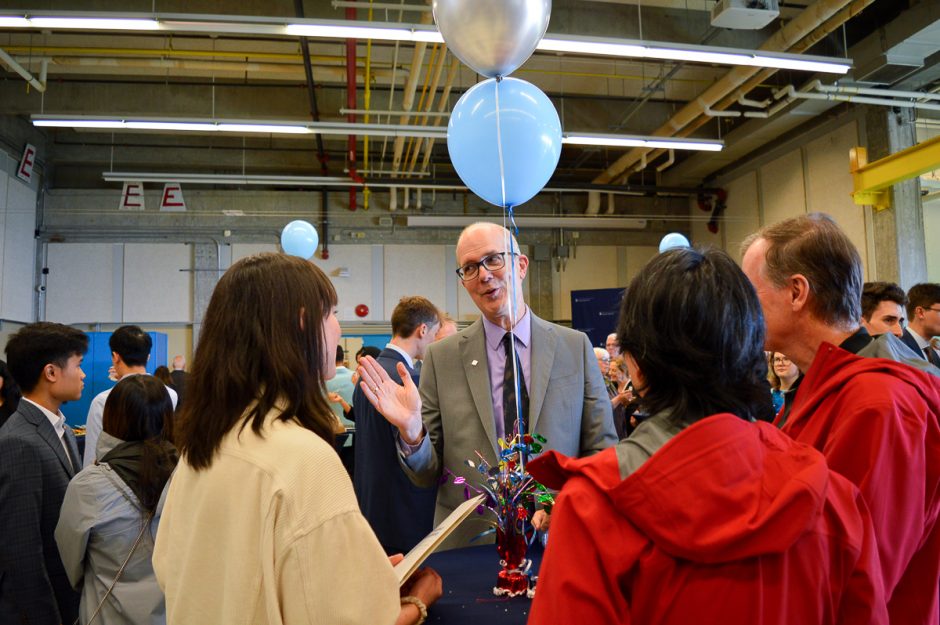
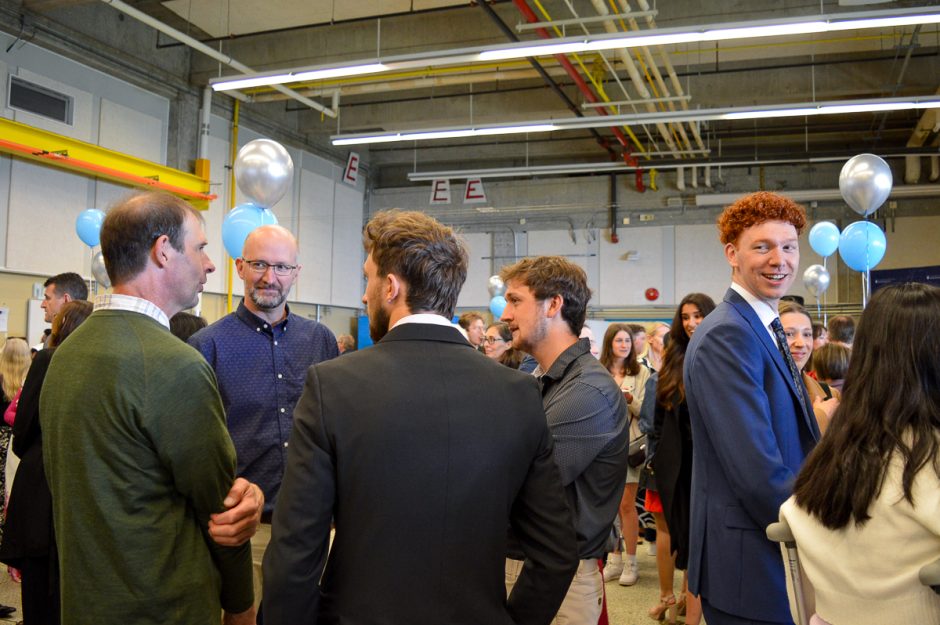
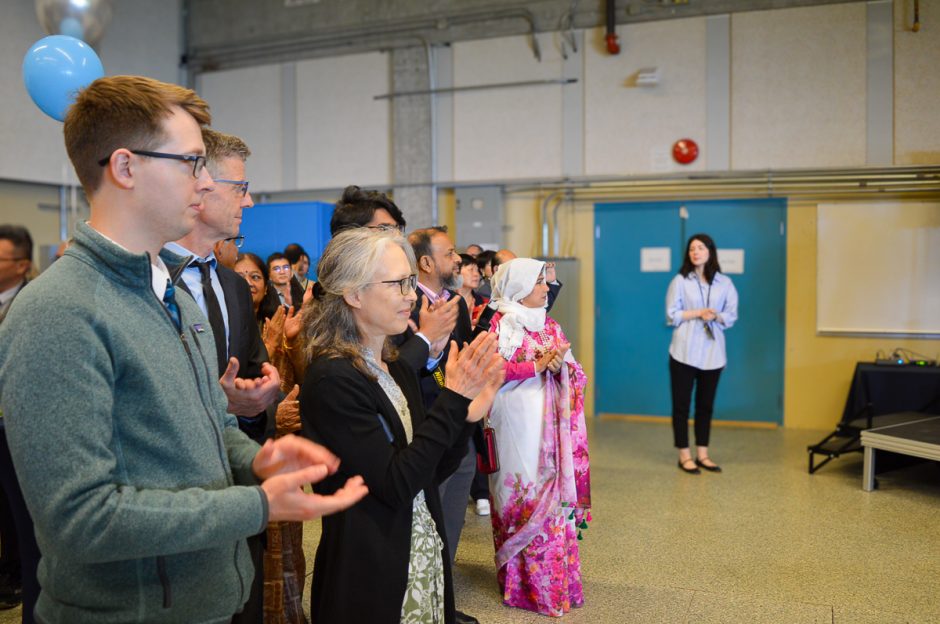
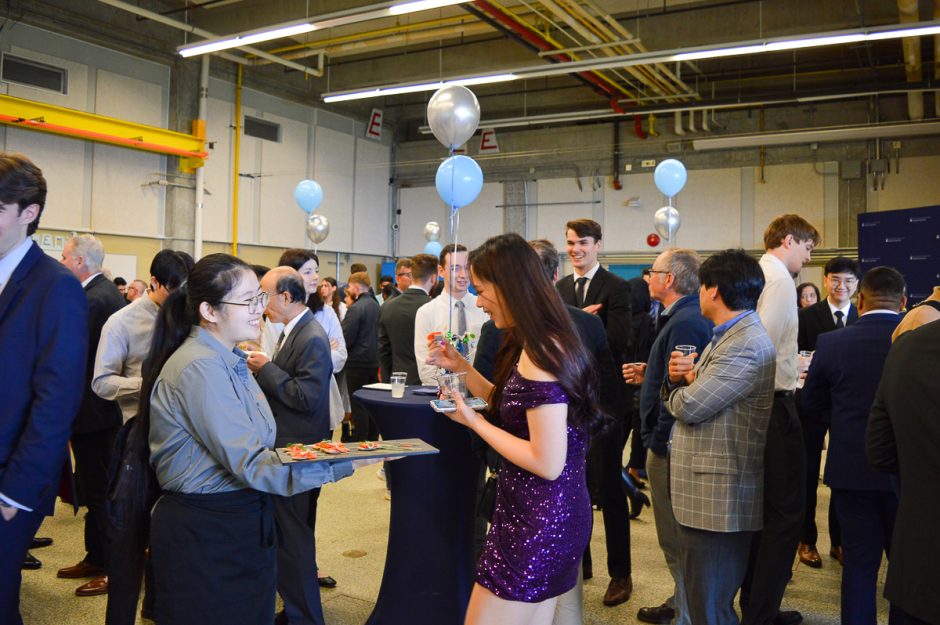
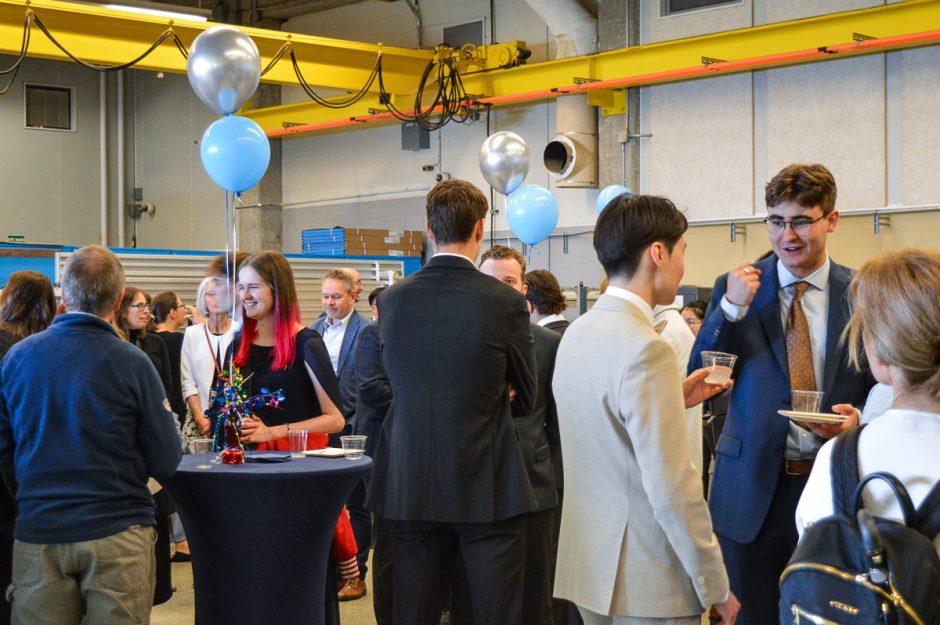
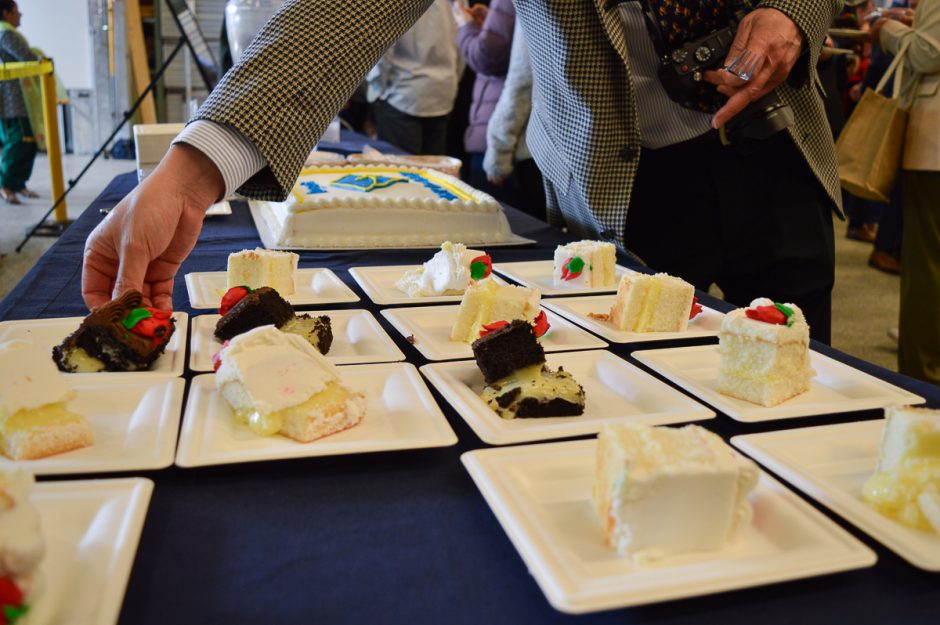
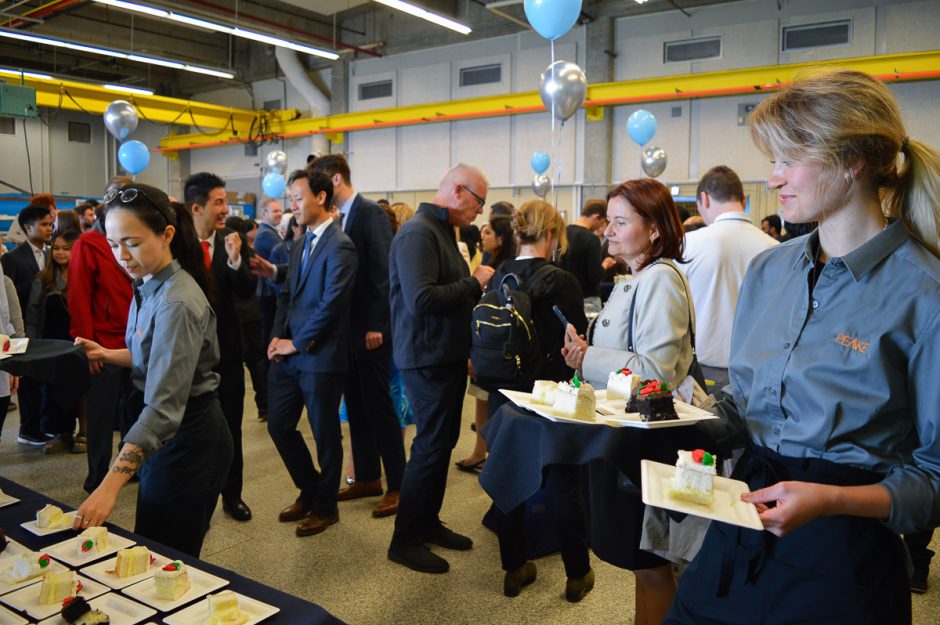
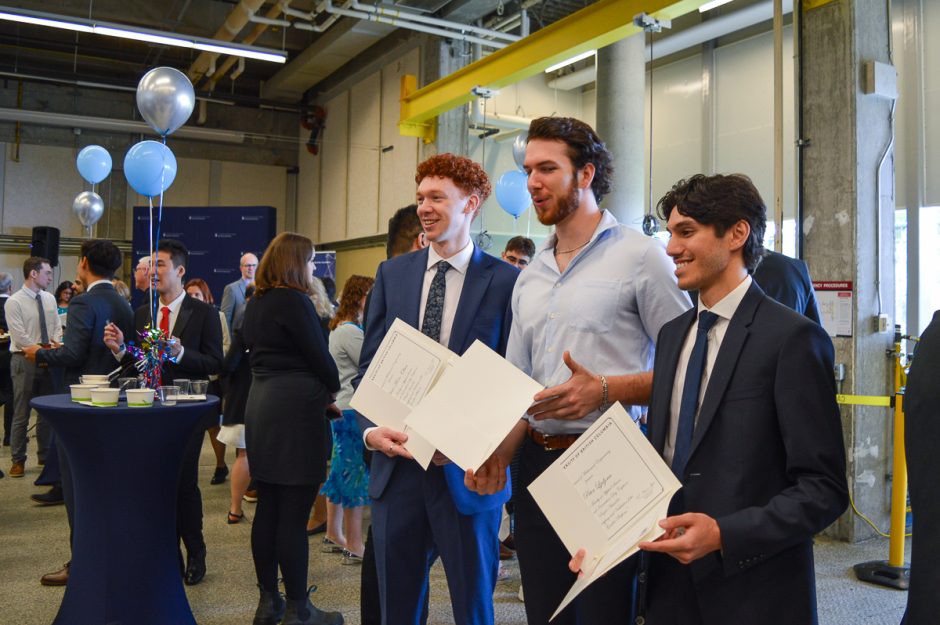
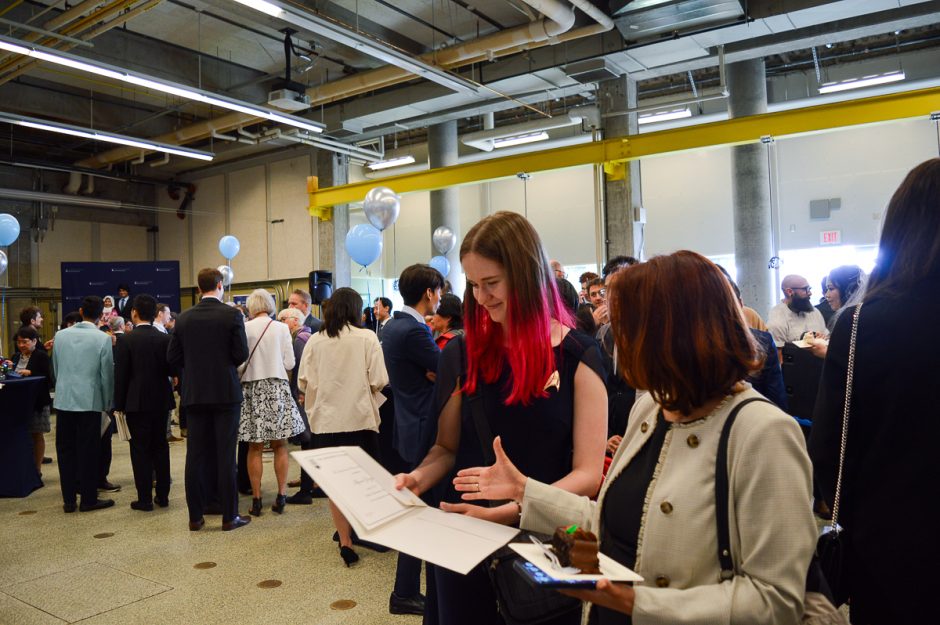
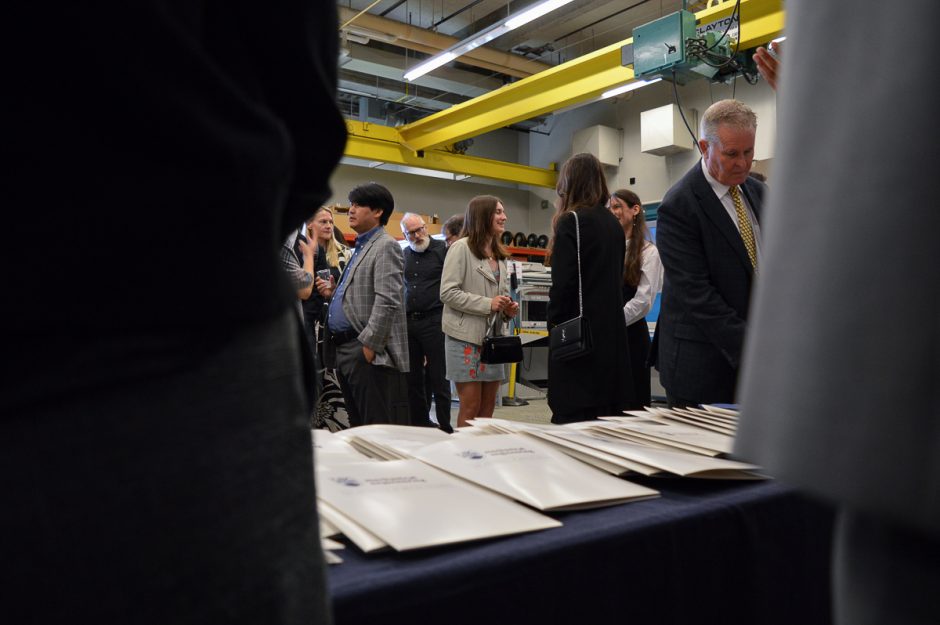
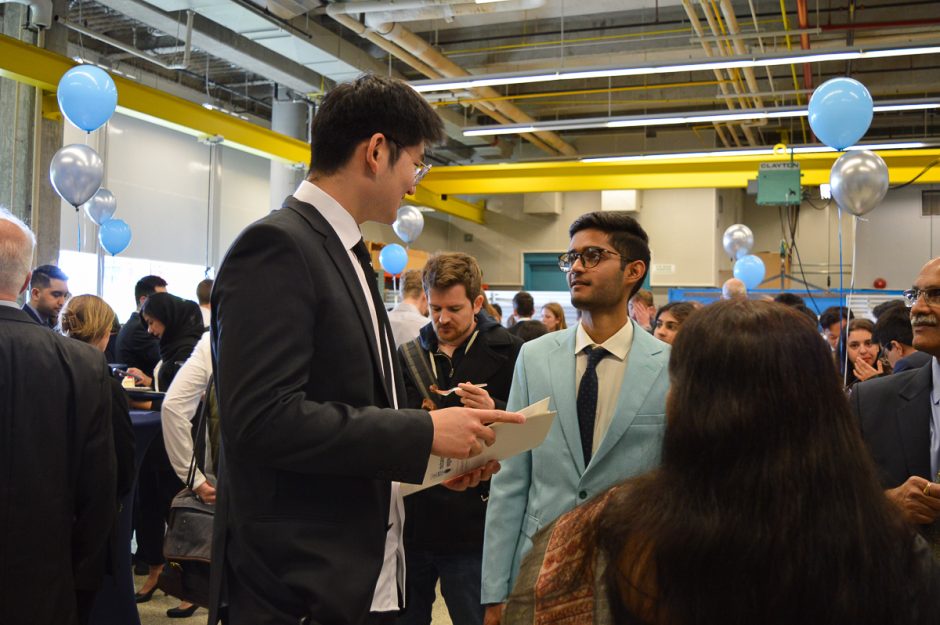
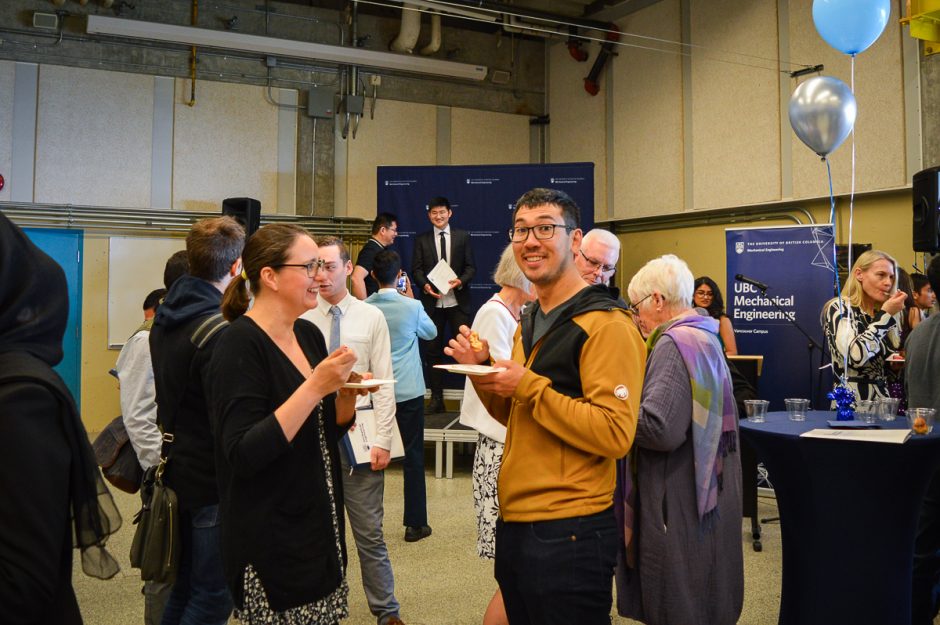
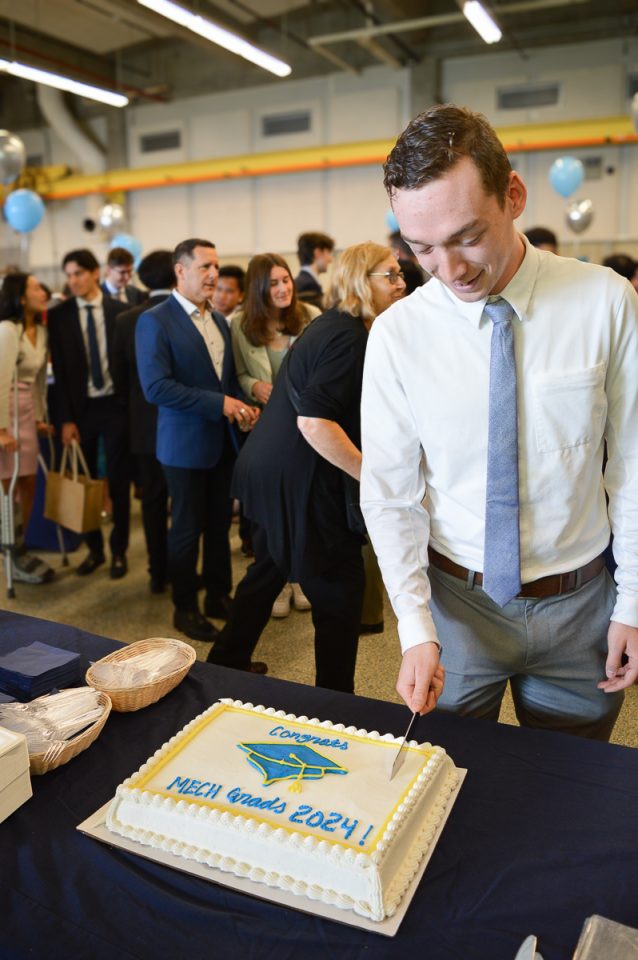
We were honoured to celebrate our spring graduating class on May 29, 2024 with a reception and awards ceremony. Before crossing the stage at the Chan Centre, we brought our students together with their families, faculty and staff to celebrate their achievements and all the hard work that has gone into this moment.
Congratulations to our 2024 graduates on this important achievement, and we wish you all the best as you step forward into your professional life!

Recognizing our Outstanding Students

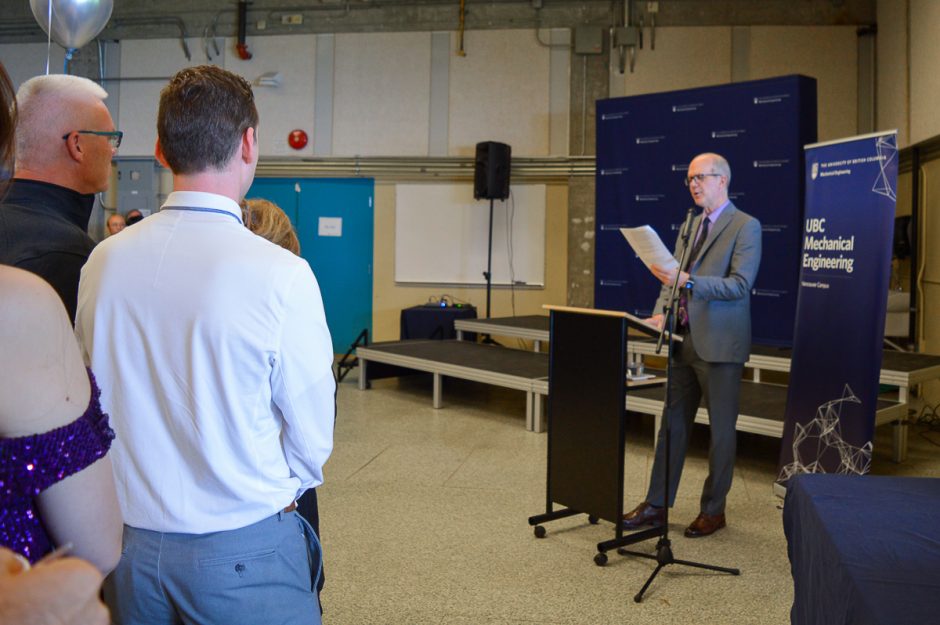
After words of congratulations to the graduating class from Club Mech President Luke Gallant, Department Head Carl Ollivier-Gooch and Capstone Coordinator Bill Rawlings presented awards for outstanding achievements in academic, leadership and design.

Major Awards

2024 recipients of the Letson Prizes, which are given to the top graduate within each Option.

2024 Letson Prize recipients.

Letson Prizes

The Letson Prizes are given to the top graduate within each UBC Mechanical Engineering Option.

The 2024 Letson Prize recipients:

  • Simon Jang, Letson Prize for the Flex Option
  • Taylor Goldblatt, Letson Prize for Biomechanics and Medical Devices
  • David Antoniuk, Letson Prize for Mechatronics
  • Razin Zibyan, Letson Prize for Thermofluids
  • David Downey, Letson Prize for Aerospace

Canadian Society for Mechanical Engineering Gold Medal

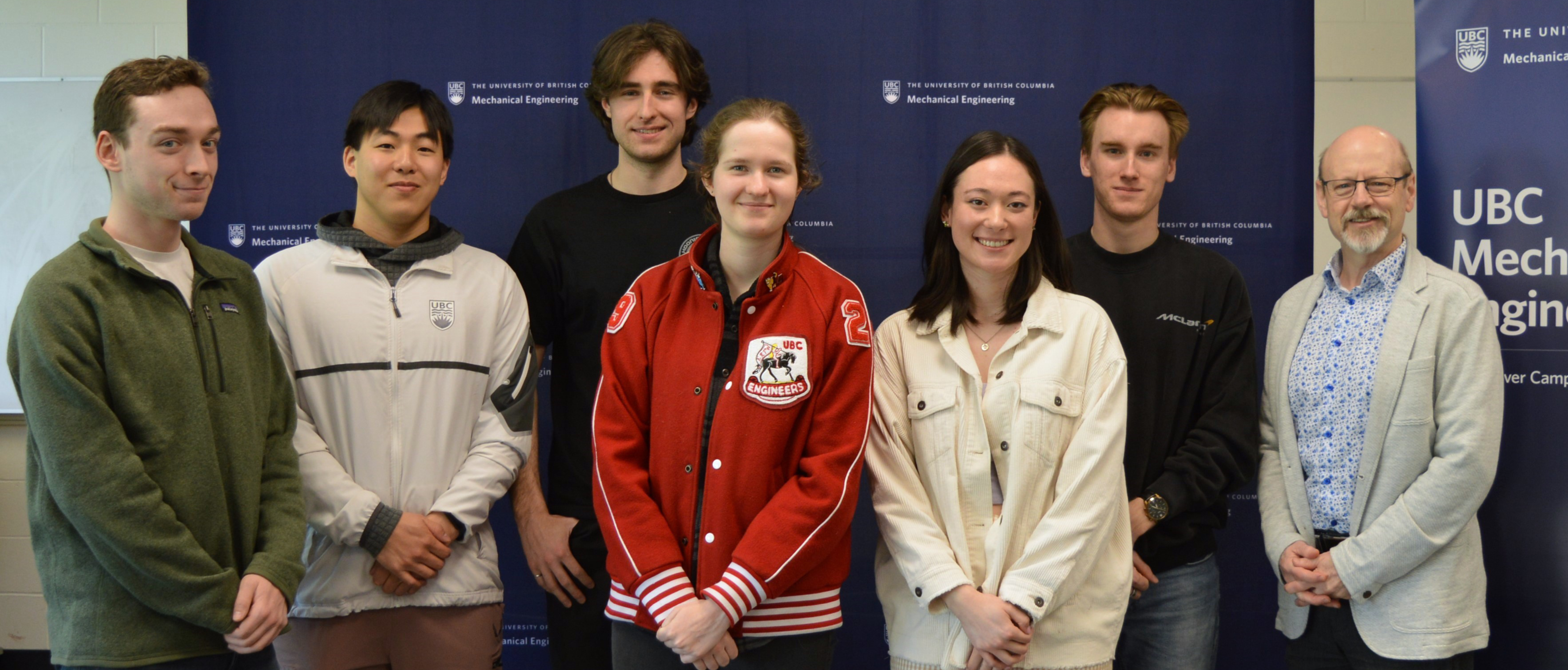
2024 winners of the Martha Salcudean Prize, JAYA-JAYANT Prize, and Canadian Society for Mechanical Engineering Gold Medal.

2024 winners of the Martha Salcudean Prize, JAYA-JAYANT Prize, and Canadian Society for Mechanical Engineering Gold Medal.

The CSME Gold Medal is given for overall outstanding achievement.

  • 2024 Recipient: David Antoniuk.

Dale CHERCHAS Memorial Prize

2024 Recipient: Nile Waldal

This award is endowed in memory of Dr. Dale Cherchas, and recognizes the top student in the area of Controls & Dynamics.

JAYA-JAYANT Prize in Mechanical Engineering

  • 2024 recipient: Behnam Karimi

This prize is endowed by Dr. V.J.Modi, and recognizes a graduate student in Mechanical Engineering for their academic excellence.

Martha Salcudean Prize in Mechanical Engineering

  • 2024 recipient: Nafise Faridi Rad

This award is endowed in memory of former Department Head, Dr. Martha Salcudean, and recognizes a doctoral candidate in Mechanical Engineering for their academic excellence.

Design Awards

2024 recipients of awards for excellence in design.

2024 recipients of awards for excellence in design.

Faculty of Applied Science Design and Innovation Day Capstone Project Awards

These awards recognize the 2024 capstone teams that exemplified stellar performance in innovation and design practice.

  • Team 12: Wave-Maker Design for Test Tank
    Lanz Bosita, Luke Gallant, Ahmed Ma, Keihl Madrid, Rhys Northcote
  • Team 19: Fracture Fixation Plate Bender
    Patric Berard, Sam Bonnell, Muhammad Hakim Zareer, Brandyn Pataki, Brent Schriemer
  • Team 21: Prototyping and Validation of the Gosselin Platform
    Thomas Curalli, Illya Danilevitch, Mason Hughes, Peter Ljuljovic, Karan Mann, Oliver Moes-Okun

Mechanical Engineering Student Choice Capstone Project Award

  • Team 11: 3D Chocolate Printer
    Aksh Dadwan, Bedir Goybulak, Danial Haji-Valizadeh, Sangwon Hwang, Thomas Powley, Jesse Sun

David NIKKEL Memorial Prize in Engineering Design

  • 2024 Recipient: Brent Schriemer, Fracture Fixation Plate Bender team

This prize is awarded to one graduating student who has excelled in design throughout their final-year MECH 45X Capstone course.

Leadership Awards

2024 Mechanical Engineering Student Leadership Award recipients

2024 Mechanical Engineering Student Leadership Award recipients.

Mechanical Engineering Leadership Awards

These awards recognize the following students for their outstanding leadership within our student community, and continuous contributions to student initiatives, clubs and teams.

  • Marc Baroudi
  • Luke Gallant
  • Alyona Glazyrina
  • Reece Haberstock
  • Kyle Swoboda
  • Jessica Wolf

Outstanding Student Leader Award

  • 2024 recipient: Luke Gallant

This award recognizes an undergraduate student who has demonstrated strong leadership skills and has made outstanding contributions to the Department and Faculty, specifically in the realms of student affairs, design competition teams, professional association student chapters, and other related activities.

Degrees with Distinction

Graduating students receive degrees with distinction at the UBC Mechanical Engineering Graduation Awards Ceremony.

2024 recipients of Degrees with Distinction.

  • David Antoniuk
  • Thomas Bement
  • Sam Bonnell
  • Nathaniel Budiardjo
  • Wilson Chen
  • Brett Clayton
  • Raymond Cormier
  • Thomas Curalli
  • Illya Danilevitch
  • Mack Davis
  • Aidan de Jong
  • Lal Deger
  • Graeme Dockrill
  • David Downey
  • Jeffrey Du
  • Arthur Feng

  • Giovanni Ferraresso
  • Luke Gallant
  • Alex Ge
  • Didar Gill
  • Taylor Goldblatt
  • Cory Haberman
  • Muhammad Muztahidul Hakim Zareer
  • Danny Han
  • Miranda Herle
  • Joshua Ho
  • Matthew Howald
  • Matthew Jaffey
  • Simon Jang
  • Simon Jobst
  • Parsa Khodabakhshi

  • Tate Kolton
  • Douglas Lee
  • Benji Li
  • Peter Lin
  • Sophie Lin
  • Devon Lister
  • Yifei Liu
  • Peter Ljuljovic
  • Jack McColl
  • Oliver Moes-Okun
  • Rhys Northcote
  • Ahram Park
  • Anastasia Peters
  • Quoc Bao Phan
  • Angie Pinto
  • Bill Qu

  • Sarvesh Ramalingam
  • Yasin Ranjbar
  • Rafael Remo
  • Kim Ristimaki
  • Nataniel Schmitt
  • Aman Shah
  • Rhet Vanden Elsen
  • Nile Waldal
  • Tony Wang
  • Lana Whyte
  • Justin Wong
  • David Yang
  • Daniel Youm
  • Owen Zeyl
  • Jose Zhang

Graduate Academic Achievement

Graduate students who have been recognized for academic achievement throughout their degrees.

2024 graduate students recognized for academic achievement.

The following graduate students achieved an overall average throughout their program of above 90%:

  • Babaee Alireza
  • Mohammad Sina Beik Khormizi
  • Nafise Faridi Rad
  • Behnam Karimi
  • Bahram Mammadov
  • Pranav Shrestha
  • Elcin Ulular
  • Mohammad Zandsalimy

Congratulations to all our award recipients, and to all our spring graduates receiving their degrees! We wish you the best as you stride towards your future, and welcome you to our alumni community.

TUUM EST! It is yours!

2024 MECH Graduation Reception & Awards Ceremony Photo Gallery

Workday Student is here!

Student working on a laptop in a shared study space.

As of May 21, all students have access to UBC’s new information system interface, Workday Student! Log in to myworkday.ubc.ca to access your records, including:

  • Course schedule and registration
  • Grades
  • Awards
  • Tuition summary and payment
  • Exam schedule
  • Transcripts
  • Transfer credits
  • Your personal and contact information

Don’t forget to log in to Workday Student before course registration opens, so you can get familiar with getting around and make sure your personal information is up to date!

Note for current students: your courses, grades and credits have been moved from the SISC to Workday. Some discrepancies in these records have been identified and are being fixed. Impacted students will be notified of any discrepancies directly.


Summer Transition Period

This summer, you may need to access both student systems depending on what you need:


Need Support?

All students have been emailed about the transition to Workday, but you can learn more about how to navigate the new system with the following resources:

Tutorials for Undergraduates

workday.students.ubc.ca

Find information on how to complete essential tasks like updating your personal information, planning your degree, registering for courses, paying tuition, and how to find your UBC Advisor (Enrollment Services, Accessibility) in Workday Student.

Detailed Info for Graduate Students

grad.ubc.ca/workday-student-support

Graduate + Postdoctoral Studies has curated detailed information specific to graduate students including technical support and how-to guides tailored to graduate student needs.

Looking for Alumni Transcripts?

Workday is not available to UBC alumni. If you’re looking to order a transcript or replacement document, please follow the instructions at UBC Student Services.

Get Help


Order of the White Rose – Apply by Jun 17

The Order of the White Rose scholarship is open to women in engineering and graduates of any engineering undergraduate program who are planning to pursue an MASc or PhD in engineering.

  • Amount: $50,000
  • Deadline: June 17, 2024, at 15:00 (3:00 pm) Pacific Standard Time (PST)

Eligibility and How to Apply

To be eligible for the scholarship, the candidate must, as of the application submission deadline at her home institution (June 17, 2024 at 15:00 PST), be:

  • A woman
  • A Canadian citizen or permanent resident
  • A graduate of an undergraduate engineering program at a Canadian university and have completed her bachelor’s degree in December 2023, or be in the process of completing it in May or August 2024
  • Enrolled, or in the process of enrolling, in a graduate studies program in engineering (master’s or PhD) to begin the year after receiving her bachelor’s degree. As of September 1, 2023, the candidate must send proof of enrolment to orderwhiterose@polymtl.ca.

How to apply:

  • For application forms and details, visit: orderwhiterose.org 
  • Electronic applications must be submitted via email to ea.assist@apsc.ubc.ca with the subject line: Order of the White Rose – [Last name, first name]: Note: To be fair to all students, late applications cannot be accepted.
  • As of September 1, 2023, the candidate must send proof of enrolment to orderwhiterose@polymtl.ca.