UBC Engineering students set to launch ‘sailbot’ to Hawaii

UBC Engineering students set to launch ‘sailbot’ to Hawaii

This article originally appeared in APSC News.


Raye is the first autonomous, robotic sailboat designed by students to cross the Pacific.

Editor’s note: After an unsuccessful launch attempt in Victoria due to technical and weather challenges, Sailbot announced on September 12 that Raye’s launch is now rescheduled for summer 2023..

Get ready for the next leap forward in autonomous driving—on the water. Raye, an 18-foot-long autonomous sailboat (or ‘sailbot’), will be launching on her maiden voyage from Victoria, BC to Maui, Hawaii this upcoming week.

Built and developed by passionate students from the UBC Sailbot engineering design team, Raye will navigate and sail 2,308 nautical miles (4,274 km) across the Pacific Ocean, without a human crew.

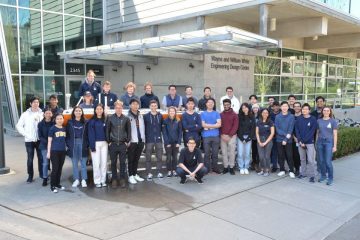
“This has been a real labour of love, creativity and innovation by over 200 engineering students in the last six years,” said Asvin Sankaran, student co-captain. “We’ve successfully tested Raye on land and in water, and are really excited to send her off.”
Learning from the past

Raye represents the culmination of lessons learned from multi-year wins at the International Robotic Sailing Regatta on lakes, as well as the team’s first attempt at an ocean-bound autonomous vessel.

UBC Sailbot launched Ada—named after the world’s first computer engineer Ada Lovelace—in 2016 with the aim of crossing the Atlantic. She tragically met her demise when a hurricane hit, her rudder failed, and she was thought lost at sea.

A year later, to the team’s enormous surprise, the R.V. Neil Armstrong called: Ada had been found and would be returned.

“Taking Ada’s design successes and failures, we were able to redesign most of Raye’s components, such as putting in dual rudders, a stronger carbon fiber hull, and new local and global pathfinding algorithms,” said David Alexander, student co-captain.

The changes in this iteration of the team’s sailbot demonstrate new possibilities for the marine industry. The development of self-sailing vessels promises new and improved navigation tools, collision avoidance systems, and to automate surveillance (reducing the number of vulnerable humans in dangerous situations at sea).
Honouring the past

Fittingly, Raye is named after the late Raye Montague, the first naval architect to use a computer program to generate a rough draft of a ship within 19 hours—compared to the industry’s then-standard of two years on paper.

“Raye’s life is an incredible story of hardship, dedication, and perseverance,” said Ashley Chang, mechanical project lead for UBC Sailbot. “Being an African-American female engineer in the US Navy was a tremendous challenge in the 1950s. And to have overcome those obstacles and revolutionize the naval engineering industry, she is truly inspirational, especially for young women in STEM.”
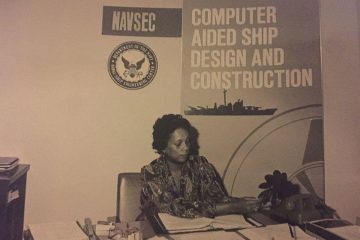
The team wrote to Montague in 2018 for permission to name the boat after her and were delighted to receive her blessing, a few months before her passing.

“She asked me to convey her sincere appreciation to you all and asked me to emphasize this means a great deal,” Montague’s son wrote. “She said that in those days long ago it was difficult for many to visualize the importance of numerical control and the plethora of robotic applications.

“Her words were ‘…this recognition makes me feel like all that work was worth it.’”

Tracking the voyage

Follow Raye through her tracking website (live upon her launch) and by connecting with UBC Sailbot on FacebookInstagram and LinkedIn.

Two NAME students awarded 2022 Jagdeep Singh Bakshi Scholarship

The 2022 Jagdeep Singh Bakshi Scholarship in Naval Architecture and Marine Engineering has has been awarded to two NAME Master of Engineering students, recognizing their excellence in the two areas of the award: Visal Katamaneni for leadership and Yves-Etienne Landry for academic excellence. The Jagdeep Singh Bakshi Scholarship continues the legacy of this late industry leader in supporting future generations of marine engineers and naval architects.

Mechanical Engineering welcomes robotics researcher Dr. Kefei Wen

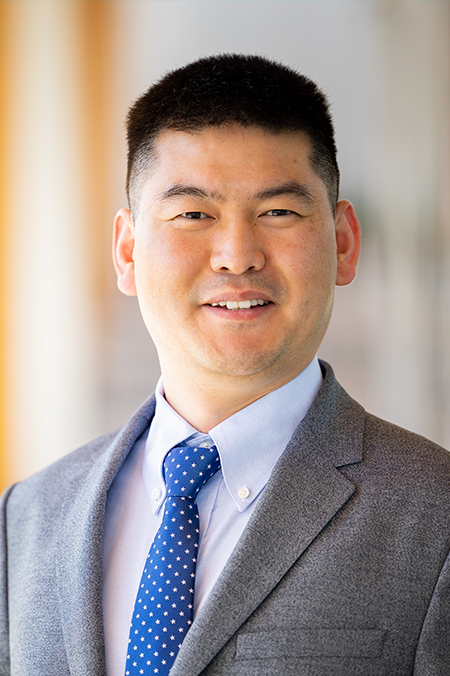
Robotics specialist Dr. Kefei Wen is joining the Department of Mechanical Engineering’s faculty team as an Assistant Professor. Coming to UBC from a postdoctoral fellowship at the Continuum Robotics Laboratory at the University of Toronto, Dr. Wen’s research focuses on physical interaction between humans and robots, specifically parallel robots, and his research interests also include kinematics, dynamics, and control of complex robotic systems.

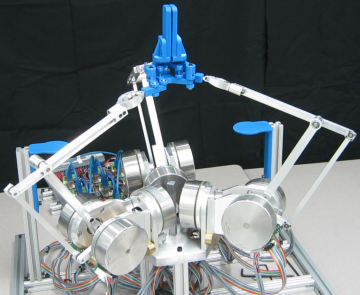
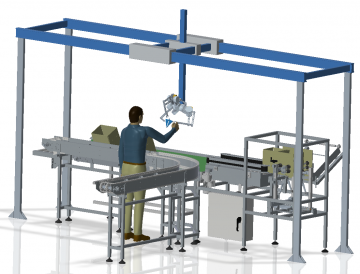
Parallel robotics are frequently used in manufacturing, where multiple jointed parallel legs attached to the ground are used to tilt a platform.  During his Ph.D. studies at Université Laval, Dr. Wen developed a methodology for synthesizing novel kinematically redundant parallel manipulators, robotic systems which are human-friendly, singularity-free, and have outstanding rotational capabilities, making them suitable for physical human-robot interaction.

His work at the University of Toronto involved unifying the modelling approaches of both rigid parallel robots and tendon-driven parallel continuum robots. In 2020 he was recognized with an ASME Journal of Mechanisms and Robotics Reviewers of the Year Award, and in 2021 a paper he co-authored was selected for Honorable Mention by IEEE Transactions on Robotics.

Dr. Wen will join our Manufacturing Automation and Robotics research area, and is starting a new research group, the Advanced Robotics Laboratory.  He joins our teaching team in Term 2 of 2022W as an instructor for Computer Control of Mechatronics Systems. We are pleased to welcome Dr. Wen to the Department of Mechanical Engineering and the UBC community!

A robotic system called a novel kinematically redundant parallel manipulator, with three pairs of jointed parallel legsSimulation of a human reaching out to interact with a robotic manipulator, hung from an overhead gantry.
The first image is a prototype of a novel kinematically redundant parallel manipulator. The second image shows how such a system could be used for human-robot interaction.


Research collaboration on cancer therapy receives CIHR Project Grant

Mechanical Engineering Associate Professor Hongshen Ma and the School of Biomedical Engineering’s Professor Megan Levings have received a Canadian Institutes of Health Research (CIHR) Project Grant to support their research collaboration on chimeric antigen receptor cell therapies used to treat cancer.

The purpose of the CIHR Project Grant Program is to “contribute to the creation and use of health-related knowledge.” Aiming to foster projects with the greatest potential for impact, the Project Grants fund work conducted by individual or groups of researchers on the grounds of the chosen projects’ “significance, impact and feasibility.”

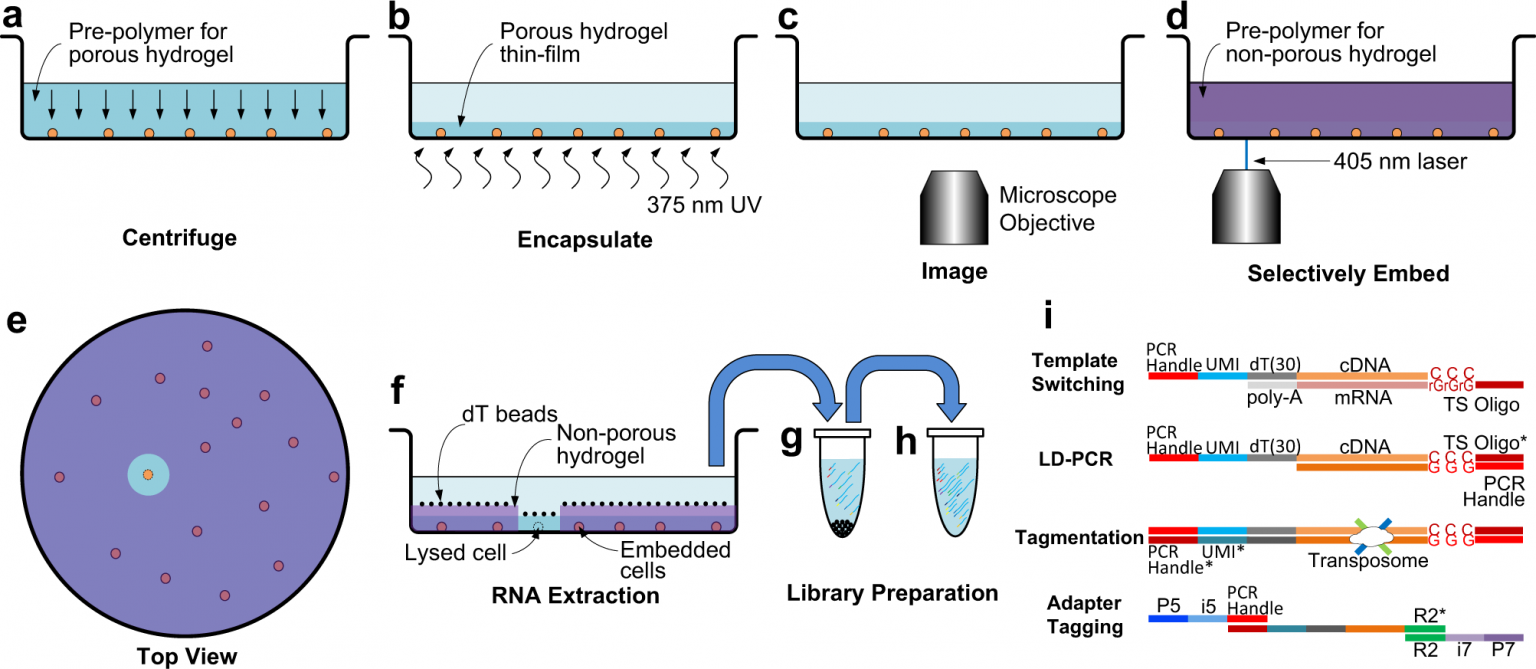
Chimeric antigen receptor cell therapy modifies a cancer patient’s own immune cells to provide them with the ability to fight cancer cells. Dr. Ma and Dr. Levings aim to analyze these engineered cells at the single cell level to improve the design and manufacture of this type of cancer therapy. The CIHR Project Grant will provide $864,450 over five years to support this work.

Dr. Ma and Dr. Levings research is one of several projects from Applied Science to receive CIHR funding from their 2022 spring competition. Read more at: https://apsc.ubc.ca/news/2022/cihr-project-grants-awarded-to-ubc-applied-science-research-cancer-therapy-and-heart.