Dr. Amanda Giang appears on Microplastics Podcast

Dr. Amanda Giang appears on Microplastics Podcast

Mechanical Engineering and IRES faculty member Dr. Amanda Giang is a guest on the Microplastics Podcast by UBC’s Cluster for Microplastics, Health and the Environment. In episode 3, she and Dr. Rashid Sumaila of the Institute for the Oceans and Fisheries discuss how interdisciplinary research is a necessity for informed policy making and how current students are pursuing interdisciplinary training to become better future leaders.

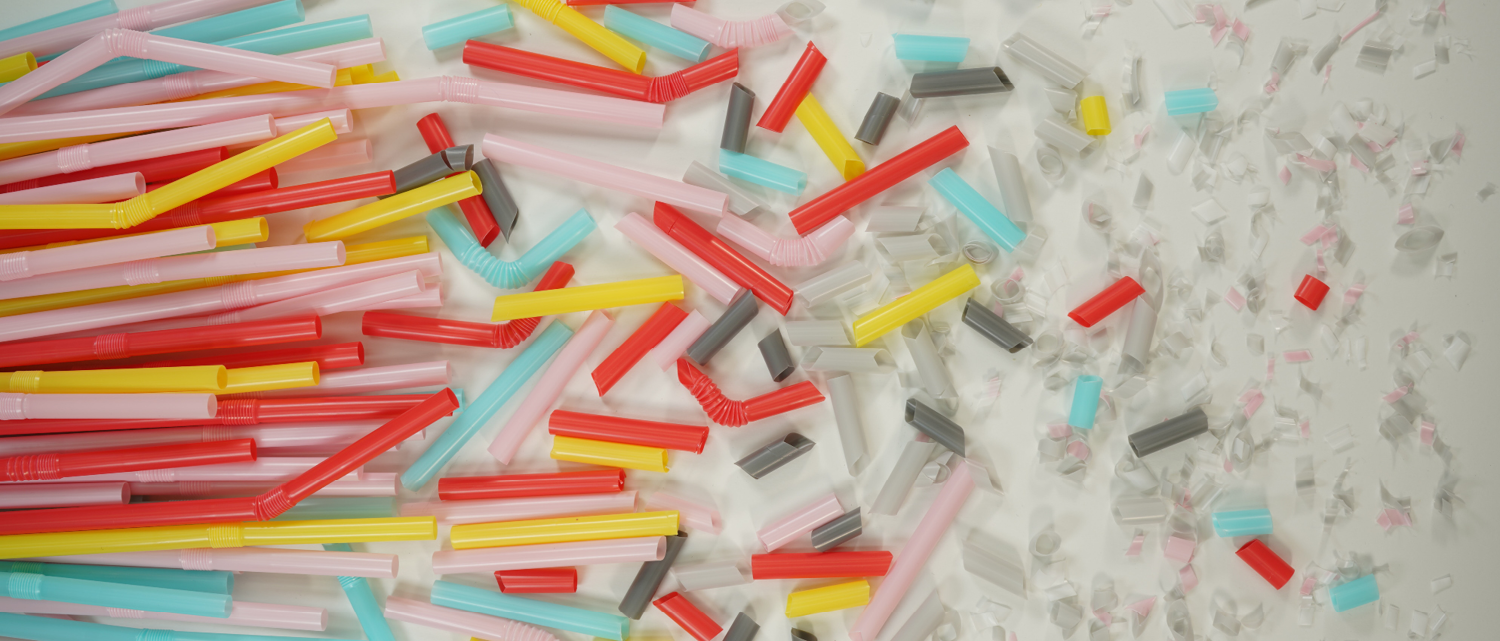
Dr. Giang and Dr. Sumaila are both members of the Microplastics Cluster, which brings together researchers from a variety of disciplines to encourage informed policy making on plastics pollution. An area of evolving concern, microplastics form when plastic waste breaks down and degrades into nanomaterials, which make their way into humans through the marine food chain. The impact of microplastics on human health is still uncertain but as they share attributes with pollutants we have already experienced, waiting too long to make policies could lead to irreversible consequences for the environment. Dr. Giang and Dr. Sumaila explore how research can inform policy development, including the need for an interdisciplinary approach, the process of how research information enters these policy decisions, the impact of young researchers, and using the concept of environmental justice to reframe policy decision making.


Photo by FLY:D on Unsplash.

MECH Researchers recieve Stair Grant for interdisciplinary projects

Interdisciplinary projects by UBC Mechanical Engineering Associate Professors Dr. Hongshen Ma and Dr. Gwynn Elfring have each received Stair Grants from UBC Science. The Stair Grants are designed to promote research collaborations between faculty from UBC Science with those of other disciplines, awarding pairs of researchers who have never previously worked together with an initial year of funding for an innovative new project.

With expertise in technologies that interface with biological systems at the cellular level, Dr. Ma is working with UBC Microbiology & Immunology Professor Pauline Johnson on the project “Macrophage phenotyping using autofluorescence imaging and machine learning.”

Dr. Elfring’s research focuses on mathematical modelling of different kinds of matter, especially complex fluids, and he will be collaborating on “Active matter at the mesoscale” with Professor Anthony Wachs from the UBC’s departments of Mathematics and Chemical and Biological Engineering.

The Stair Grant’s one-year funding supports two graduate students, awarding $20,000 for each student. In addition, a $5,000 in research stipend is provided for project supplies.

For a full list of recipients and projects, as well as application details for future grants, see the announcement UBC Science.

APSC Rising Star – Josh Heieis: Rocketing my way through mechanical engineering

“Your degree is what you make it – take advantage of everything you can do to make it your own.”

Josh Heieis

  • Degree: Bachelor of Applied Science
  • Grad year: 2022
  • Program: Mechanical Engineering
  • Campus: Vancouver

Hi! I’m Josh, and I’m graduating this year from Mechanical Engineering specializing in Thermofluids, with a minor in Physics.

I was born and raised right here in Vancouver, and stayed close to home to go to UBC for my education. Right away in my first year, I joined the design team UBC Rocket, which turned out to be one of the best decisions of my degree. Later on, I did co-op positions at a few companies here in the lower mainland, and a total of 16 months at Tesla down in San Francisco. Now, 6 years after I started, I’m finally graduating, and heading down to New Zealand to start full time at Rocket Lab and keep working on the things I love.

Why did you choose to go into your field of study at UBC?

Back in high school, I spent a lot of time on my school’s robotics team, and had an interest in technology – I closely followed Tesla and SpaceX in particular, and kept up with anything else science or technology related. Combined with a natural affinity for math and physics, these experiences had made me realize that I wanted to do engineering. However, back then I was convinced that I wanted to continue with robotics and programming – so I had my sights set on either Engineering Physics, or Mechatronics as an alternative.

During first year, my focus shifted towards MECH due to what I was hearing about the different programs – MECH seemed to teach more hands-on, direct topics (which is what I was interested in), versus ENPH which focused a lot more on the theory behind engineering topics. In parallel, I had joined UBC Rocket right away when I started first year. I thought the work the team did in that first year was incredible, and it made me want to pursue whichever program would best allow me to learn how to do more of it as best as I could. That program turned out to be MECH, and in particular the Thermofluids option (although I would have gone into the Aerospace option had it been around back then).

What has made your time at UBC memorable?

Without a doubt the defining feature of my time at UBC was my design team, UBC Rocket. The experiences I had were all incredible – from going to competition in New Mexico in first year and placing first in our category, to working on and testing our own rocket engines, to going to competition events and meeting with teams from other schools doing the same thing as us, and not to mention the friends I made along the way. This team ended up shaping my degree almost more than the classes I took.

Honorable mentions go to the MECH 2 design projects, my Capstone project in 5th year, and the co-op program for making it possible for me to work in San Francisco for a year.

How are you applying the skills you learned through your studies at UBC?

I have been fortunate enough to have had several co-op terms at Tesla, where I was able to apply many of the skills I’ve learned in class to make measurable impacts in my team and on the products the company ships. It was also a very valuable learning experience that complemented my courses quite well.

After graduating, I am now starting full-time at Rocket Lab, where I will be applying everything I’ve learned through my university studies (both classes and design team). I am very excited to be able to contribute to the future of space travel.

What advice would you give a student entering your degree program?

Definitely consider all your options of how you can make your degree your own. Co-ops (maybe even more than the standard 5 terms), exchange programs, minors, design teams – there are a lot of ways you can modify your degree to really suit what you want.

I’ve found that the exact program you enter (MECH, ENPH, IGEN, etc) doesn’t matter as much as the other experiences you have that enhance your university experience – both for your personal happiness and for your future career. Your degree is so much more fulfilling when you have these other experiences – having fun at design team competitions, living abroad for a few terms, and meeting many new friends.

How did your studies in the Faculty of Applied Science prepare you for the future of work?

Whatever may change in the future, the foundations of engineering that we learn will remain constant. Having the last few years of my studies being through the COVID pandemic also helped in an unexpected way – we were all forced to change the way we work and study, which will help deal with anything that may come in the future.


Article originally appeared on Rocketing my way through mechanical engineering | UBC Applied Science

Dr. Adam Clare joins Mechanical Engineering and UBC Manufacturing Program

The Department of Mechanical Engineering is pleased to welcome Professor Adam Clare to UBC as a faculty member. Dr. Clare will be supporting the Manufacturing Program at UBC Vancouver, which is run in collaboration with the Department of Materials Engineering. Dr. Clare joins UBC from the University of Nottingham in the UK, where he was a Professor in the Department of Mechanical, Materials, and Manufacturing Engineering (M3), and the Rolls-Royce/Royal Academy of Engineering Research Chair.
In his research, Professor Clare investigates how non-traditional manufacturing methods can be used to create a desired shape while enhancing material properties and creating new surfaces. This research is aimed at creating new methods and materials for use in fields like aerospace and biomedical engineering, which are continuously developing and often require parts and materials with additional functionality or performance. His work involves electrical discharge machining, electron beam melting, laser processing of materials, process monitoring and control, joining technologies, electrolyte jet machining, and additive manufacturing techniques.

Bridging research and application, Dr. Clare serves as Director and Scientific Advisor to Texture Jet Ltd. and Scintam Engineering Ltd., which uses the findings of his research to develop new technologies for industry. He also contributes as an editor to several publications: the Journal of Materials Processing Technology, Precision Engineering, Manufacturing Letters, as well as the International Journal of Machine Tools and Manufacture. Dr. Clare is currently President of the Association of Industrial Laser Users (AILU).

We are excited for Dr. Clare to join UBC as a faculty member in the summer of 2022, and our research and teaching community!

Media Mention: CBC asks Dr. Steve Rogak about cloth masks and Canadian CAN95

CBC: Your questions answered: Should I wear a mask if I’ve already had COVID? As Canadians look ahead to summer vacation plans with friends and family, there are still lingering questions about which safety precautions are necessary and which ones are overkill, now that public health restrictions have relaxed. Many of you sent in questions after reading this article about how to navigate a mask-optional Canada. CBC News followed up, and got the answers you were looking for.

Media Mention: CBC talks to Dr. Rogak on how masks are still effective & recommended indoors, despite relaxation of rules in Canada

CBC News: Should you wear a mask? Advice for navigating a mask-optional Canada  |  Experts who study airborne particles still recommend wearing masks in crowded indoor settings. With masks now optional in most public spaces and Quebec recently joining the rest of Canada in relaxing its rules, the mental gymnastics required to figure out whether or not masking is necessary might feel tantamount to performing advanced calculus. Yet even as the rules shift for where masks are required, some people may still choose to wear them — as they did before mandates came into effect.

MECH undergraduate duo wins 2nd place in Simon Cox Design Competition

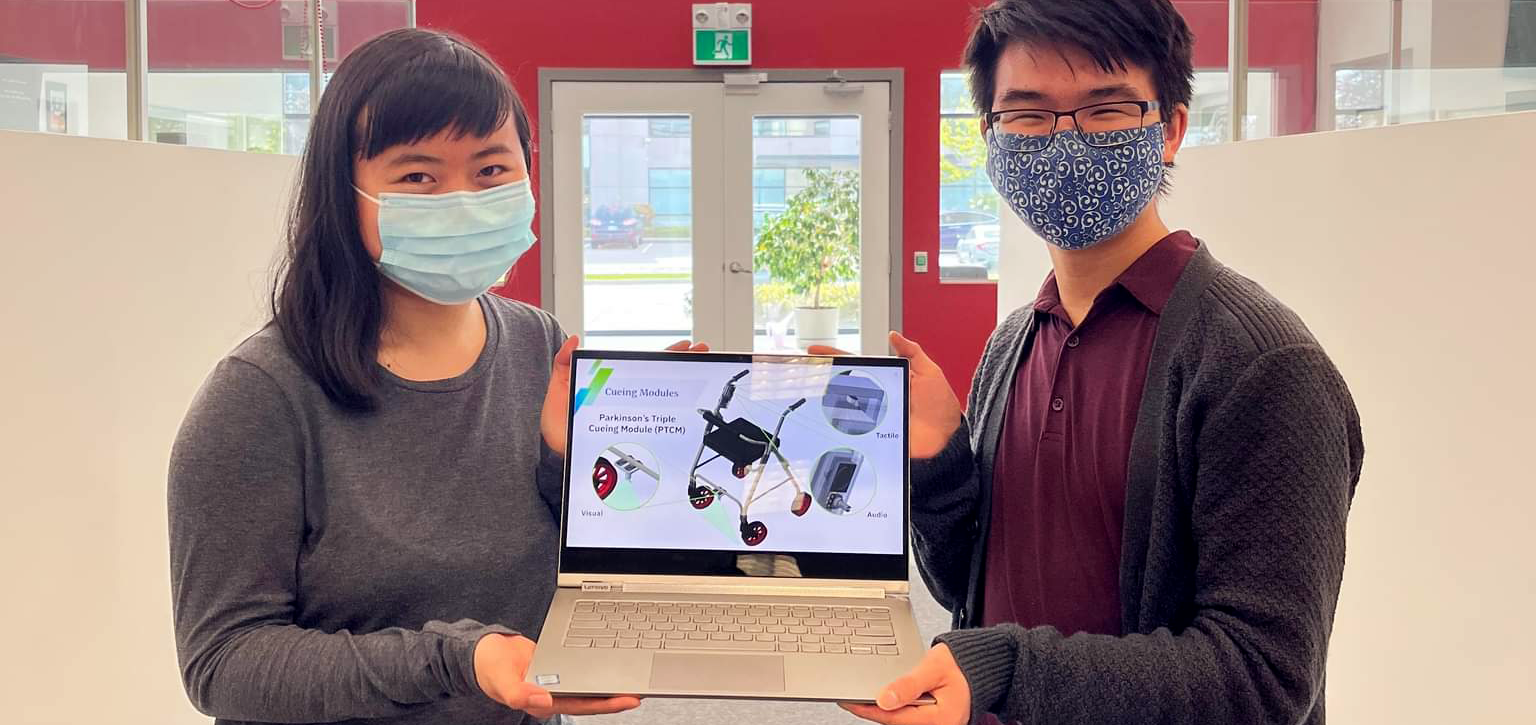
Undergraduate students Phoebe Cheung and Andrew Mah have won the Nancy Lear Achievement Award for their design of a Triple Cueing Module to help people living with Parkinson’s. This $2000 award is given to the second-place winners of the Simon Cox Student Design Competition, in which student teams collaborate with a peer with a disability to bring ideas for assistive technology to life. The competition is run by BC non-profit Technology for Living, which strives daily to improve the quality of life for BC residents living with disabilities through assistive technology, innovation, and respiratory care. While showcasing student design and innovation, the competition also raises awareness about the everyday issues facing British Columbians living with neuromuscular disorders and spinal cord injuries.

Cheung and Mah designed a device to help people living with Parkinson’s break out of freezing episodes, wherein walking is temporarily interrupted and falls can take place due to the upper body’s continued momentum. Freezing can be broken by sensory cues, and the team’s device utilizes a laser, sound, and vibration to provide the user with multiple kinds of stimuli. The module can be mounted to any walker, and can be activated when necessary by buttons near the handle. The team was supervised by Mechanical Engineering Professor Jon Mikkelsen. Learn more about the team’s design in their video presentation from the first round of competition.

First and third place in the Simon Cox Student Design Competition were also awarded to UBC students. First place was awarded to a catheter drainage device giving users with limited fine motor control more independence, designed by engineering students at UBC Okanagan. Third place went to a rain protection device for wheelchair users with limited hand mobility, designed by UBC Vancouver students. The Peer’s Choice Award – selected by vote from community members with mobility challenges – went to a switch-activated catheter release valve designed by a BCIT team. Watch the online award gala of the competition finals to learn about all the winning designs.

Graduate Student Profile: Mohammad Zandsalimy on studying for his PhD in Computational Fluid Dynamics at UBC

Graduate + Postdoctoral Studies talks to Mechanical Engineering PhD student Mohammad Zandsalimy on why he has chosen UBC to continue his study of computational fluid dynamics under supervisor Dr. Carl Ollivier-Gooch, and what he hopes to accomplish with his degree. “Since a very young age, I have been passionate about learning topics in science and engineering. Knowledge and wisdom enable me to help humanity reach beyond the stars. A Ph.D. degree at UBC presents new challenges to sharpen my skills in Computational Fluid Dynamics and makes me a mature scientist to reach my ultimate goal.”

NAME MEL Student Lucky Garg awarded SNAME Scholarship

The Society of Naval Architects and Marine Engineers (SNAME) has awarded Master of Engineering Leadership (MEL) student Lucky Garg the Wilbur N. Landers Graduate Scholarship for Advanced Study in Naval Architecture, Marine Engineering, and Ocean Engineering. Open to SNAME members, this scholarship awards $4000 USD towards a year of study to candidates pursing Master’s-level education in maritime fields.