Media Mention: Do we really need to mask up outdoors? Dr. Steven Rogak comments on the need to evaluate risk.

Media Mention: Do we really need to mask up outdoors? Dr. Steven Rogak comments on the need to evaluate risk.

MONTREAL GAZETTE: Despite emerging science that has changed what we know about how the coronavirus is transmitted, there’s been one constant over the past year: that outdoors is safer than indoors. But lately that message is getting murky, with Quebec recommending the wearing of masks outdoors, then rescinding the recommendation — kind of, and Ontario locking up tennis courts, banning golf and temporarily closing playgrounds — before opening them again.

So what’s changed? Is there new information suggesting that we’ve been underestimating the strength of virus transmission outdoors? Or is it simply an example of messaging that doesn’t reflect the science?

New Paper from MEMs Lab increases accuracy in measurement of eye movements

The Mechanical Engineering Micro-electro-mechanical systems (MEMS) Lab has published a new paper “A Fusion Algorithm for Saccade Eye Movement Enhancement with EOG and Lumped-element Models”. Working in the MEMS Lab as a PhD student under supervisors and co-authors Dr. Mu Chiao and Dr. Clarence de Silva, author Hiroshan Gunawardane has developed an algorithm which cleans up the noisy signals generated by electrooculography (EOG) measurements of tiny eye movements called saccades.

Gunawardane describes how EOG measurements of these eye movements on their own can be hard to use: “Saccades are rapid eye movements when you look from one point to another without considering the background. We usually use those to look here and there all the time and EOG can be used to record these. However, EOG signals are very noisy because of reasons like artifacts (brain signals, muscle signals, eye blinks, etc.)…”  To confirm the effectiveness of their algorithm in reducing this noise, it was compared against a camera-based eye-tracking system at the Department of Psychology’s Vision Lab, in partnership with co-authors Dr. James Enns and graduate student Raymond MacNeil. The team of co-authors also includes third-year engineering physics undergraduate Leo Zhao, who has been assisting with the research.

The researchers will continue to explore how this algorithm can be applied, such as in the development of virtual reality headsets, and medical applications like the diagnosis of eye conditions.

Find the “A Fusion Algorithm for Saccade Eye Movement Enhancement with EOG and Lumped-element Models” at DOI: 10.1109/TBME.2021.3062256.


Photo by V2osk on Unsplash

Statement on Anti-Asian Racism & Resources

In light of the recent shootings in Atlanta and the rise of anti-Asian racism in the past year, we would like to join President Santa Ono and the Faculty of Applied Science in acknowledging and condemning harassment and violence against Asian and Pacific Islander communities, and all forms of discrimination. These are long-standing issues which have affected members of our university and Vancouver communities, and we reaffirm our commitment to stand in solidarity with those facing racism and discrimination, and to provide a safe and respectful environment for our students, faculty and staff. Please find the APSC statement and resources below. You can also reach out to the Mechanical Engineering Equity, Diversity, Inclusion and Indigeneity directly at edi@mech.ubc.ca.

– Equity, Diversity and Inclusion Committee, on behalf of UBC Mechanical Engineering


UBC Applied Science Condemns Anti-Asian Harassment and Violence

Recent escalations of anti-Asian harassment and violence, including last week’s shooting in Atlanta, are horrific reminders of the racism faced by the Asian and Pacific Islander community every day.

UBC Applied Science condemns these acts in the strongest possible terms. We are committed to providing a safe environment for all members of our community.

A list of resources has been compiled for anyone who has experienced or is concerned about discrimination and harassment at UBC:

Get help

Learn more

Be a better bystander


“Racism and bias have no place in our community and that we have zero tolerance for it.”

— UBC President Santa Ono

Original APSC statement posted here: https://apsc.ubc.ca/news/2021/03/ubc-applied-science-condemns-anti-asian-harassment-and-violence


UBC experts team up to tackle air pollution with network of sensors

UBC NEWS: Air pollution is an urgent problem linked to as many as nine million deaths per year worldwide and 14,000 annually in Canada, primarily from related heart and lung diseases. A group of UBC experts are determined to mount a rapid response through research.

The team, known as Rapid Air Improvement Network (RAIN), is planning to use a network of air quality sensors, mobile monitoring and sophisticated analysis instruments to locate and study air pollutants with the detail needed to support fast, effective interventions.

They plan to install an air quality sensor network on the UBC campus this summer, to leverage the university’s traffic, population and operations data which can be quickly tuned to improve air quality. The project will also outfit a mobile monitoring station that will be used further afield, including communities affected by wildfires and other areas in urgent need.

Grad Students Compete in 2021 Three Minute Thesis Heat

Graduate student research topics

On February 25, five graduate students from the Department of Mechanical Engineering faced off on Zoom to see who could best explain their thesis research in three minutes or less. The Department’s second annual 3 Minute Thesis heat challenged graduate students to hone their communication skills by packing their complex research projects into a quick presentation that effectively communicated their work and its importance using only one slide, no audio or video, and no props.

Participants included both master’s-level and PhD students, researching a range of topics:

Nikoo Soltan  |  MASc Student, Supervisors: Dr. Peter Cripton & Dr. Gunter Siegmund
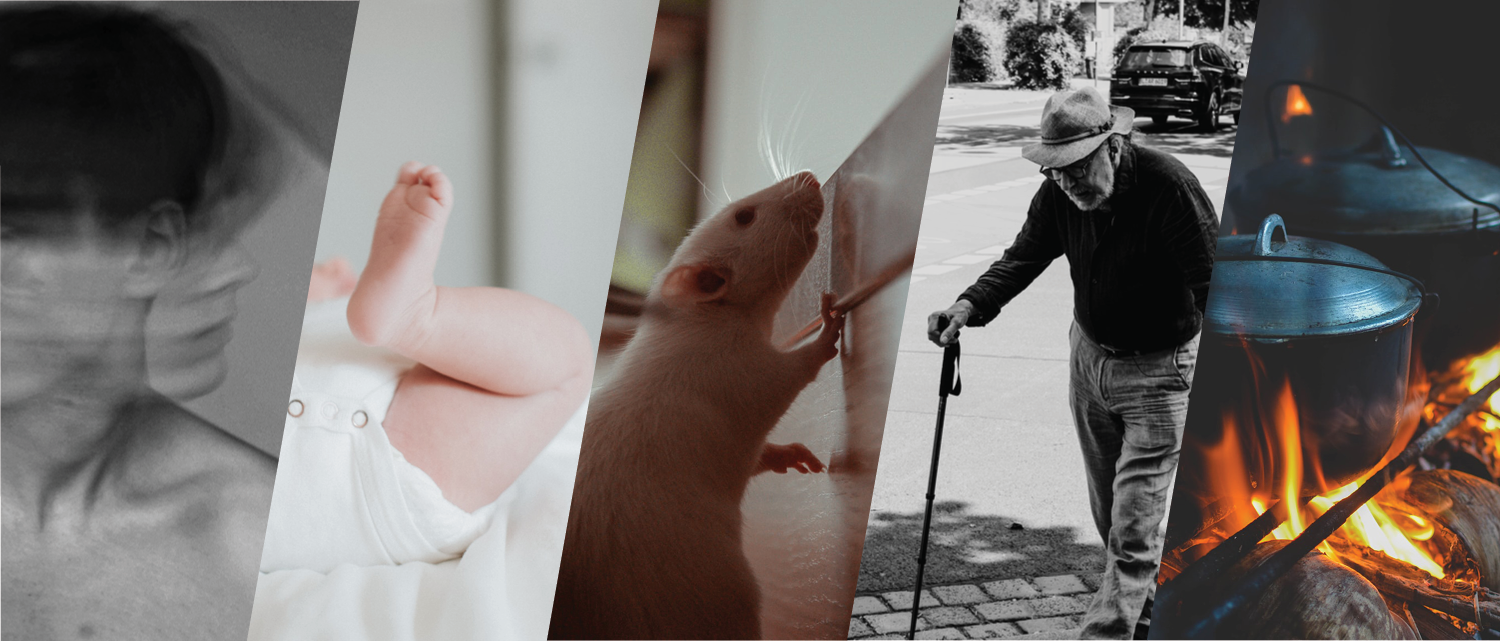
Soltan discussed the difficulty in detecting soft tissue and nerve damage caused by whiplash due to its invisibility in imaging technologies like X-ray. By studying the way different kinds of collisions affect the head and neck on animal models, Soltan hopes to shed light on how soft-tissue injury is caused.

Ammarah Kaderdina  | MASc Student, Supervisor: Dr. Antony Hodgson
If misdiagnosed, developmental hip dysplasia in infants can cause health problems later in life. 3D ultrasound is shown to be a more effective diagnosis tool than the current standard, 2D ultrasound, but it is too expensive for many pediatric practices to provide. Kaderdina is looking to reconstruct 3D ultrasound volumes from 2D ultrasound image frames, with the primary focus on accurately location-tagging the image frames.

Shayan Heydari | MASc Student, Supervisor: Dr. Rajeev Jaiman
Rats’ whiskers act as a kind of radar, picking up vibrations in the air which can tell them many things, including the shapes of objects in their vicinity. As air flows past them, whiskers create vortices, and by studying this mechanism Heydari hopes to lay the groundwork for creating whisker-like location sensors which could be used in robotics.

Iraj D Hamani | PhD student, Supervisor: Dr. Thomas Oxland
Spinal deformity affects many seniors who once had healthy backs. Hamani is working to understand the role muscles play in this shaping complex skeletal system as the body ages, particularly their mechanical properties. By understanding the specific muscles involved, treatment could be developed to strengthen them, preventing this debilitating condition.

Mrinmoy Chakraborty | PhD student, Supervisors: Dr. Naomi Zimmerman, and Dr. Amanda Giang
In many countries, cooking and heating are done by burning solid biomass fuels like firewood and dungcakes, contributing to poor indoor air quality and leading to higher mortality rates. In situations where the transition to cleaner fuel might be slower to achieve due to fuel price and behavioural reasons, Chakraborty seeks to understand if better ventilation design can more quickly alleviate this health impact.

Presenters spoke to a general audience of non-experts and a panel of faculty judges.  Lecturer Adrianna Eyking, Dr. Dana Grecov, and Dr. Lyndia Wu brought expertise in technical communication, fluid mechanics and dynamics, biomedical, and mechatronics subjects to their deliberations, but the audience was also responsible for selecting a People’s Choice winner. In the end, both the experts and the audience agreed: congratulations to Shayan Heydari for winning both the MECH First Place title and People’s Choice award! He will receive a $150 Amazon gift card as a combined prize for winning both titles, and will advance to the UBC 3MT Semi Finals.

Semi-Final competitors will submit their three-minute presentations via video, and after adjudication, and finalists will be announced on March 12th. The UBC Final will be in live virtual format on March 31st from 12 – 1:30 PM. Register here to view the competition, and find out more about the UBC 3 Minute Thesis at https://3mt.grad.ubc.ca.

Congratulations to all our presenters for taking part in this challenge!


Photos left to right by Adrian Swancar, zelle duda, Oxana Kuznetsova, Miikka Luotio and MD Duran on Unsplash.