Congratulations to the class of 2020! We’re excited for you to celebrate your university achievements, and to embark on your next chapter and the bright future ahead.
If you couldn’t make the Virtual Graduation Reception and Awards Ceremony on November 23rd, you can watch the recording here. It features words from Department Head Dr. Steve Feng, as well as special guest Dean James Olson, and and a toast to the graduating class by NAME graduate and SNAME Chair Jasbir Singh. Faculty members Professor Jon Mikkelsen, Dr. Chris McKesson, Dr. Clarence da Silva, Dr. Gary Schajer, Dr. Sheldon Green, Dr. Yusuf Altintas also offer their congratulatory messages to our November 2020 graduates!
Ten Canadian engineering deans are listed on the recently-released Stanford University’s published list of 1965-2019 top 100,000, or 2% in their field, scientists in the world. The list was created based on a rigorous composite indicator of 6 metrics over 1965-2019.
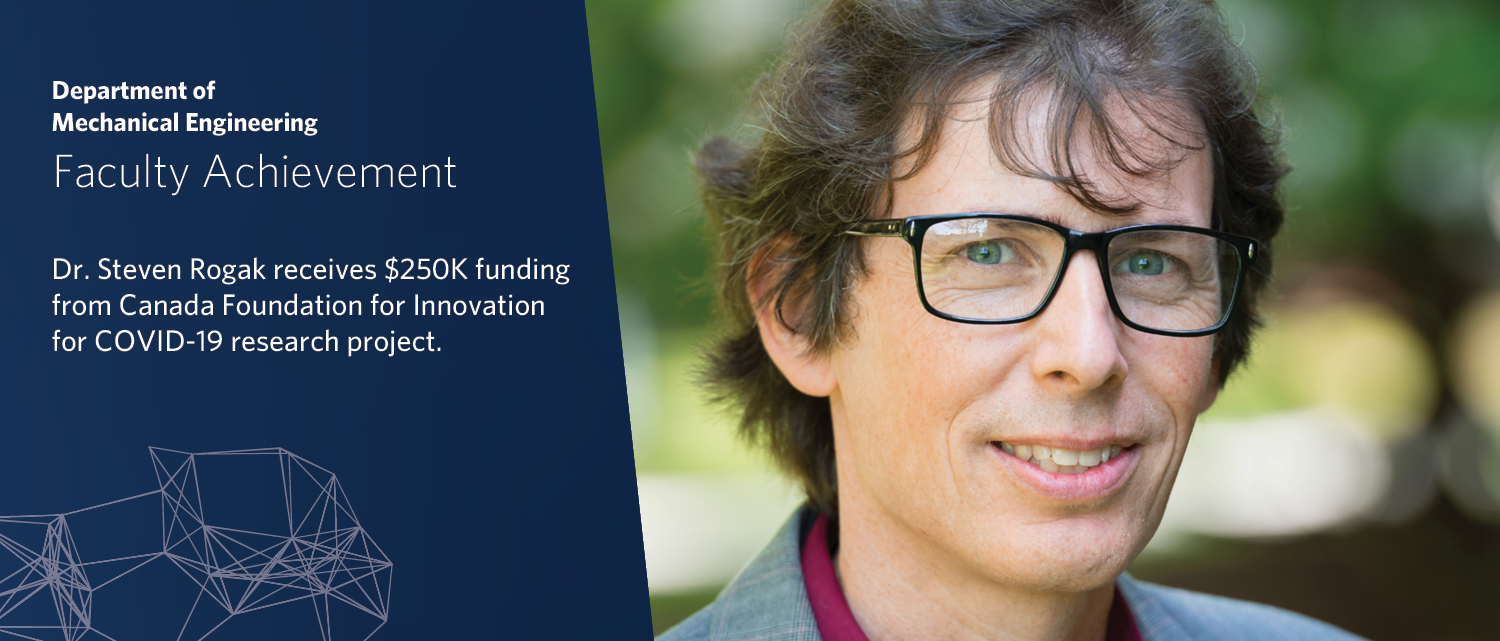
Steven Rogak, a mechanical engineering professor at the University of British Columbia, has been awarded $250,000 through the Canada Foundation for Innovation’s Exceptional Opportunities Fund to “cover the urgent need for equipment” for his ongoing research related to COVID-19.
Rogak’s project, which aims to assess the effect of aerosol and droplet control measures in indoor spaces, is one of five projects led by UBC researchers to receive support through the fund. The funding was announced today by the Honourable Navdeep Bains, Minister of Innovation, Science and Industry.
“Canadian researchers and scientists are helping to protect our health and safety and are key to finding our way out of the COVID-19 pandemic,” said Bains in the announcement. “With this funding through the Exceptional Opportunities Fund, the Government of Canada is ensuring these talented Canadians have the equipment and tools to support them in their very important work.”
The Exceptional Opportunities Fund is “designed for those very few instances when an exceptional research opportunity would be missed if a project had to wait to undergo the normal course of a national competition before a decision could be rendered.” Seventy-nine projects at 52 universities and research hospitals, colleges, polytechnics and Cégeps across Canada will receive a total of $28 million in research infrastructure support through the fund.
As a new UBC Public Scholar, Mechanical Engineering PhD student Pranav Shrestha is working toward developing an inexpensive microscope capable of detecting sickle cell disease, increasing access to screening in rural communities. “In this project, we plan to explore the feasibility of inexpensive and portable alternatives to conventional screening techniques. We plan to develop an inexpensive microscope capable of detecting sickle cell disease, which has the potential to increase the access to sickle cell screening in rural communities.”
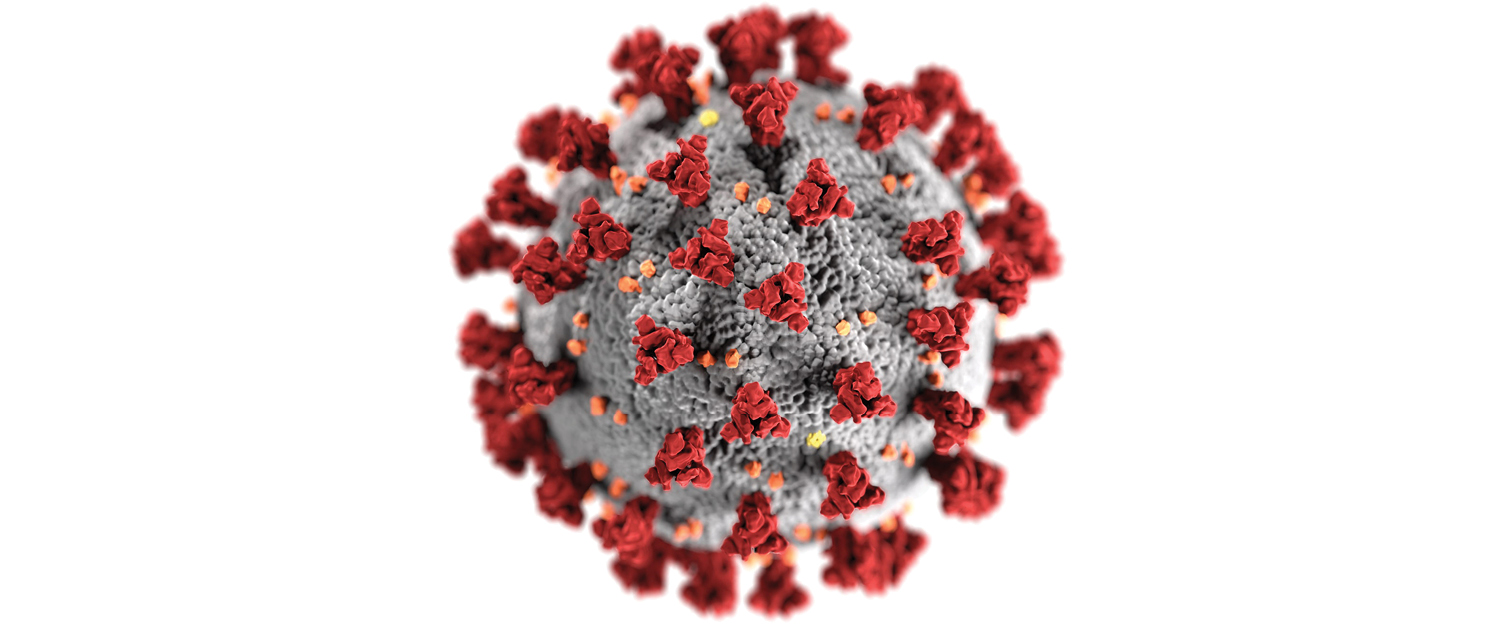
At its heart, mechanical engineering is the understanding of energy transfer and forces, physics concepts not usually associated with medicine. However, even at the scale of a human cell, those concepts are at play, and understanding them could be the key to designing effective treatments. SARS-CoV-2 is a tiny particle that has stopped the world, but even it obeys the laws of physics.
Dr. Mauricio Ponga, Assistant Professor at UBC’s Department of Mechanical Engineering, has applied his expertise in applied solid mechanics and computational mechanics to the problem that is plaguing scientists all over the world: how can we stop SARS-CoV-2 from entering a cell and reproducing? He has found a part of the answer, and it’s the amount of energy involved in the connection between the virus that causes COVID-19 and the cell it hijacks.
Coronavirus gets its name from the Latin word for “crown,” as it is wreathed by spike proteins (S-proteins) it uses to attach to cell receptors. The angiotensin-converting enzyme 2 (ACE2) receptors on cells in our lungs, heart, arteries, kidneys and intestines are meant to help us lower our blood pressure. However, the S-proteins of SARS-CoV-2 have amino acid residues (simply called “residues”) that bind to other residues on ACE2. Once an S-protein binds to an ACE2 receptor, more ACE2 receptors are drawn to the area and connect with the virus, bending the cell membrane until it eventually envelopes the virus within the cell. This is the process that many potential therapeutics like drugs and vaccines are trying to stop. Researchers knew the strength of the connection was within a range of 10-20 KBT, but the actual number was unknown until now. Ponga says,
Before this work there was no calculation of this [S-protein receptor binding energy] for any virus. So I provided a calculation with molecular dynamics of that energy; what I found is the number is 20.5 [KBT], which is on the top of the scale. So it’s a very, very strong connection.
Using reconstructions of the atomic structure of SARS-CoV-2, Dr. Ponga was able to run simulations identifying which amino acid residues of the virus’ spike protein and the ACE2 receptors are responsible for bonding, and seeing how much energy would be released by trying to pull them apart. This led him to the discovery that the S-protein receptor binding energy was at the top of the predicted range, as well as to the intriguing discovery that the residues change with the distance between the two proteins.
A SARS-CoV-2 spike protein (magenta, cyan, and orange) attaches to an ACE2 receptor (green). The residues between the two create a molecular bond.
Both of these discoveries have implications for designing treatments and vaccines. By finding how much energy is involved in the adhesion between the virus and the cell receptor, Dr. Ponga has been able to analyze the amount therapeutics would need to reduce that energetic bond by in order to be effective – calculations revealed a 50% reduction would prevent the virus from entering the cell. Also, by identifying the active residues involved in bonding as they change with distance, therapeutics could be designed to target them more specifically. He uses the metaphor of a piece of tape – on its own it has an adhesive surface, but once you cover that surface with dust it can no longer attach to anything. Now we know how much dust we need to use, and what kind.
Reality is a bit more complicated, as his simulations reveal that the density of receptors in a cell can change the amount by which the energetic bond would need to be reduced, but there are still benefits to even a partial reduction in adhesion. If half the S-proteins in SARS-CoV-2 can be blocked it will be prevented from attaching to a cell, but blocking fewer will still slow down the adhesion process, allowing the immune system more time to fight the infection. Dr. Ponga’s analysis provides rates at which this slow-down would occur.
Looking at the smallest parts of this tiny virus, and using his knowledge about how energy functions at the molecular level, Dr. Ponga has found something that could contribute to the global fight against this deadly disease.
His findings have been published by Nature Research journal Scientific Reports in the article “Quantifying the adhesive strength between the SARS-CoV-2 S-proteins and human receptor and its effect in therapeutics”. Scientific Reports is an open access publication, and the article is available in full at https://doi.org/10.1038/s41598-020-74189-4.
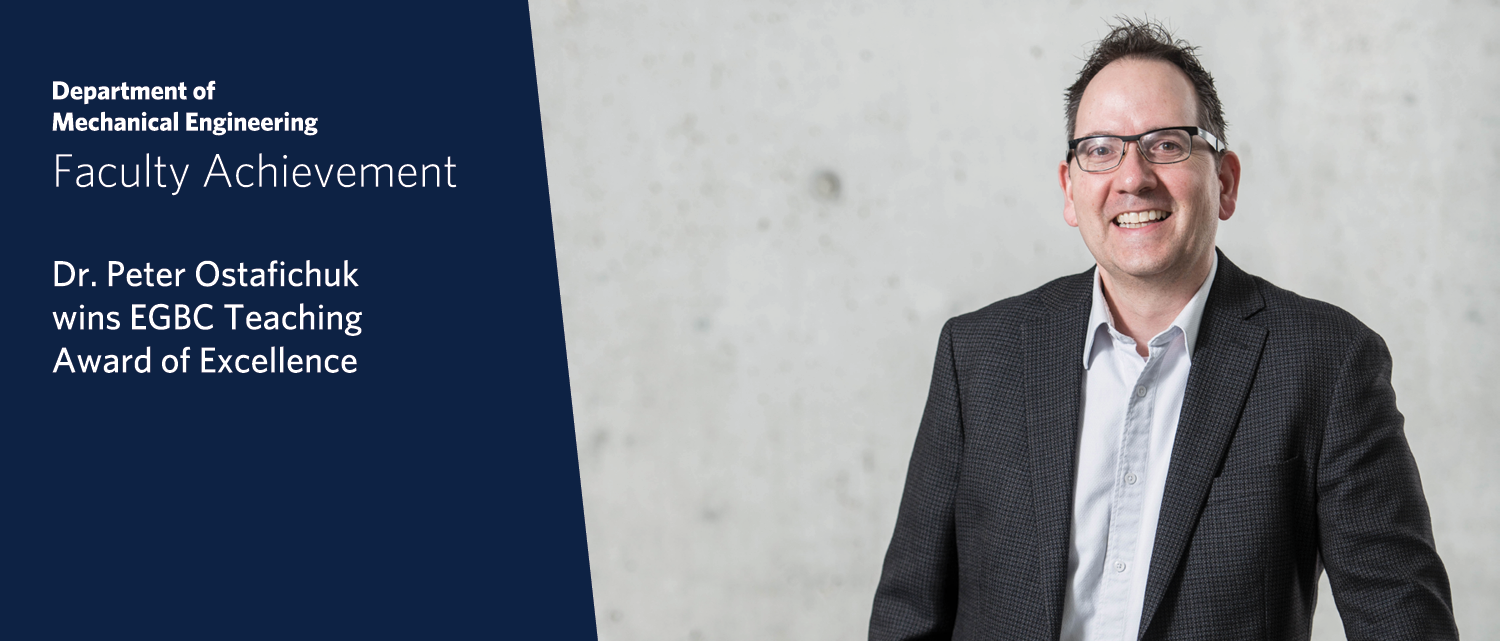
Engineers and Geoscientists British Columbia (EGBC) has awarded Dr. Peter Ostafichuk with the EGBC 2020 Teaching Award of Excellence. Now in its hundredth year, EGBC regulates the engineering profession in BC, maintaining standards of professional and academic practice and providing licensing for its 37,000+ members. This award is a testament to his impact on engineering students from across the Province.
Dr. Ostafichuk has been a leader in classroom innovation, some of his contributions including introducing the “flipped classroom” or Team-Based Learning technique to UBC engineering, integrating multi-level peer feedback in his classes, as well as the creation of more than 50 videos introducing first year engineering. As the inaugural Chair of First Year Engineering he has shown a high dedication to students, providing mentoring and advising sessions open to all 1000+ engineering first years at UBC, and working with the Engineering Undergraduate Society on issues of curriculum, health and wellness, and students’ transition to university.
He has had a large impact on engineering curriculum at UBC, having redeveloped the first year curriculum, as well as leading the creation of UBC Vancouver’s award-winning second year Mechanical Engineering curriculum. He is currently writing an introduction to engineering textbook. His contributions to curriculum have also furthered EGBC’s objective of ensuring public safety:
Dr. Ostafichuk has integrated the fundamental tenet of the Engineers & Geoscientists British Columbia code of ethics throughout the first year introduction to engineering courses and beyond. Students are required to hold the safety, health, and welfare of the public, and the protection of the environment, above all else as they wrestle with ethical dilemmas, assess project risks, and formulate engineering decisions and recommendations.
In June, Dr. Ostafichuk was also recognized for his significant contribution to engineering education and development of engineering teaching by the Canadian Engineering Education Association who elected him one of their inaugural Fellows.
EGBC has featured Dr. Ostafichuk’s accomplishment in their September/October issue of Innovation magazine, and he was presented with the award by the organization’s President Liannah Mah, P. Eng. in a virtual ceremony on October 7th.
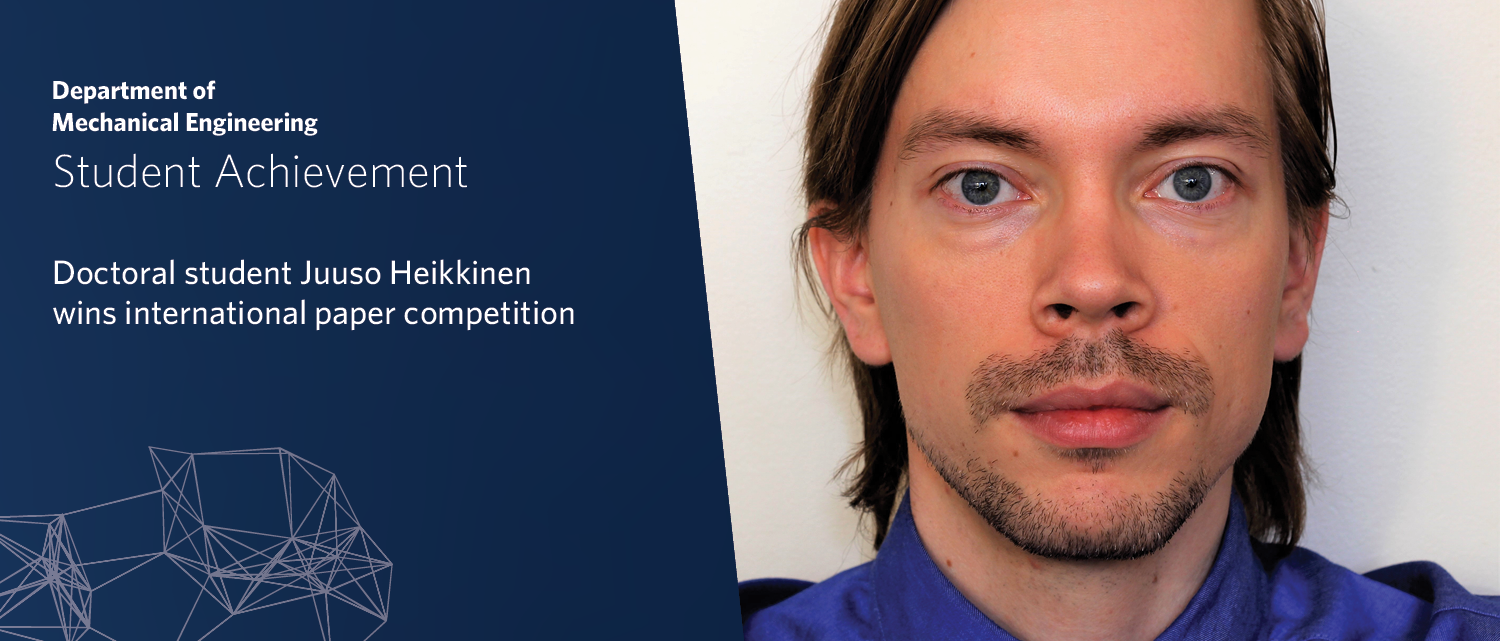
UBC Mechanical Engineering doctoral student Juuso Heikkinen has won first place in the prestigious Michael Sutton International Student Paper Competition for his work on “Remote Surface Motion Measurements using Multi-Wavelength Defocused Speckle Imaging”. The competition is run by the Society for Experimental Mechanics (SEM) at its Annual Conference and Exposition, which was held virtually this year. The competition draws graduate students from around the world, and this year after abstracts were selected, finalists had to give a ten-minute video presentation and answer live questions from the competition committee.
Heikkinen’s paper focuses on his work developing a remote non-contact inspection tool that measures distance, surface angle and microscopic motion, under supervisor Dr. Gary Schajer. The tool is designed for use in hazardous situations where an item can’t be safely reached, or for monitoring large structures such as bridges.
As well as earning the first place title, Heikkinen takes home a cash prize of $300 US, a hardbound copy of Handbook on Experimental Mechanics, and an SEM student membership.
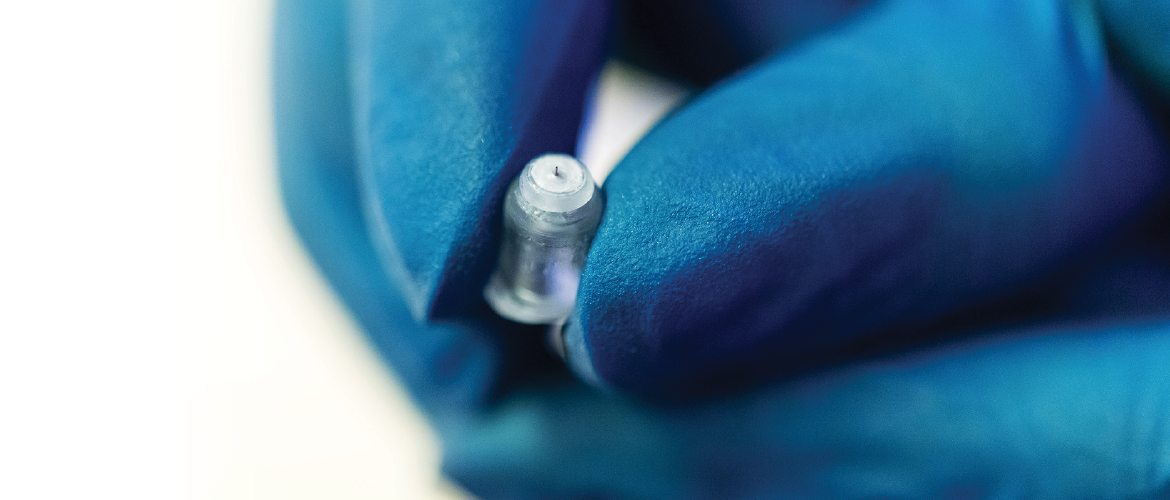
Mechanical Engineering faculty member Dr. Boris Stoeber has edited a new book on microneedle technology – the use of needles smaller than a milimetre long as a minimally invasive way to deliver drugs and monitor compounds in the body – alongside co-editors Dr. Raja K. Sivamani (UC Davis Health) and Dr. Howard I Maibach (UC San Francisco). Microneedling in Clinical Practice will provide a comprehensive overview of current knowledge on the subject, and publishes on October 2nd by CRC Press.
Collaborating since 2016, the co-editors brought together various experts in microneedles to author twelve chapters on the different ways this technology can be integrated into clinical use for medical or cosmetic purposes. The chapter “Hollow Microneedles” was authored by UBC Mechanical Engineering and Electrical and Computer Engineering alumnus Dr. Iman Mansoor alongside Dr. Stoeber, his former supervisor. A recognized expert in microneedle technology, Dr. Stoeber is a Canada Research Chair in Microfluidics and Sensing Technology, researching microscopic fluid motion for biomedical and other applications.
CTV News: Could a baby wipe work as a mask filter? B.C. researchers put fabrics to the test.
VANCOUVER — As masks become part of our daily attire, many people might be wondering about what the best ones are made from.
The simple answer, according to UBC mechanical engineering professor Steve Rogak, is there’s nothing better than an N95 mask.
But he told CTV News Thursday there are lots of homemade materials that work very well.
“We ended up testing 41 different types of materials that you could potentially use for such types of masks,” he explained. “It turns out that many of the common materials are pretty good at removing most of those particles.”
UBC MEDIA RELATIONS: Lightweight cotton mask with dried baby-wipe filter combines good filter quality and breathability. Most scientists and health authorities support wearing non-medical face masks in public to help prevent the spread of COVID-19. A team of UBC researchers led by Steven Rogak, a professor of mechanical engineering who studies aerosols, and Dr. Jane Wang, a clinical instructor in the faculty of medicine, decided to test the most popular types of mask fabrics to find out how well they filtered particles while remaining breathable. Here, they share their findings.