Making a difference: UBC students design low-cost ventilator for COVID-19

Making a difference: UBC students design low-cost ventilator for COVID-19

UBC MEDIA RELATIONS: BC engineering students have developed a simple, low-cost COVID-19 ventilator that may very well save lives. Their design—built around a modified BiPAP machine—is among the final 10 in the Code Life Ventilator Challenge, an international competition that has attracted more than 1,000 teams from 94 participating countries.

The competition, hosted by the Montreal General Hospital Foundation and McGill University Health Centre, invited participants to design a ventilator that can be manufactured easily anywhere in the world and adheres to compliance specifications. Final results will be announced by the end of the week.

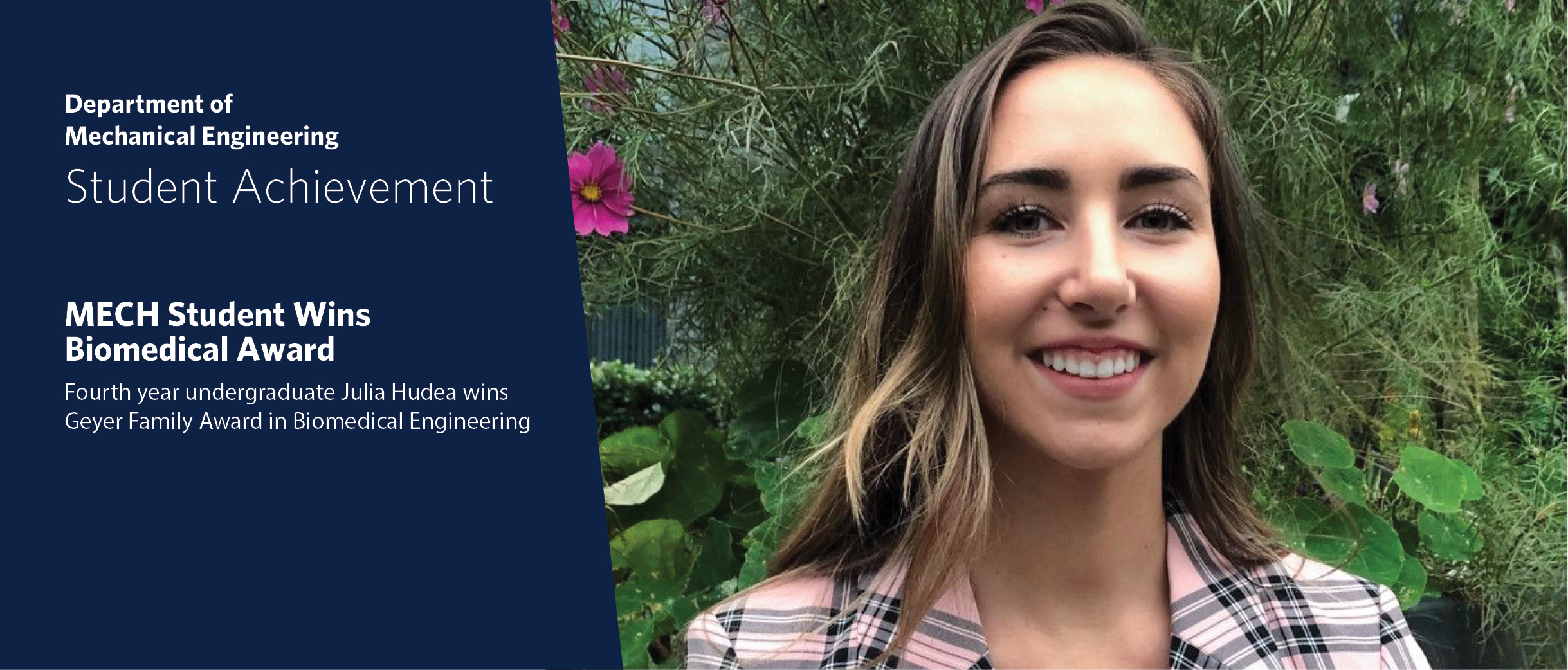
MECH Student Wins Geyer Family Award in Biomedical Engineering

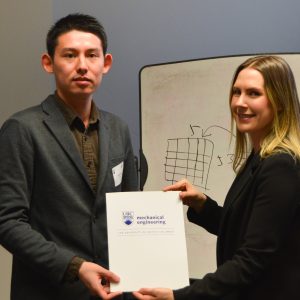
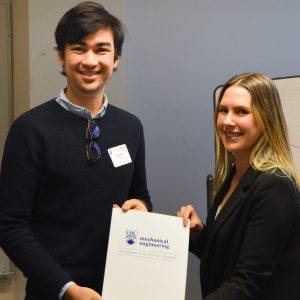
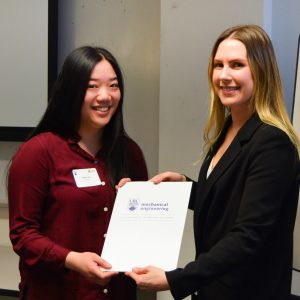
Julia Hudea, a fourth-year student in the UBC mechanical engineering program’s biomedical concentration, has been awarded the Geyer Family Award in Biomedical Engineering.

The award recognizes biomedical engineering undergraduate students “with an entrepreneurial spirit, an interest in the local biomedical engineering industry and demonstrated leadership and communication skills.”

Hudea is part of Fraxure, a student team that aims to help people with fractured thigh bones move around during recovery. She and her teammates are designing a mobile device that pulls the broken bone back into alignment, then applies a cast on the affected leg.

“Non-surgical fracture treatment can confine patients to a hospital bed for months, potentially leading to pressure sores, infections and other complications,” says Hudea. “Our technology aims to improve patient mobility while also improving outcomes.”

Now exploring venture possibilities with entrepreneurship@ubc, Fraxure was formed by members of UBC’s Biomedical Engineering Student Team in 2015, when they set out to address femur fractures caused by boda boda accidents in Africa. The high cost of surgery and the shortage of surgeons in the country have meant that many patients there are treated using external traction and fixation.

Hudea is also part of a capstone team that is working on a way to deal with bleeding in the upper gastrointestinal tract, an area that is difficult to access using conventional treatment methods. Fatal in five to 30 per cent of cases, upper GI bleeding is typically caused by peptic ulcers and esophagus-related conditions.

The Kastrup Lab at UBC’s Michael Smith Laboratories has developed a powder that promotes coagulation and stops bleeding, but it tends to clog existing delivery devices such as catheters. Hudea and her teammates are developing methods to integrate the medicine with a pressurized flow of carbon dioxide to reduce clogging and enable treatment even in hard-to-reach places such as the upper GI.

Hudea intends to continue along her entrepreneurial path after graduation, applying her business and engineering knowledge to address critical clinical needs. To this end, she is currently enrolled in UBC’s New Product Development course, learning about the factors that influence the fate of new products.

“My main takeaway from the course has been to be open to any opportunity and to continue to identify challenges in the medical field, as this is the first step to ensuring the success of a product,” says Hudea.


This article originally appeared on Applied Science News & Events.

Accelerating Our Transition to a Sustainable Energy Future

Globally, we remain very dependent on fossil fuels for electricity, heat production and transportation. With increasing concern regarding the wide-ranging negative impacts of the climate crisis, there’s a lot of pressure from government and the public to take action on how we as a society produce and use energy.

There are many solutions within our reach, and each has its advantages and challenges.

Producing energy from renewable sources like solar, wind or tides is becoming more prevalent, and with it comes the need for parallel advances in developing resilient grids that can absorb fluctuations and advancing effective energy storage solutions.

Here in BC, there’s a big push for electrification of many different aspects of our industrial and transportation activities, and this too generates a range of technical, social and environmental issues.

Grad Students Compete in Inaugural MECH 3MT Heat, Advance to UBC Final

On February 27th, Mechanical Engineering graduate students honed their communication rather than their technical skills by competing in the inaugural Department Three Minute Thesis heat. The Three Minute Thesis challenges them to distill their entire thesis into a three-minute presentation that communicates both what their research is and why it matters. Started by the University of Queensland, Australia in 2008, the Three Minute Thesis (or 3MT) is now practiced by universities all over the world, and has been running at UBC since 2011.

Departments across campus host “heats,” which are the first level of the competition for participating students. Winners of the departmental heats go on to compete in the UBC Semi-Final, and then the UBC 3MT Final decides who will represent the university at the Western Canadian Regional Final.

Besides having only three minutes (going over time can garner penalties), presenters are limited to one slide, and no animations, sound, media, props, or other gimmicks are allowed. This ensures that graduate students are working on their presentation and speaking skills alone. Effective communication is an essential skill for an engineer – a “soft skill” that will allow engineers to effectively work in teams, do project management, compete for funding, and a host of other job and research tasks that call for them to articulate their work.

At the Mechanical Engineering heat, presentations were judged by a panel of three department faculty members; Professor Lyndia Wu, Associate Professor Ryozo Nagamune, and Lecturer Adrianna Eyking brought expertise from biomedical engineering, mechatronics and manufacturing, and technical communication to their deliberations.

MECH Winning Presentations:

    • First Place: Calvin Qiao, PhD in Mechanical Engineering, Investigating Vestibular Changes After Subconcussive Head Impacts, Dr. Lyndia Wu
    • Second Place: Conan Omori, MASc in Mechanical Engineering, Finding Knots in Logs with X-ray Vision, Dr. Gary Schajer
    • Runner Up: Cidnee Luu, MASc in Biomedical Engineering, Wearable Sensors to Study Head Impacts in Ice Hockey, Dr. Lyndia Wu and Dr. Mike Van der Loos
    • People’s Choice: Conan Omori


At the 3MT Semi-Finals and Final Competition

As the first and second place winners, Calvin Qiao and Conan Omori advanced to the UBC Semi-Finals on March 10th. Twenty-one students competed in two rounds at Thea’s Lounge, in front of a judging panel made up of faculty from across campus. Competitors included master’s and doctorate level students from disciplines that ranged from Physics and Astronomy to Genome Science and Technology, including a strong APSC showing with participants from Civil Engineering, the School of Biomedical Engineering, and Electrical and Computer Engineering, in addition to Mechanical Engineering.

Despite stiff competition, Conan Omori was one of only eight students (and the only master’s-level student) who advanced to the UBC Three Minute Thesis Final at the Robert H. Lee Alumni Centre on March 12th. The group included just one other APSC competitor, Laura Stankiewicz, PhD in Biomedical Engineering. In the end, Stankiewicz took second place, while the first-place winner was Dennis Riley Louie, PhD in Rehabilitation Sciences, who will represent UBC at the Western Canadian Final.

Congratulations to Conan for advancing to the UBC Final, to our heat winners, and to all our participants for being a part of MECH’s first departmental heat! We look forward to seeing you at next year’s competition!
MECH Services Move Online

To support UBC’s social distancing protocols, many Mechanical Engineering employees are working remotely. While our Administrative and Student Services Office spaces are closed, both offices are fully available online. Our Machine Shop and Electronics Shop are also providing online services.  Please email us with your query!

General contacts are provided below, and for more detailed contact information, please visit our general Contact Us page or Faculty and Staff Directory.

Administrative Office

Online Hours: 8 AM – 4 PM, Monday to Friday

Finance:  finance@mech.ubc.ca
Human Resources:  hr@mech.ubc.ca
Facilities and Safety:  facilities@mech.ubc.ca

Student Services Office

Online Hours: 8 AM – 4 PM, Monday to Friday

General Student Services Enquiries: 
Email students@mech.ubc.ca or talk to an advisor:

  • Josy Austin: 604-619-9032
  • Sarah Clayton: 604-341-1162

Graduate Admissions:  admissions@mech.ubc.ca | 604-612-2389
Communications:  communications@mech.ubc.ca

Machine Shop

The Machine Shop is currently closed, but is accepting jobs to queue for when we reopen.  To access these services, please use the online submission form.

Please email Markus Fengler at mfengler@mech.ubc.ca with any Machine Shop enquiries.

Electronics Shop

The Electronics Shop is currently closed.  We are accepting design jobs and providing advice via email.

Sean Buxton (course work): sbuxton@mech.ubc.ca
Glenn Jolly (research work): gjolly@mech.ubc.ca
Usman Rizwan (MANU program inquiries): usman@mech.ubc.ca

Facilities and Safety

Department buildings are currently closed to students, faculty, and staff, except for those with specific approvals.  For information about building access, please email access@mech.ubc.ca. For all other questions about facilities or safety, please email facilities@mech.ubc.ca, and Jen Pelletier or Monica Clarkson would be happy to assist you.


More Information

UBC’s Response

Information, latest updates and FAQs are available at ubc.ca.  UBC has also put together a website dedicated to the University’s Coronavirus (COVID-19) at covid19.ubc.ca, which includes updates, information on prevention, and information for students, faculty & staff, as well as resources.

COVID-19 Information for APSC

Applied Science has gathered resources for Undergraduate Engineering Students, Faculty, and Staff at apsc.ubc.ca/covid-19.

UBC UPDATE: Coronavirus (COVID-19) and UBC’s response

March 13, 2020 announcement: UBC is transitioning to online classes effective Monday March 16, 2020 for the remainder of the term. For classes that cannot be accommodated online, we will be issuing further information through our Faculties.  This will apply to UBC Vancouver, UBC Okanagan and UBC Robson Square. UBC’s campuses will remain open and all university operations will continue as normal, as we transition. For full details of this announcement visit https://broadcastemail.ubc.ca/

NAME Students visit Engine Room Simulator

The room is dark except for a few colorful buttons on the instrument panels and the glow coming from the simulator screens. Naval Architecture and Marine Engineering (NAME) students have to figure out how to power up their “ship” before they can use the overhead lighting, in one of the challenges offered by the BCIT engine room simulator.

Visiting Lecturer, Dr. Fredrik Ahlgren from Sweden’s Linnaeus University, has brought his MECH 550N class to the North Vancouver BCIT Marine Campus, a specialized facility created specifically for technical training in the marine industry. The engine room simulator there is an immersive learning tool, allowing students to see how the systems interact on a large complex vessel. Seawater, diesel generators, ship power, the engine, pumps, and other integral systems are all linked and can affect each other and the performance of the ship if not used correctly.

Mech 2 Rover Mission: Competition Results

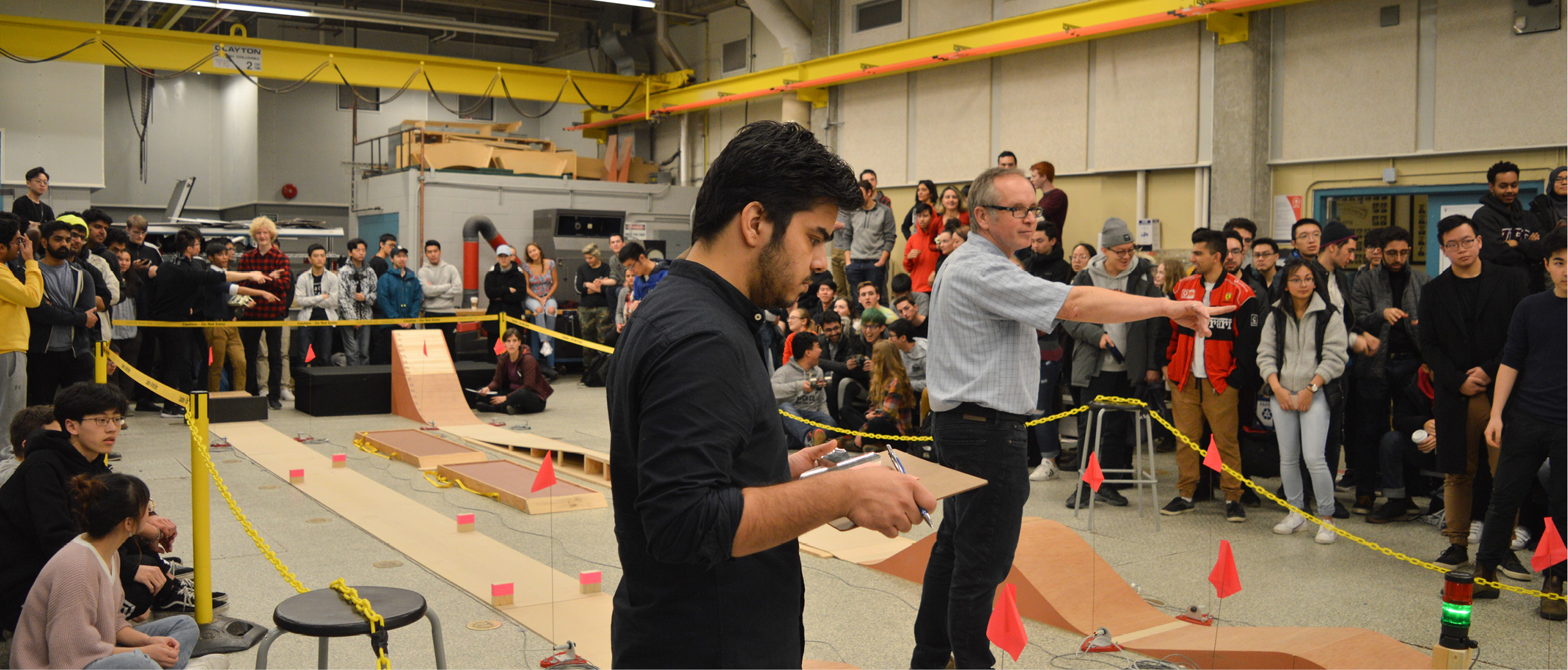
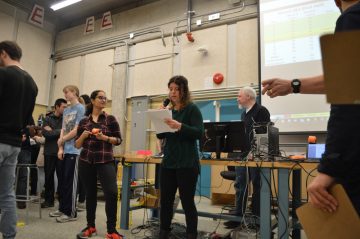
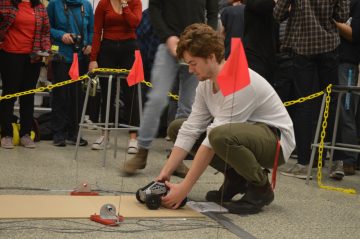
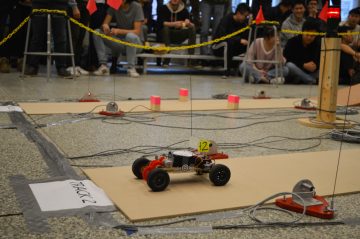
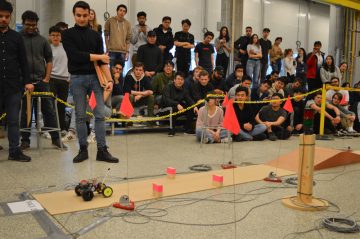
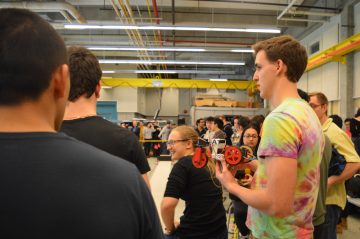
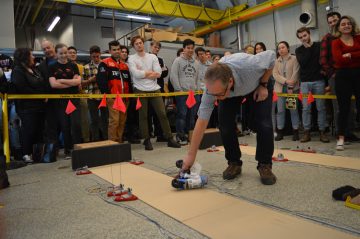
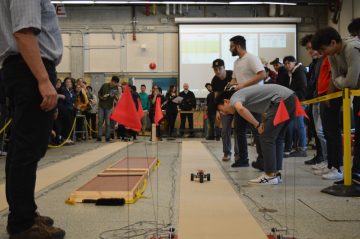
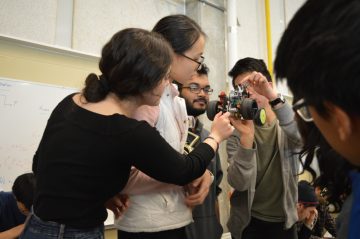
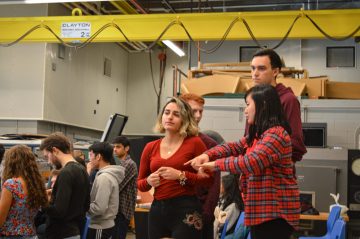
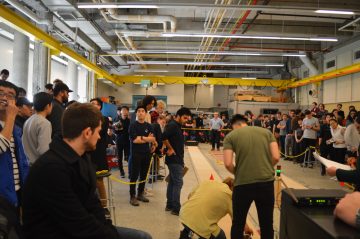
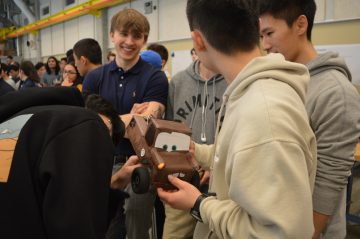
January 31st saw twenty teams of second year mechanical engineering students face off to see whose rover design could overcome all obstacles to victory. The first of the term’s two design competitions was filled with many ups and downs, as students’ remote-controlled vehicles careened over hills, chasms, angled terrain, sand traps, and more.

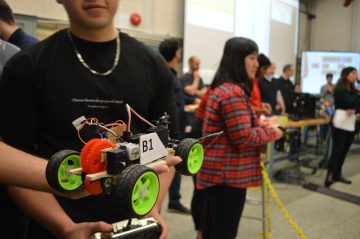
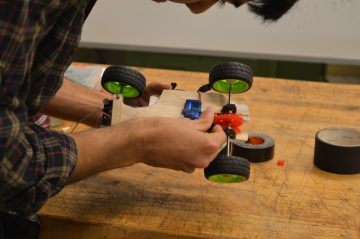
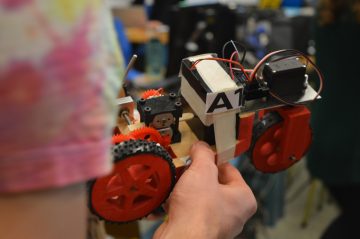
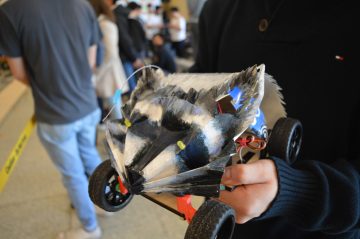
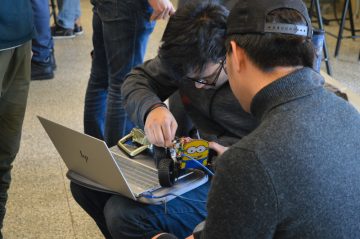
Simulating a space rover with a key control failure, teams had to design a vehicle that could traverse five unknown tracks while their motor was stuck at full speed. Students only had a few weeks to design and build, leveraging the academic, instrumentation, machine shop, and design process knowledge they’d gained in Term 1 to create their vehicle. As well as having to design for a variety of terrains, students also were encouraged to build with sustainability in mind, receiving points for using recyclable materials and facing possible point reductions otherwise.

After two hours of boisterous competition in front of an enthusiastic audience of their peers, friends, and the public, the final results saw the three top places decided by razor thin margins. Coming in third place was Team C3POno, with their vehicle “Carver 3,” while less than half a point more put team C2 BELIEVE’s “iNtuition” in second place. The difference of almost a single point decided the top spot, placing “The Big Block with Wheels (BBW)” by The Block Builders at the top of the podium.

Mech 2 students will have the opportunity to go back to the drawing board and learn from their Rover Mission experience, when they again vie for victory in a second competition on April 22, 2020. Watch our events postings at https://mech.ubc.ca/news-events/ for the announcement and come see the action!

Gallery