UBC News: New device identifies high-quality blood donors

UBC News: New device identifies high-quality blood donors

Blood banks have long known about high-quality donors – individuals whose red blood cells stay viable for longer in storage and in the recipient’s body.

Now a new device developed at UBC is showing promise as a method to identify these “super donors”, potentially helping more than 4.5 million patients who need blood transfusions every year in Canada and the United States.

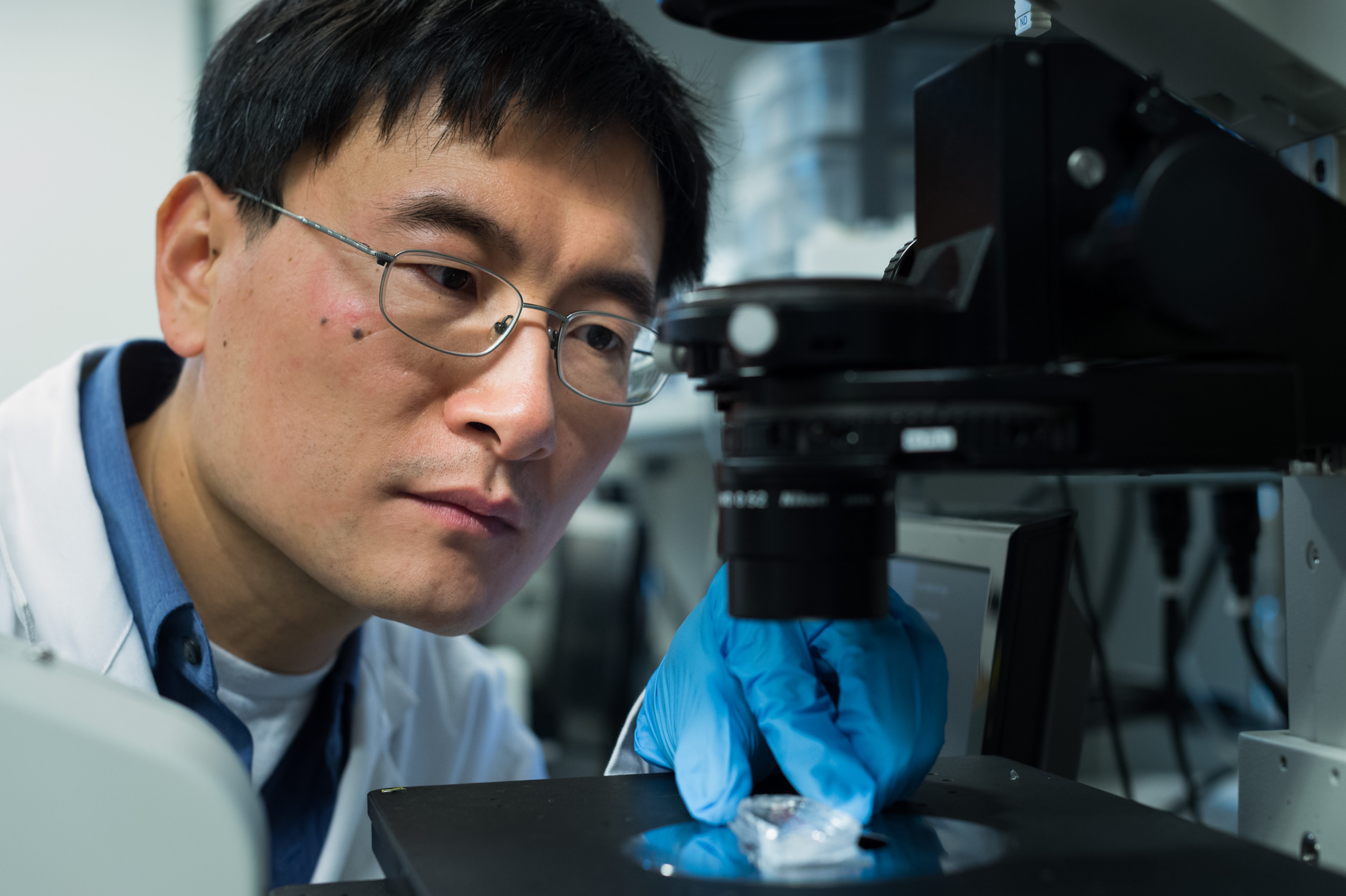
“We know that the deformability of red blood cells, or their ability to squeeze through small constrictions, is an important factor in the longevity of these cells in recipients of blood transfusions,” explains lead researcher Hongshen Ma, a professor of mechanical engineering and biomedical engineering. “This is because cells that remain deformable longer can stay in circulation longer. But until now we didn’t have a reliable way to measure this capability in donated red blood cells.”

Dr. Peter Cripton elected to International Research Council on Biomechanics of Injury

Mechanical Engineering professor Dr. Peter Cripton has been elected to the IRCOBI Council, the governing body of the International Research Council on Biomechanics of Injury. Comprised of researchers from all over the world, the IRCOBI fosters research on impact biomechanics and injury mechanisms, hosting two major conferences a year, and improving the global body of knowledge that informs safety standards relating to road transport. Created in 1969 in response to the growing body of international research on road safety, the IRCOBI seeks to bring cutting-edge information on injury biomechanics to a global platform.

IRCOBI Council members are leaders in their fields and election to this preeminent position is a recognition of Dr. Cripton’s expertise. As well as being a professor with the Department of Mechanical Engineering, he is an Associate Director of the university’s School of Biomedical Engineering, and a primary investigator with the International Collaboration On Repair Discoveries (ICORD). As a longstanding attendee and presenter at IRCOBI conferences, Dr. Cripton expresses his desire to contribute to the organization:

My students and I have benefited greatly from our interactions at the IRCOBI meeting and through our interactions with the IRCOBI council. Since my group has benefited so much from our participation in the organization, it felt natural to want to give back to the injury biomechanics community by offering to join the council. I am humbled and honoured by my election to the Council as I consider it to be the top research organization in the field of injury biomechanics.

 The IRCOBI Mission is to educate and provide an academic forum for the dissemination of best practices and research on injury causation and protective systems. I am hopeful that, through my work in the council, I can contribute to this very worthwhile mission by supporting and promoting high-quality injury biomechanics and injury prevention research, both at the IRCOBI conference and in many other venues. Through this work I hope to help increase the reach and impact of this important field internationally.

Dr. Cripton will serve a five-year term on the IRCOBI Council. He is currently the only Canadian researcher on the 20-person council.


New Frontiers in Research: Subconcussive Impacts

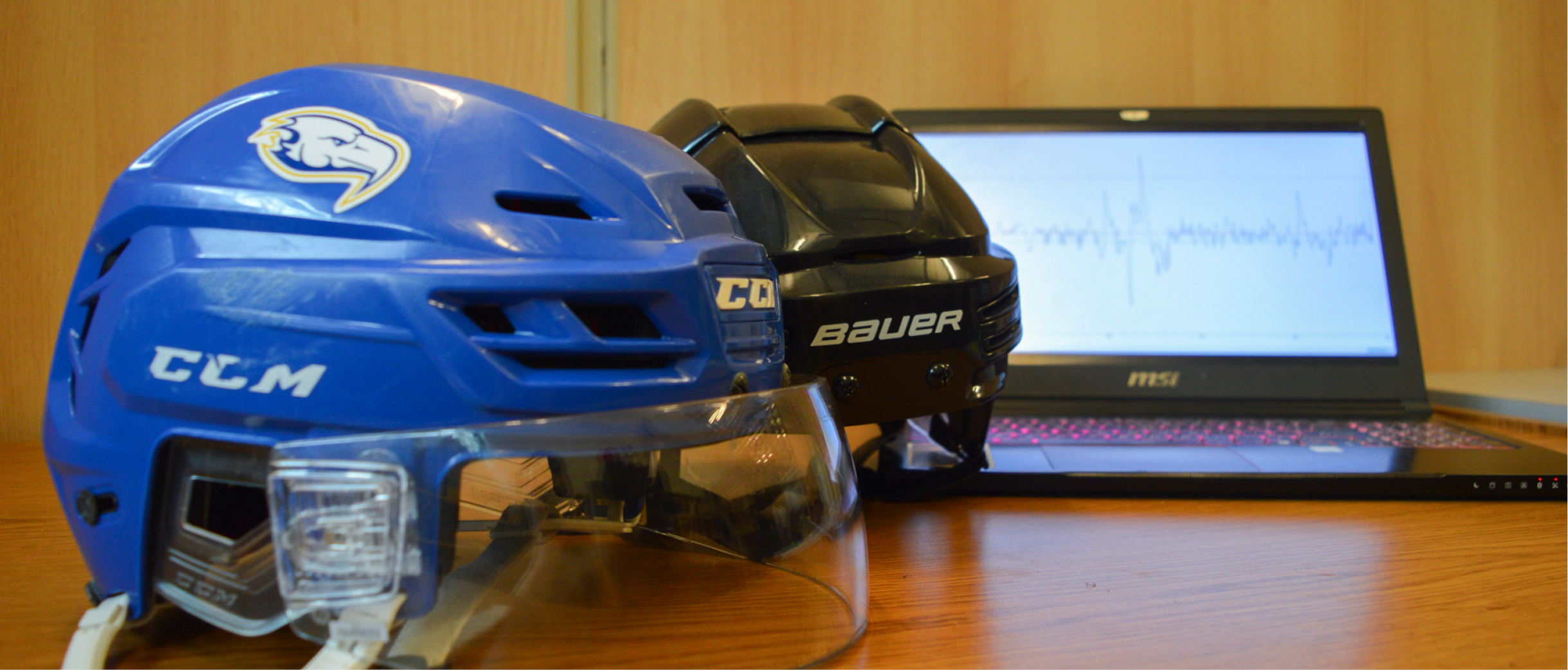
Here we explore current research by Mechanical Engineering Assistant Professor Lyndia Wu, “Investigating Brain Trauma Accumulation from Subconcussive Head Impacts and Differences between Male and Female Ice Hockey Players” 

Two projects by UBC Mechanical Engineering faculty members were among the first to receive funding through the Government of Canada’s New Frontiers in Research Fund (NFLF), an initiative recently launched to support and encourage “high-risk, high-reward, interdisciplinary and international research.” The fund, which will invest $275 million over the next 5 years and 65 million ongoing, provides up to $250,000 in funding per project, to offset the challenges early-career researchers often face securing funding for innovative, “fast-breaking” but consequently risky research endeavors. Both projects will receive the maximum $250,000 in funding over the next two years.

Below, we delve into Dr. Lyndia Wu’s innovative research into subconcussive head impacts:


Dr. Lyndia Wu’s project, “Investigating Brain Trauma Accumulation from Subconcussive Head Impacts and Differences between Male and Female Ice Hockey Players,” developed out of her concussion biomechanics research. Wu’s PhD work at Stanford University focused on developing motion sensors to measure head acceleration parameters during impacts in sports, and then correlating that information with whether or not the impacted players sustained concussions. In doing that research, however, Wu realized that there were limitations with correlating impact inputs with “binary concussion/no-concussion outcomes”. First, the diagnosis of concussion in sports relies heavily on self-reporting, and players may not always report their injuries. Second, among those who did get diagnosed, there were “variations” in both type and severity of symptoms, complicating the binary injury classification. As such, Wu is currently leading her own research group at UBC to address this limitation in brain injury biomechanics research.

“Even if a person doesn’t have a clinically-diagnosed concussion,” Wu explained, “it doesn’t necessarily mean nothing happened. As we know, sometimes milder impacts can cause a shorter lasting and milder response, but if there’s accumulation of a lot of small impacts, there might still be longer term effects on the brain.” Wu called these milder impacts “subconcussive events” and noted that they are “under-studied at this point, compared to all the studies involving clinically-diagnosed concussions, because [they are] inherently difficult to quantify.”

It was from these observations that Wu’s new project was conceived, and the investigation has been made possible by the New Frontiers in Research Funding. The new project will still use the aforementioned motion sensors to measure the accelerations of the head during impacts, but the funding will allow her team to also develop a “brain response sensor” that can quantify the resulting subconcussive events. “So instead of only measuring the head impact input,” Wu explained, “we’re also trying to measure the output from the head impacts in real time, continuously on the field, which has not really been done before. So, this is very high risk, as is encouraged by the New Frontiers in Research Fund, because we don’t exactly know what to expect in terms of these immediate brain responses to head impacts that are happening on the field.”

Wu and her team are working with two co-investigators: electroencephalogram (EEG) concussion measurement expert Naznin Virji-Babul and neuropsychologist Noah Silverberg to develop this brain response sensor. While it’s still in the early stages, Wu mentioned that they are considering a fabric-based, wearable EEG device that could be worn underneath the helmet. Because EEG sensors measure the brain’s electrical activity through the scalp, this type of sensor would theoretically allow her team to see and measure the disturbances that happen in the brain after every impact on the field, and to further look at the cumulative effects of multiple impacts over time. It would also allow them to do sex- and gender-based analyses, and examine why female players tend to have worse brain injury outcomes compared to male players. Wu hopes the data from her wearable sensor will shed some light on whether these differences are the result of biological factors, such as females having weaker necks leading to higher head accelerations, or sociopsychological factors, such as males being conditioned to act “strong”.

The results of Wu’s research could have significant implications for the sports industry. Further understanding the sex and gender differences might lead to “different concussion management strategies for male and female players”. But her results might also lead to regulations around the impact exposure a player is allowed to endure. As Wu put it:

If we know what each head impact is doing to the brain during these sports activities, and we find an input/output relationship in terms of when the brain might have sustained irreversible or longer-term changes, we might be able to put a limit on the exposure level and say ‘okay, perhaps this number of impacts with this frequency is the limit that a player should sustain within a single season, because beyond this limit we’re seeing some longer lasting changes that would be harder to mitigate.’ Our brain recovers pretty fast and has plasticity, so we’re not saying that we should necessarily ban contact sports or that nobody should be sustaining head impacts, but maybe there should be a limit on how many each player should sustain.

Because Wu is venturing into virtually uncharted research territory—attempting to measure brain responses in the wild, with a type of sensor that is typically used on stationary participants in a lab rather than on people playing sports—such research would likely not be possible without the New Frontiers in Research fund.  “Having funding mechanisms like this, where non-traditional and collaborative interdisciplinary work is encouraged, is pretty great,” Wu said, “because it enables novel research that might not be fundable by any of the traditional mechanisms.”
Congratulations November 2019 Grads!

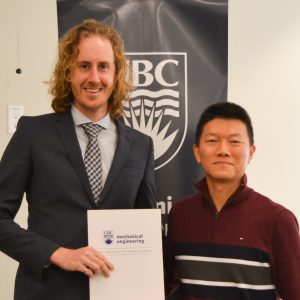
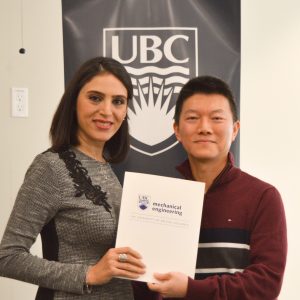
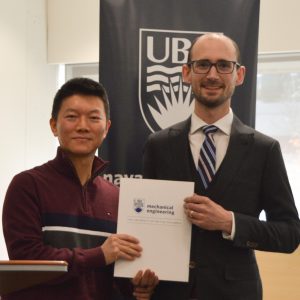
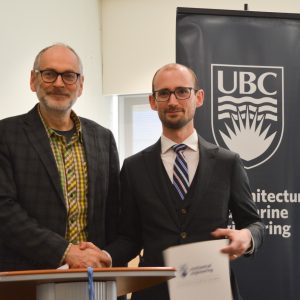
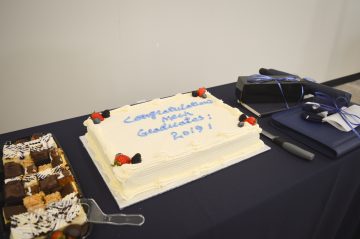
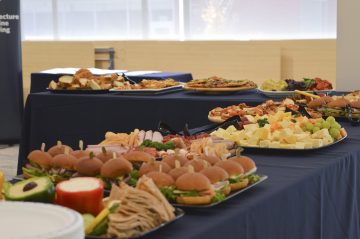
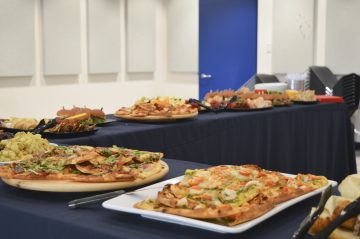
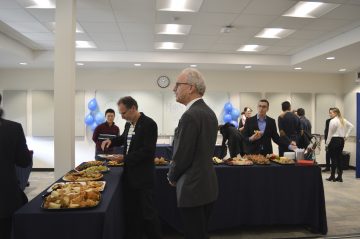
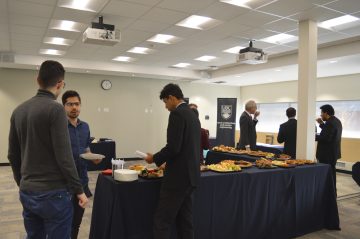
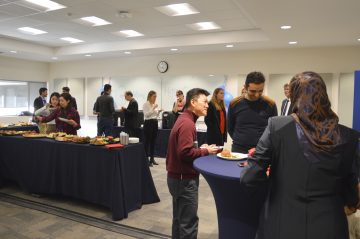
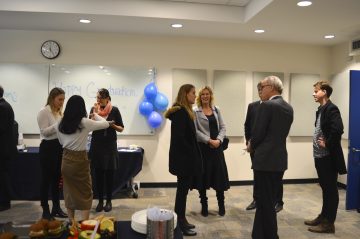
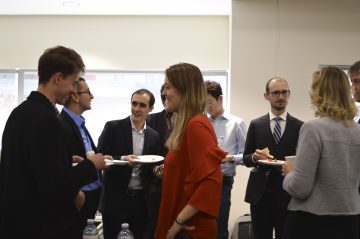
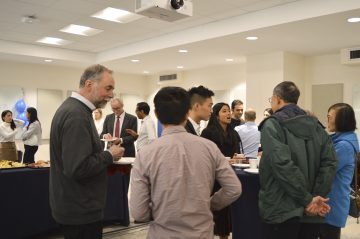
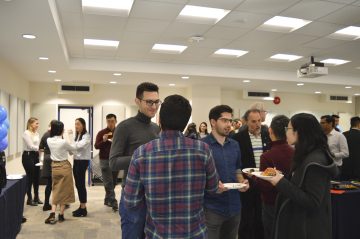
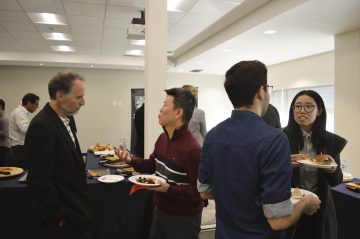
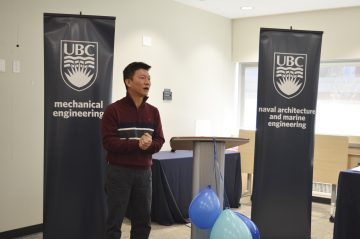
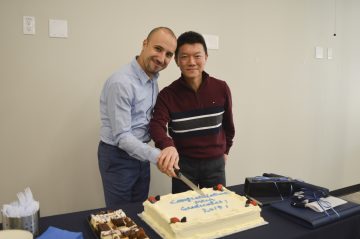
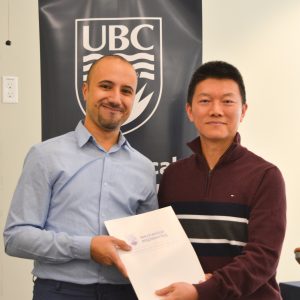
Congratulations to all of our recent Mechanical Engineering and Naval Architecture and Marine Engineering graduates who crossed the stage on November 28th, 2019! In addition to everyone who received their degrees on Thursday, the department extends additional congratulations to all of our award winners who have shown exceptional academic and design achievements in the course of their studies. The awards below were presented at the MECH and NAME graduation reception.

Graduate Student Academic Achievement Award

This award went to outstanding graduate students who achieved an overall average GPA above 90%:

  • Ahmed Baloch
  • Kevin Bergh
  • Mahdiar Khosravi
  • Jeff Meiklejohn
  • Peter Summers
  • Hamideh Torabigoudarzi
  • Gordon Tulip
  • Kai Wang
  • Qiang Zou

Naval Architecture & Marine Engineering Design Award

This award is a recognition of exceptional achievement in Engineering Design, and was awarded to the “Fast Ferry LNG Conversion” project team: 

  • Kevin Bergh
  • Peter Summers
  • Gordon Tulip

Reception Gallery

Inside CREATE-U: Mechanical Engineering’s new Undergraduate Research Opportunity

This summer, the Department of Mechanical Engineering is spearheading an exciting new program designed to enable undergraduates to explore what research is all about. Combining Research Experience and Technical Electives for Undergraduates (CREATE-U) is a comprehensive package featuring six credits of coursework and a paid research project in a Mechanical Engineering lab (which can even count as a coop work term), helping undergraduates to try a skill set they may want to pursue further either through graduate school or in industry.

While this may seem like a lot to pack into two summer terms, these various elements are designed to fit together to give participants a complete and supported experience. The first course, MECH 410G Research Skills and Data Analysis, will be a bootcamp that introduces what research is, how the environment of a lab works and what people do there, how to read research articles and do an initial literature review, how lab funding works, and more. Many of these are skills researchers often develop through the experience of working in a lab or starting a research-focused graduate degree, so to have them packaged into an introductory class is an innovation that will give CREATE-U participants key insights into the work term ahead.

The paid work term itself will see undergraduates paired up with a graduate student mentor to help answer their questions, support their project, and adapt to working in a lab. Besides supporting the undergraduate participants, this innovative CREATE-U initiative provides a professional development opportunity for the mentors as well. They will receive training in leadership, how to be a good mentor, Equity Diversity and Inclusion, how to support a struggling student, and having a mentee will give graduate students their first supervisory-style relationship: an experience that will benefit them if they wish to continue in academia or as an industry leader.

At the same time as their work term, CREATE-U participants will take MECH 410H/550U Research Communication, which will introduce how a researcher communicates their results.  Building on the Research Skills and Data Analysis course, students will work on a narrative literature review, an NSERC outline of proposed research, a research abstract, and a final poster presentation. The poster presentation can then be used if the student would like to take part in UBC’s Multi-disciplinary Undergraduate Research Conference (MURC).

Besides being unique in terms of content, CREATE-U is a brand new way of looking at admissions as well. Applications will be broad based, and grades will only be one sixth of an applicant’s score. As long as an applicant has the minimum 76% average (taken from the minimum GPA requirement for graduate school) the application committee is looking to find undergraduates with qualities that will make them good researchers – an innate desire to explore ideas that will motivate them in the pursuit of answers. After applications are submitted, they will be reviewed by a fully blinded committee, and participants will be matched to their chosen projects in order of score. This process is designed to open research opportunities to as many people as possible, making the experience accessible to students who may not have thought of a future in research, despite having good research potential.

Approaching its first iteration, CREATE-U is currently a pilot project made possible by the Program for Undergraduate Research Experience (PURE). There are ten spots available, and interested undergraduates can review the available projects and application details here. Applications are due on Monday, December 2nd, 2019.

Media Mention: Global News interviews Dr. Zimmerman on hazardous Delhi air quality

Global News interviewed Mechanical Engineering faculty member Dr. Naomi Zimmerman about early November’s hazardous air quality in Delhi, and air pollutant PM 2.5. 

Hull Testing Returns to UBC after 12 Years

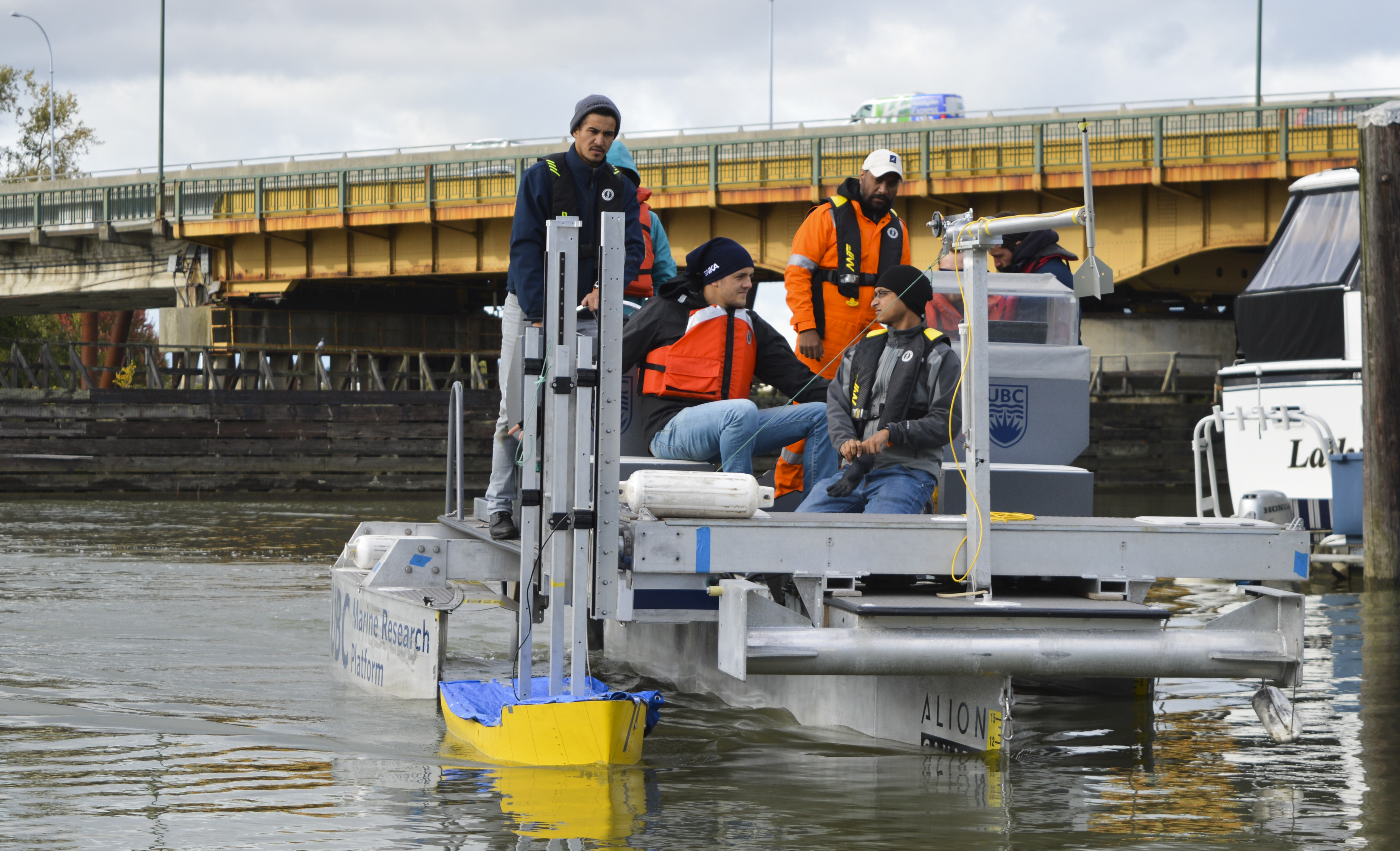
Students testing their model hull design aboard the new UBC Marine Research Platform.

On Tuesday, October 8th, Naval Architecture and Marine Engineering (NAME) graduate students embarked on the waters of the Fraser River delta to test model ship hulls, marking the first time hull testing has been done by students at UBC in the last twelve years. This has been facilitated by the recent addition of UBC Marine Research Platform, an innovative testing vessel that replaces the need for large and expensive tow tanks with versatile open water testing in real world conditions.

The last hull testing facility at UBC was an on-campus tow tank which was torn down to make way for the development of Wesbrook Village. After years without the capacity for students to test their designs, in 2017 the UBC Research Platform was donated by the Robinson family in memory of its inventor, Charles “Chuck” Robinson. Since it’s donation in 2017, NAME has been preparing it for educational and research use with the generous support of Serco North America (formerly Alion Science and Technology). Mavi Innovations worked in collaboration with NAME staff this past summer to implement a number of maintenance items and to update the research platform’s instrumentation system and model deployment hardware.

On the dock of Vancouver Marina in Richmond, NAME Program Director Jon Mikkelsen explained why having the UBC Marine Research Platform is such a useful tool for students:

Students view live hull testing data.The UBC research vessel was developed to improve the accuracy of ship design. You create a replica model of the ship that you’re intending to build, test it on the water – measuring resistance, how the vessel behaves in waves, how it maneuvers – and using that information an engineer can scale it up and use it for the design of a prototype ship. If you’re spending millions of dollars building a ship, you want to make sure that the predictions of resistance are done accurately so you can properly match the engine to the vessel at the desired speed.
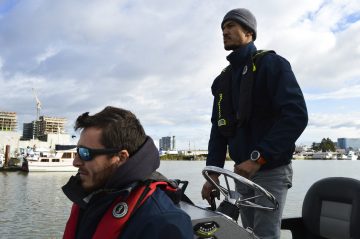
The students attached their model hull – called the UBC Series – and headed out on to a small branch of the river, west of Sea Island. Known for its calmer waters, this area provided an ideal testing ground for the models, without large waves or currents to affect the data. A laptop onboard recorded the readings, while allowing students to monitor them in real time. The NAME program’s visiting naval students, Ensigns Mel Rapuzzi and Thibaud Bourbon – here from the French naval academy to gain international scientific experience – provided the vessel’s crew so that the program students could focus on their measurements. Having run the tests at multiple speeds, the NAME students will use their data to extrapolate how a full size ship would behave and select a propulsion system for their design.

Visiting students Ensigns Mel Rapuzzi and Thibaud Bourbon from France's Ecole Navale.Former co-director, and NAME professor, Dr. Chris McKesson noted the many stakeholder participants that have brought hull testing back to the university, enhancing learning resources for students and benefitting the larger world of naval design:
The platform itself was donated, the resources to operate it are a gift from Alion Canada (now Serco North America) and the boat handling skills of our “drivers” are the result of their position as officers in the French Navy, which we have partnered with for the past three years. This highlights the international nature of naval architecture, which provides the ships that unite the world in global commerce. Most of those ship designs start as model tests, while ALL of their designers start as students.  Our industry is definitely giving back to ensure that global commerce continues to be as efficient as possible.

“I’m personally very excited to be able to have students testing these things on the water,” Professor Mikkelsen noted, “…it’s a historic day for us.”

Read more about the UBC Research Platform and donors, Serco (Alion) and the Robinson family, here.


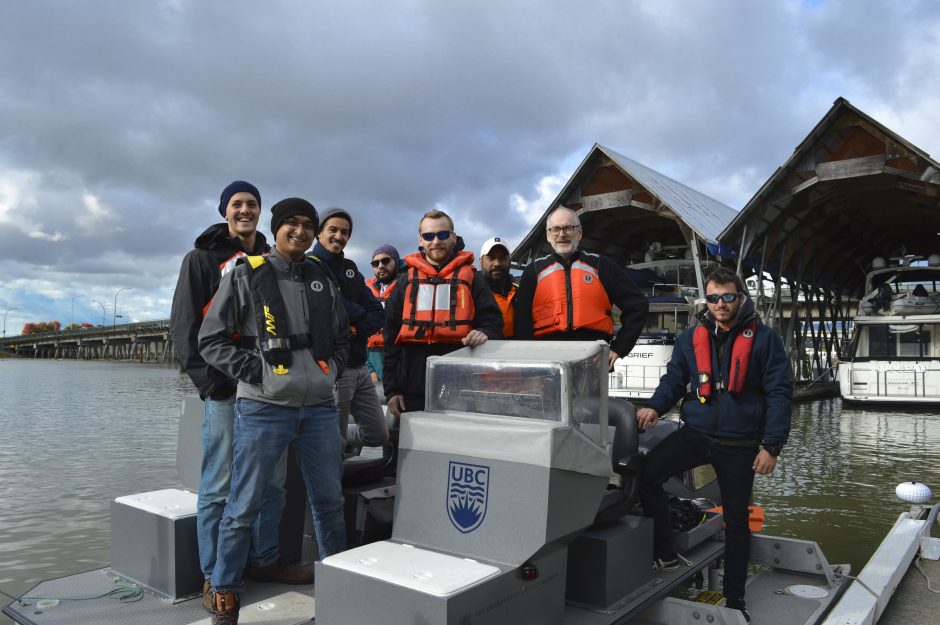
NAME graduate students, visiting French naval students, and Program Director Jon Mikkelsen aboard the UBC Marine Research Platform

Media Mention: Virtual Reality Video Games Make Rehab Fun For Younger Patients

Magnifying mistakes leads to more meaningful motor learning. Experts commonly advise that the best exercise is exercise you enjoy doing—that way you’ll keep doing it. The same holds true for rehabilitation exercise, especially when it comes to younger patients. Vancouver Coastal Health Research Institute scientists recently tested gaming devices equipped with immersive virtual reality (VR) technology to see if they motivated teenage patients with cerebral palsy to improve their motor learning. Initial results show VR was well received by patients and was successful in improving outcomes, making it worth pursuing further. Biomedical engineer Leia Shum designed the study under the guidance of Dr. Machiel Van der Loos.