“I believe entrepreneurship and telling powerful stories connecting us to earth will have the most impact and, if I can be an advocate for these paths I think I will have done my best to do my part.”
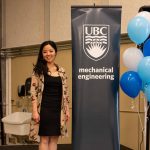
I have always wanted to help solve important problems. After completing my degree in mechanical engineering, the most immediate problem I wanted to tackle was the stress I saw in my fellow students. I began to think about how valuable the meditation techniques I used were to deal with stress. I became a traveling meditation teacher, and after six months of practice, decided to combine my passions — I joined a large engineering firm that allowed me to travel and teach. I worked in clean energy, sustainable metals and a first-of-its-kind solution for nuclear waste traveling all over North America. After 10 years, I felt a deep desire to focus on what I think is the most pressing issue of our generation: clean energy. In the UBC Master of Engineering Leadership (MEL) program in clean energy engineering, I learned from esteemed thought leaders, won accolades at startup competitions, worked at the City of Vancouver and at UBC on developing models for future rooftop solar utilities and microgrids. I am also glad I got to share tools of meditation and mindfulness with my cohort colleagues and lead a meditation chapter in the city.
Why did you choose engineering?
Engineering has always been a way of answering the questions of ‘how does this work?’ and ‘how do we fix this?’. I grew up in Abu Dhabi, where I saw the country transform from a sleepy town to a world-class metropolis with effective infrastructure planning and engineering investments. When I moved to Canada, I resolved to be part of solving problems that would make life better for large groups of people.
What has made your time at UBC the most memorable?
The inspiration I received from my professors to make a difference, the stories of entrepreneurs who had and the confidence boost of doing well at one of Canada’s best universities has made this experience one I will never forget.
What have you learned in engineering that is most valuable?
The most important thing I have learned is not to ignore the little voice inside your head asking ‘Why?’. Often in engineering, we are told to do things a certain way. Based on our experience and intuition, we might have doubts about why we are doing things a certain way that might be uncomfortable to bring up and spend time on, but these questions usually lead to a safer product or a better way to do things if explored skillfully.
How are you applying the skills you learned through your studies at UBC?
My experiences involved a lot of technical problem solving and project engineering. The MEL program courses — technical, business and leadership — and my projects at the City of Vancouver and Clean Energy Research Center taught me about making key decisions using net present value analysis, which is an incredibly valuable tool I am implementing both in my consulting work and with helping run an organic farm with my brother.
What has been your most valuable non-academic experience studying engineering at UBC?
In the summer semester, a small group of us were faced with a dilemma: we had the option of applying to the Lean Launch Pad program (a five-week entrepreneurship competition that was rumored to be very intense); I was accepted to be a Greenest City Scholar at the City of Vancouver; and we had a full summer semester of MEL courses. When we consulted with our program director, she informed us that no previous students had stacked so many demanding things on top of each other, and advised us to think hard before undertaking this. But, we leaned on each other’s skills, worked remotely, trusted each other and pulled it off successfully. What we learned about working as a team against all odds taught us more than any course could.
How do you feel a graduate degree in engineering has benefitted you compared to a different field of study?
I always felt that if I pursued a master’s degree, it would be in a field of study that had a pressing need for having more people in. It is vital for more leaders to be educated in clean energy because it is a topic in which it is easy to conceptualize a situation, but be totally misinformed about it. During the MEL program, I have reversed my thinking on many topics that I’m sure I would not have otherwise.
What advice would you give a student considering a graduate degree in engineering?
An undergraduate degree is a foundation to an engineering way of thinking. A few years of work later, it is vital to pick a topic of study that you have a deep passion for and diving in to really understand it. Without this, a surface level understanding of things rarely goes a long way towards making a deep impact.
Where do you find your inspiration?
The work of tireless leaders like David Suzuki, Elizabeth May and Elon Musk inspires me to keep pushing for a better world, for ourselves and future generations. Their messages are often looked on incredulously as impossible dreams, but they are sources of hope for us to draw from.
What are your plans for the future?
In the immediate future, I would like to round out my degree by getting a few certifications in project management and sustainable infrastructure, and working in the clean energy startup industry in British Columbia. Long-term, I would like to be involved in helping solve the clean energy problem for our Indigenous communities, lobby for modifying BC’s Clean Energy Act to allow for more renewable energy production, and pushing for electrification of our heating and transportation sectors.
How will you go on to make a difference in our world?
Time will tell, but I intend to volunteer my time and resources in helping raise awareness about the small window of time we have to avert permanent climate change and educating our next generation in the actions we can do to make a difference. Aside from protesting, I believe entrepreneurship and telling powerful stories connecting us to earth will have the most impact and, if I can be an advocate for these paths I think I will have done my best to do my part.
View more 2019 Student Stars at apsc.ubc.ca/students/stars/2019.
This story originally appeared on APSC Rising Stars 2019.