Interdisciplinary AURORA Transportation Testbed Announced

Interdisciplinary AURORA Transportation Testbed Announced

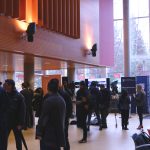
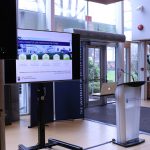
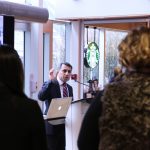
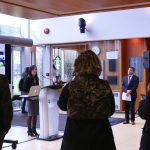
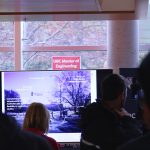
Walter Merida makes AURORA announcement

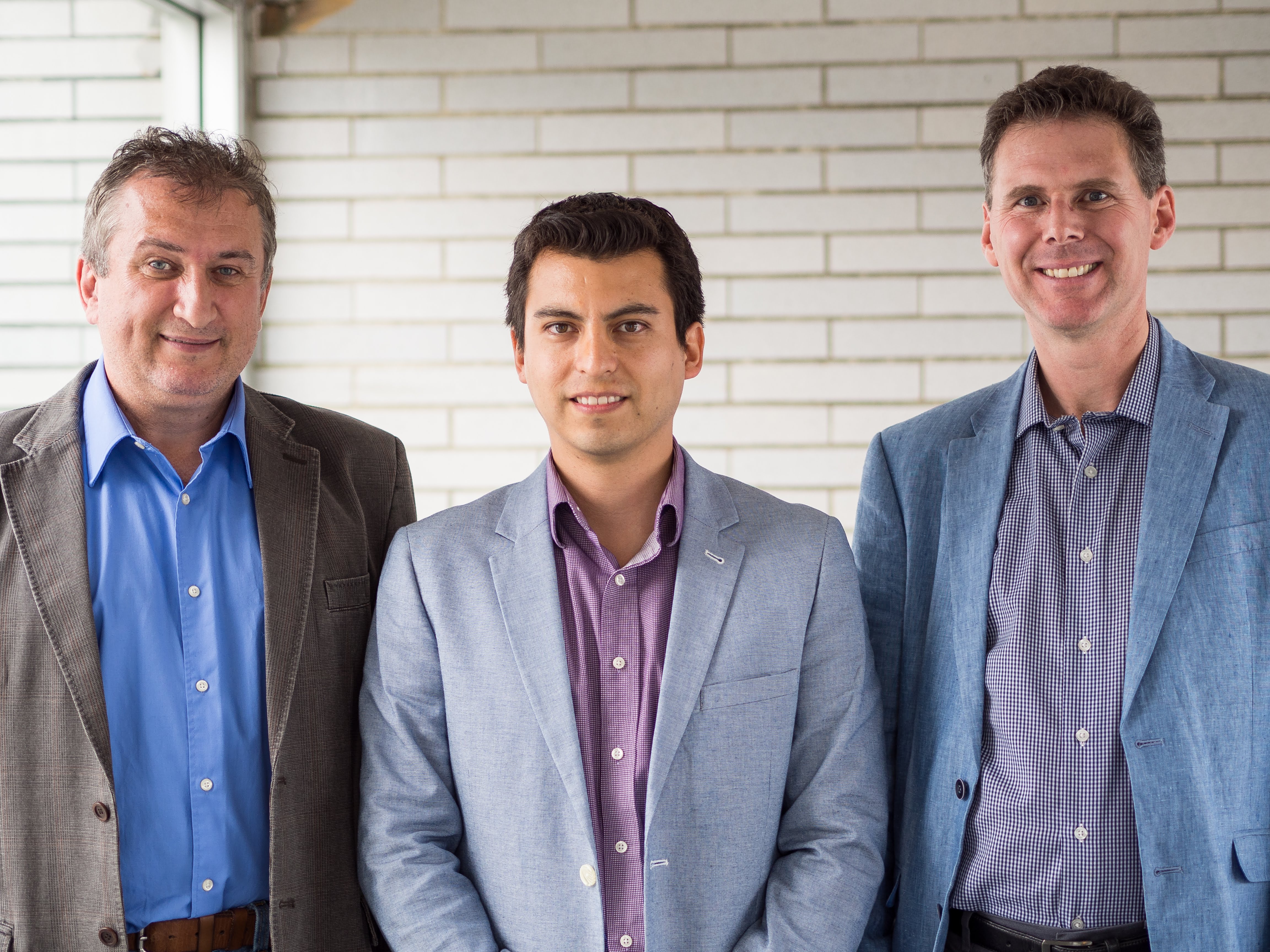
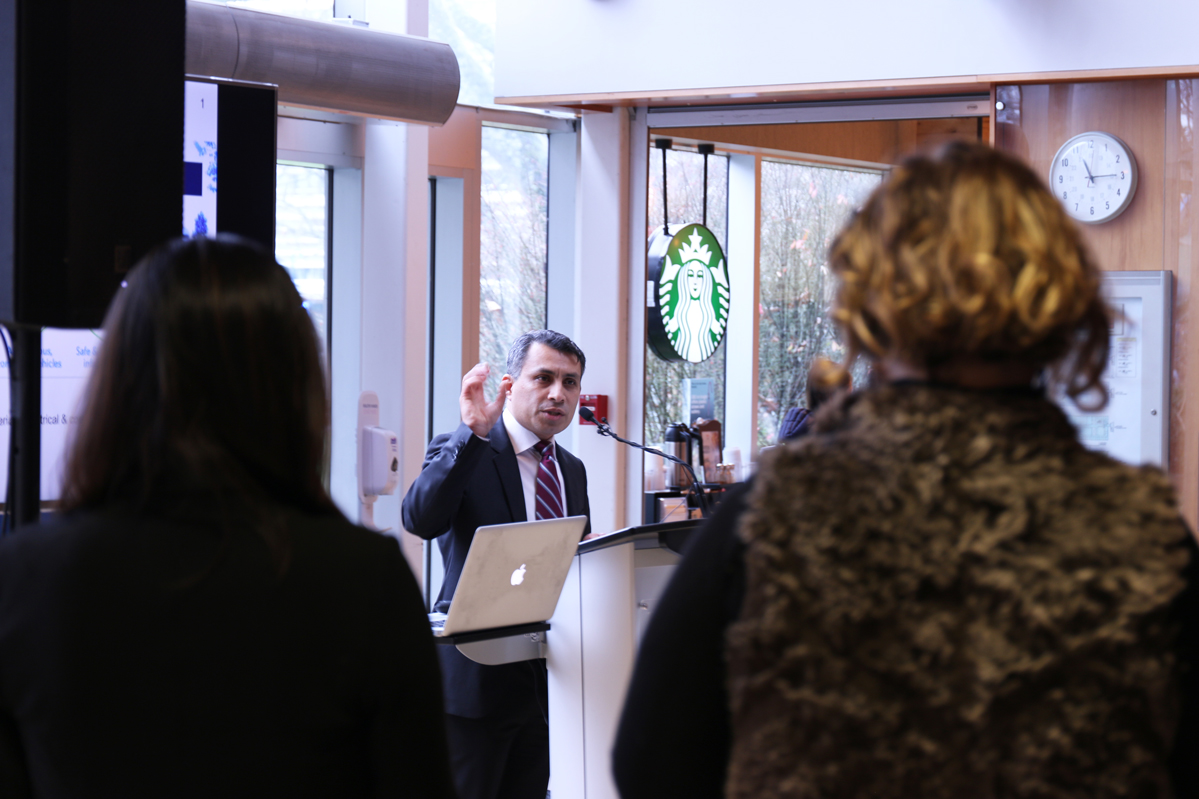
Yesterday, Dr. Walter Merida, Mechanical Engineering Professor, Associate Dean, and director of the Clean Energy Research Centre, announced the launch of AURORA, UBC’s new connected vehicle testbed. He was joined in the Kaiser Atrium for the announcement by MLA Bowinn Ma, Parliamentary Secretary for TransLink, and AURORA lead researcher Dr. David G. Michelson, professor of Electrical and computer engineering. AURORA is a connected network of roadside cameras, monitors and vehicles that will be used to rapidly gather traffic data, which can be analyzed and used to make our transportation networks safer and cleaner. This interdisciplinary project brings together researchers from mechanical, civil, materials, electrical & computer engineering, as well as architects, policy makers and business. It is supported by the Ministry of Transportation and Infrastructure, Transport Canada and industry partners.

Read more about AURORA.

APSC Prof Named Fellow of Royal Society of Canada

Thomas Oxland, PEng, a professor in UBC’s Departments of Mechanical Engineering and Orthopaedics and co-director of the UBC Orthopaedic and Injury Biomechanics Group, has been elected a Fellow of the Royal Society of Canada (RSC), Canada’s highest honour for artists, scholars and scientists.

Recognized by the RSC for his “seminal research work” in the field of musculoskeletal diseases and injuries, Oxland has played an instrumental role in advancing orthopaedic engineering at UBC and Vancouver General Hospital over the past two decades. In addition to serving as founding director of UBC and VGH’s former Division of Orthopaedic Engineering Research, which operated from 1997 to 2009, he was heavily involved in the establishment of both the Centre for Hip Health and Mobility and the International Collaboration for Repair Discoveries (ICORD) research centre, where he is a principal investigator and associate director of preclinical discovery research.

Oxland holds bachelor’s and master’s degrees from the University of Waterloo and master’s and doctoral degrees from Yale. He is a fellow of the Canadian Academy of Engineering, the recipient of a Humboldt Research Award from the Alexander Humboldt Foundation and a former Canada Research Chair in Spine Biomechanics. Before joining UBC, Oxland worked at Spine-Tech, a spinal implant company in Minneapolis, and at the Maurice E. Müller Institute for Biomechanics (now the Institute for Surgical Technology and Biomechanics) at the University of Bern.

Of the 2018 fellows, Chad Gaffield, the RSC president, said: “These exceptionally talented scholars, artists and scientists have made an outstanding mark in their fields, advancing knowledge and creating a positive impact on the world. We are thrilled to welcome them, knowing they will continue to work towards a better future for all of us based on deep knowledge and understanding of the past and present.”

The RSC consists of three academies (the Academy of the Arts and Humanities, the Academy of Social Sciences and the Academy of Science) and is aimed at recognizing “scholarly, research and artistic excellence” and promoting “learning and research in the arts, the humanities and the natural and social sciences.” Oxland and the other 88 fellows named this year will be inducted into the Society at its Annual General Meeting in Halifax this November.

The full RSC citation for Oxland reads:

Thomas Oxland is an international authority in the biomechanical behaviour of the human spine. His seminal research work includes the biomechanics of the normal, degenerated, and injured spine, spinal cord injury, spinal and other orthopaedic implants and surgical techniques. He was a key research and development engineer for novel spinal implants that remain in clinical use today, more than twenty-five years after the initial surgeries.


This story originally appeared on APSC News.

Could a DIY ultrasound be in your future? UBC breakthrough opens door to $100 ultrasound machine

UBC breakthrough opens door to $100 ultrasound machine

Photo Credit: Clare Kiernan

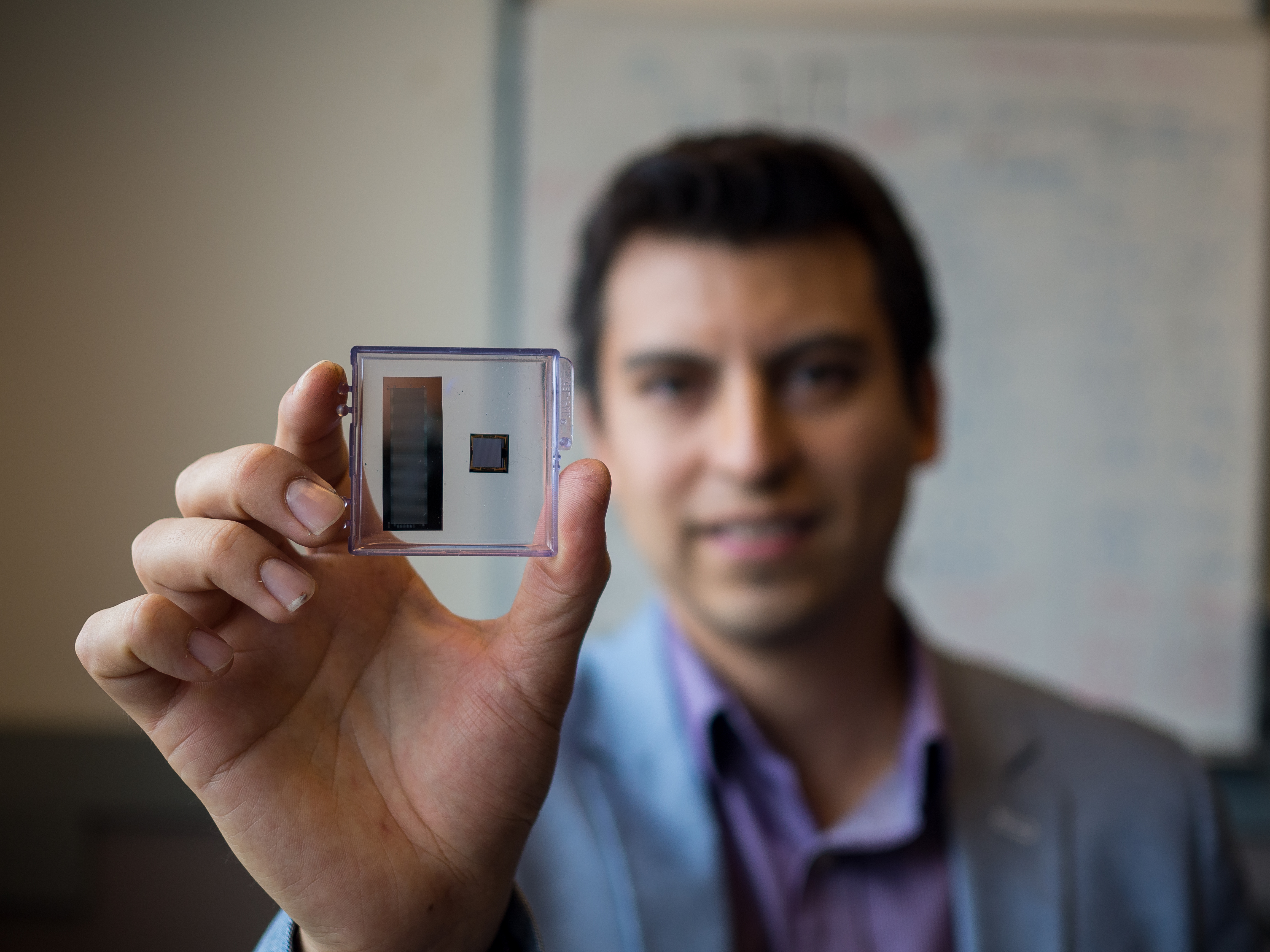
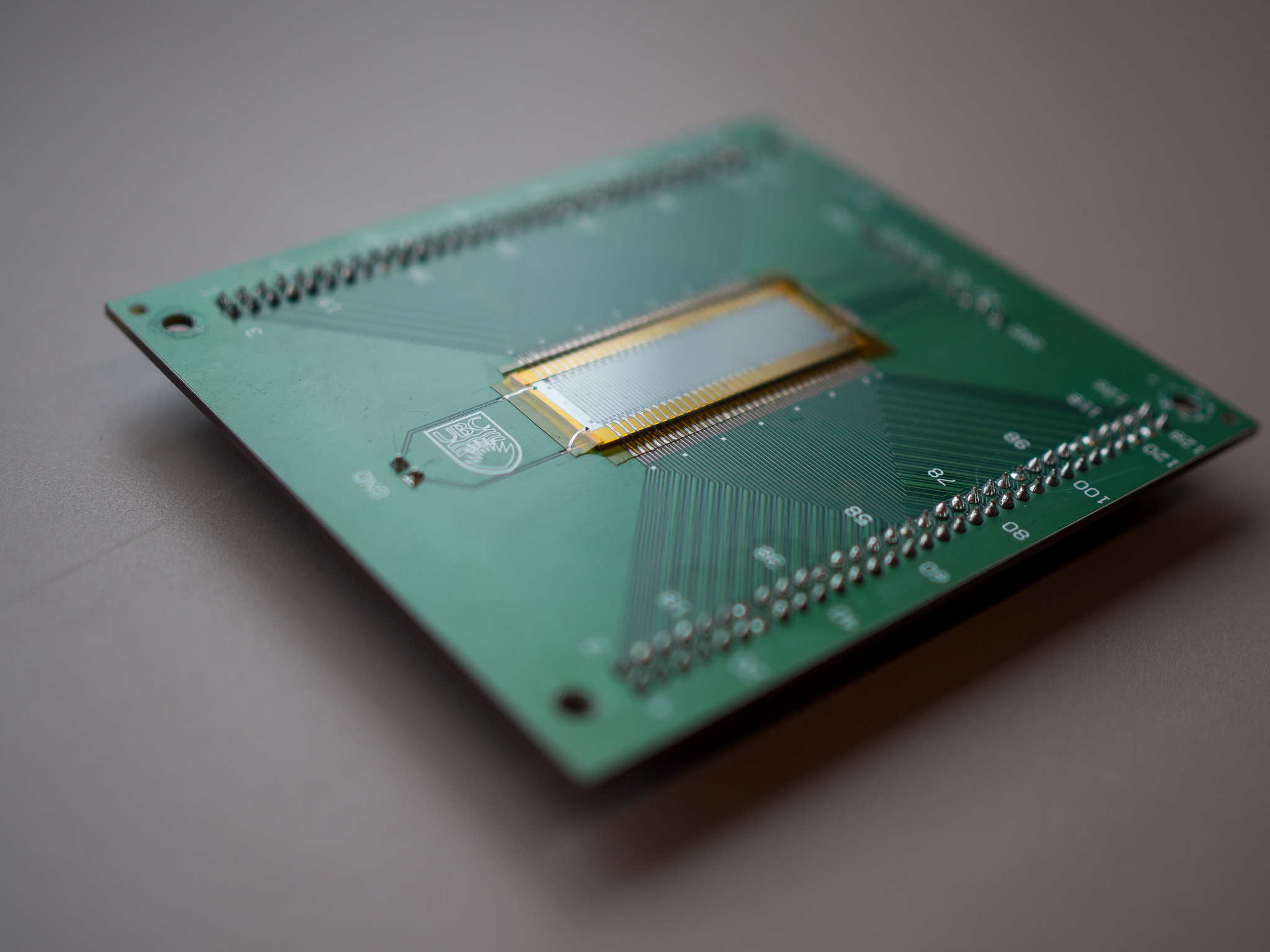
Engineers at the University of British Columbia have developed a new ultrasound transducer, or probe, that could dramatically lower the cost of ultrasound scanners to as little as $100. Their patent-pending innovation—no bigger than a Band-Aid—is portable, wearable and can be powered by a smartphone.

Conventional ultrasound scanners use piezoelectric crystals to create images of the inside of the body and send them to a computer to create sonograms. Researchers replaced the piezoelectric crystals with tiny vibrating drums made of polymer resin, called polyCMUTs (polymer capacitive micro-machined ultrasound transducers), which are cheaper to manufacture.

“Transducer drums have typically been made out of rigid silicon materials that require costly, environment-controlled manufacturing processes, and this has hampered their use in ultrasound,” said study lead author Carlos Gerardo, a PhD candidate in electrical and computer engineering at UBC. “By using polymer resin, we were able to produce polyCMUTs in fewer fabrication steps, using a minimum amount of equipment, resulting in significant cost savings.”

Sonograms produced by the UBC device were as sharp as or even more detailed than traditional sonograms produced by piezoelectric transducers, said co-author Edmond Cretu, professor of electrical and computer engineering.

“Since our transducer needs just 10 volts to operate, it can be powered by a smartphone, making it suitable for use in remote or low-power locations,” he added. “And unlike rigid ultrasound probes, our transducer has the potential to be built into a flexible material that can be wrapped around the body for easier scanning and more detailed views–without dramatically increasing costs.”


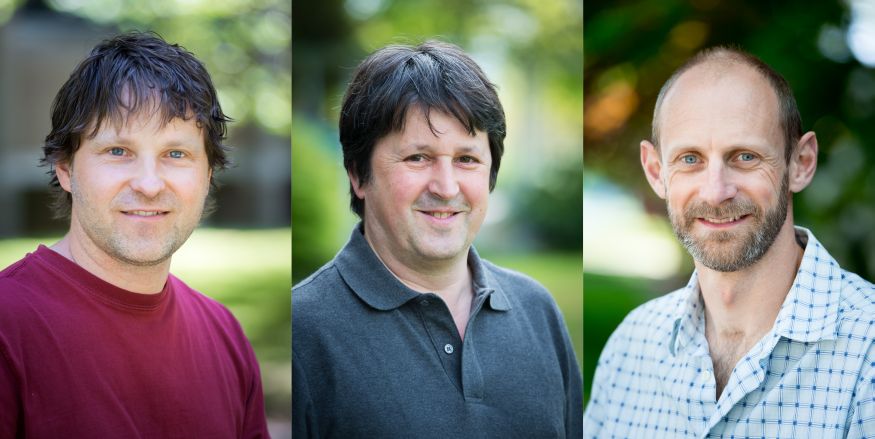
Left to right: Edmond Cretu, Carlos D. Gerardo and Robert Rohling. Credit: Clare Kiernan

Left to right: Edmond Cretu, Carlos D. Gerardo and Robert Rohling. Credit: Clare Kiernan


Co-author Robert Rohling, a professor of mechanical engineering and electrical and computer engineering, said the next step in the research is to develop a wide range of prototypes and eventually test their device in clinical applications.

“You could miniaturize these transducers and use them to look inside your arteries and veins. You could stick them on your chest and do live continuous monitoring of your heart in your daily life. It opens up so many different possibilities,” said Rohling.

The research was published recently in Nature Microsystems & Nanoengineering.

Story originally published by UBC Media Relations.

APSC Rising Stars 2018: Madie Melcer, BASC ’18 MECH Alumna

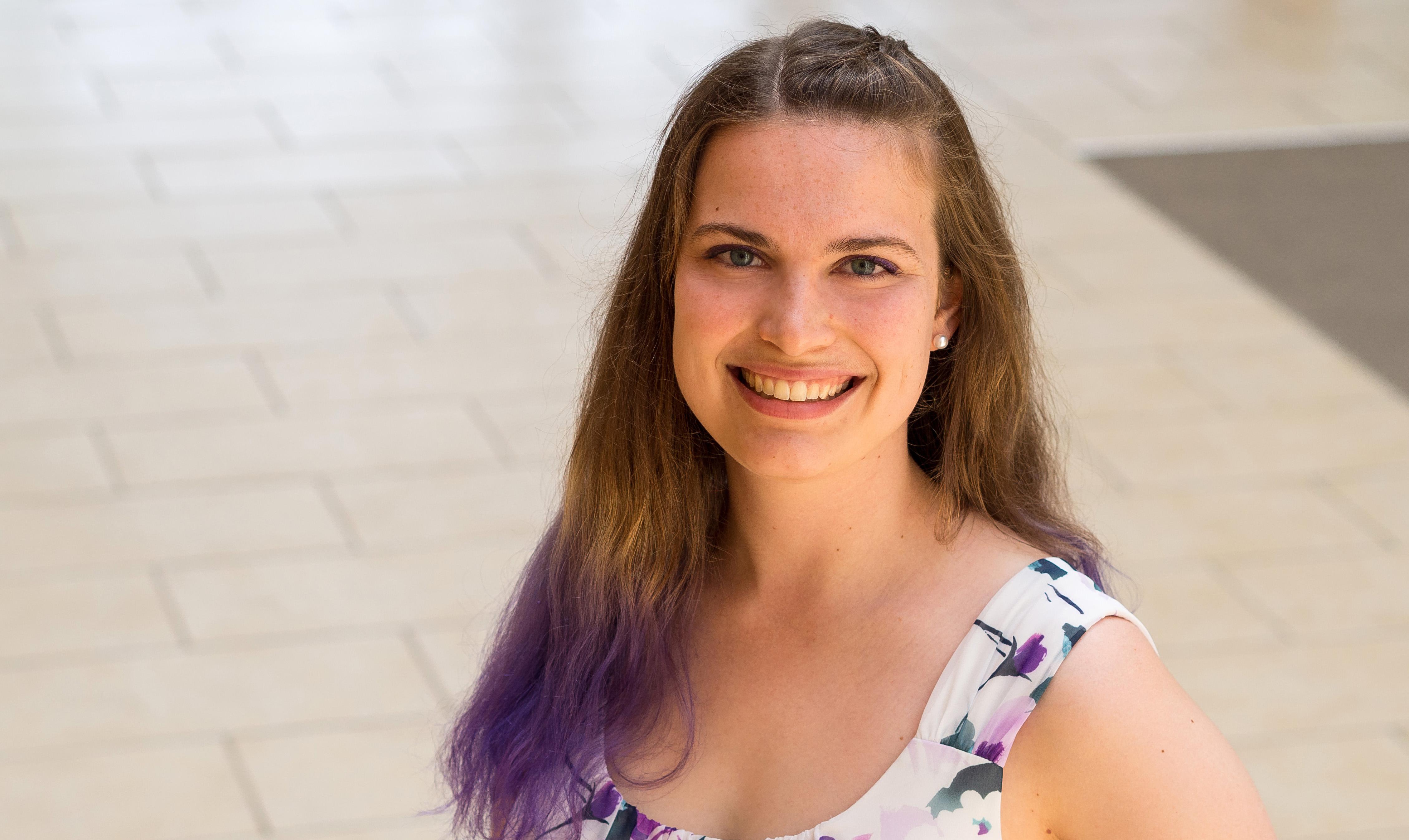
2018-05-29 Rising Stars Madie Melcer

Photo by Clare Kiernan

“I spent three years designing and building [Ada] with my team before taking the boat across Canada to launch her into the Atlantic Ocean for what was to be the first ever trans-Atlantic journey by an autonomous sailboat.”

I’ve made my way through five years of mechanical engineering at UBC trying to do as much as possible. I joined UBC Sailbot at the beginning of my first year, helped launch our autonomous sailboat, Ada, across the Atlantic Ocean in August 2016, and then spent my last two years on the team as a mechanical lead. I’ve been a member of the Godiva Band for all five years playing flute and piccolo — and I was in the UBC Concert Winds for my first five semesters. I’ve had three co-op jobs: working for Bosch in Germany; International Submarine Engineering in Port Coquitlam and finally at Blue Origin in the United States. I spent the first half of this past year applying to graduate schools, and was accepted to Stanford, University of Michigan, Purdue University and University of Washington. I’m really excited to be attending Purdue this fall to start a master’s in aerospace engineering, with the end goal of getting a job in rocket propulsion.

Why did you choose engineering?

I spent most of my education up to grade eight or nine hating science (though math was ok). My love for science — and specifically physics — eventually developed because of a couple of really good science teachers in grades nine and 10. My physics teacher in grade 10 said I would do well in engineering, and the deal was sealed when I won our class trebuchet competition at the end of the school year.

What has made your time at UBC the most memorable?

Honestly, the people: a few really excellent professors I was able to connect with, classmates I worked with for various projects, amazing teammates on UBC Sailbot and mostly my friends. You really bond with your classmates in MECH 2 (the cornerstone program of UBC Mechanical Engineering) and as a result of helping each other through that program, we’ve stuck together and had a lot of fun making our way through engineering.

What have you learned in engineering that is most valuable? 

Going through mechanical engineering at UBC has been an experience. Anyone who’s been through MECH 2 or has known someone in MECH 2 can tell you that it’s a hard year. It was tough, but it prepared me for the rest of university and it was the first time I actually enjoyed everything I was learning. After that, third year blended into fourth year, and it is the design projects and co-op experiences that stand out. We take a lot of classes, but the most valuable thing I learned from school was how to work successfully within a team of engineers to tackle a problem together. I learned how to trust others’ work in order to finish projects that I would not have been able to do myself. In co-op, I had the chance to design a small part of a submarine (International Submarine Engineering) and to design a test stand for a gearbox that will end up on a rocket (Blue Origin), which were both very valuable in seeing how our classroom knowledge transfers to the real world.

What has been your most memorable/valuable non-academic experience studying engineering at UBC?

Without question, it was going to St. John’s, Newfoundland with UBC Sailbot to launch our sailbot, Ada. I spent three years designing and building her with my team before taking the boat across Canada to launch her into the Atlantic Ocean for what was to be the first ever trans-Atlantic journey by an autonomous sailboat. Unfortunately, I could only stay for two weeks because I was working over the summer, but while I was there, I loved spending every minute with my Sailbot family all piled into one house. I got to go out in our chase boat to see her sailing for final testing, helped make adjustments to her and enjoyed very late family dinners after coming from the yacht club each night. It was so rewarding to see three years worth of work sailing successfully in front of me and to be able to share that with my teammates who worked just as hard as I did to get to that point. [Unfortunately UBC Sailbot did not succeed in their trans-Atlantic goals, but they did manage to set the record for the farthest distance sailed by an autonomous boat across the Atlantic.]

How do you feel a degree in engineering has benefited you compared to a different field of study?

Aside from the obvious benefits of job prospects, I think engineering is unique in its problem-solving mentality. We develop a problem-solving mindset, learn the tools to approach a design problem and learn how to teach ourselves anything we don’t already know. That means that we can go after a huge variety of industries and jobs, taking the basic building blocks we’ve developed to tackle a wide range of problems. I feel confident to go into the real world with my mental engineering toolbox, which I don’t think is something you’d get in other fields of study.

What advice would you give a student considering engineering?

Don’t doubt your ability to be an engineer or to do anything you want. I spent many years of my degree feeling like a fake engineer because so many other people around me appeared to be so much more invested in engineering — I wanted to go home and do something unrelated to engineering at the end of the day, not watch machining videos on YouTube. You don’t have to let engineering consume your life. In fact, it’s generally good for you to have other hobbies. Despite not trying to learn about engineering in every spare second, I realize that I have come to the end of my degree and am moving on to some amazing opportunities.

What are your plans for the future?

I’ll be spending this summer as a returning intern at Blue Origin, working in their manufacturing and test group. I’m really excited to be going back to learn more about the aerospace industry. This fall, I’ll be heading to West Lafayette, Indiana to begin a Master of Aerospace Engineering at Purdue University (which has the best propulsion program in the country).

Looking farther forward, I plan to use my master’s degree to work in rocket propulsion. Aside from being able to call myself a rocket scientist, I look forward to contributing to the effort to get humanity into space and explore beyond Earth. Ultimately, it would be my dream to become an astronaut, but I realize that realistically, the chances of that happening are low. In my mind, the next best thing is designing the rocket engine that will get other people into space.

For more information: Student and Alumni Stars

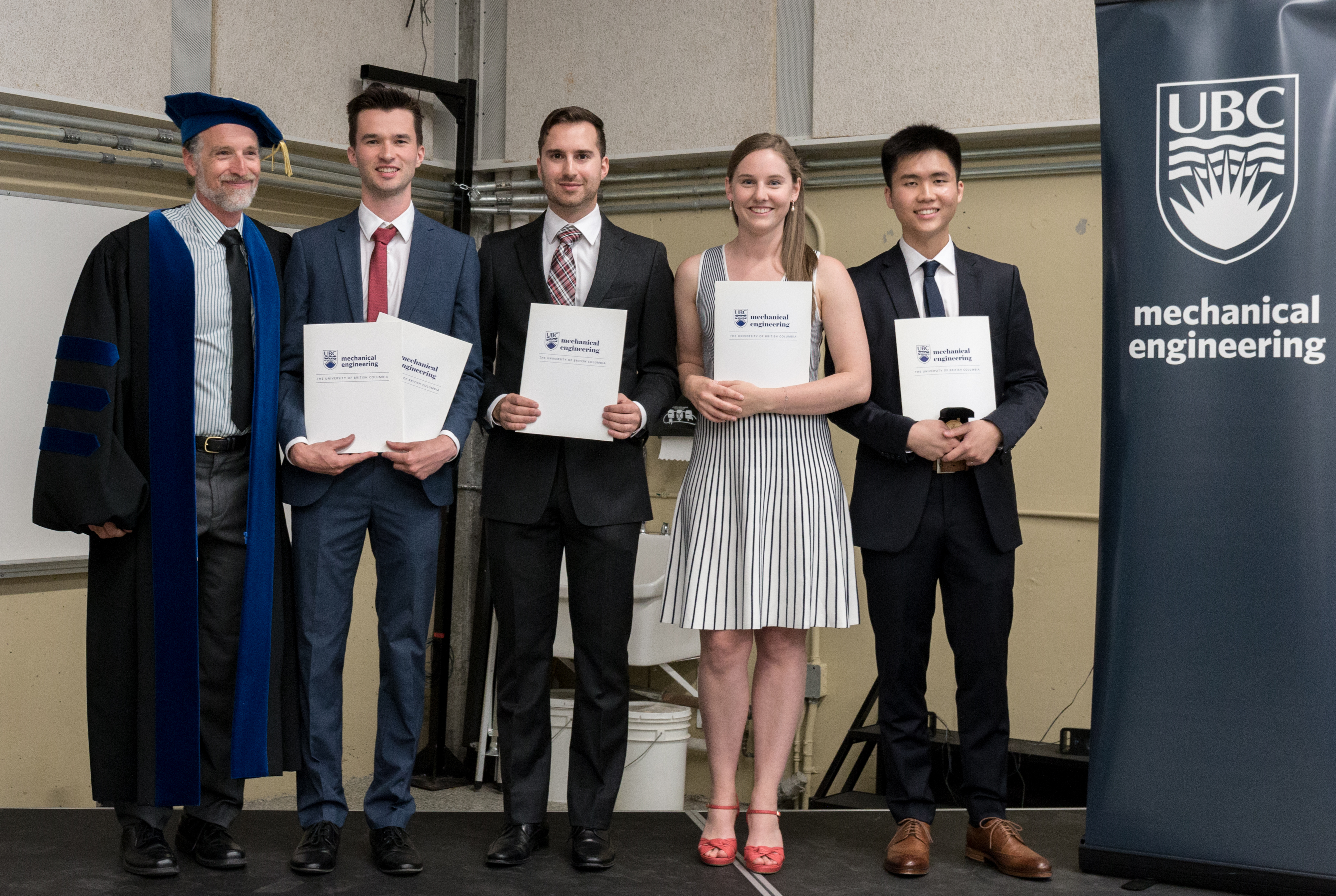
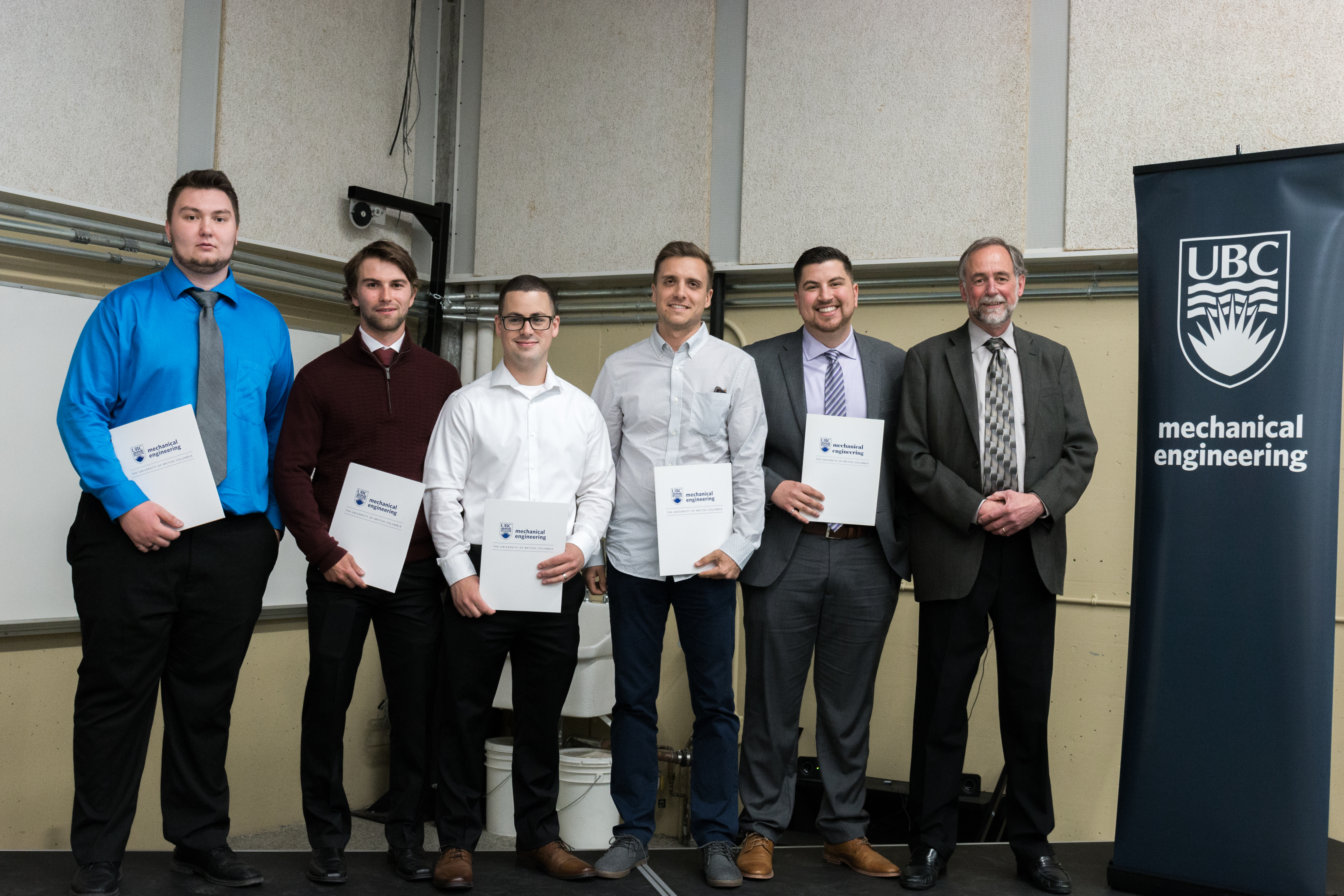
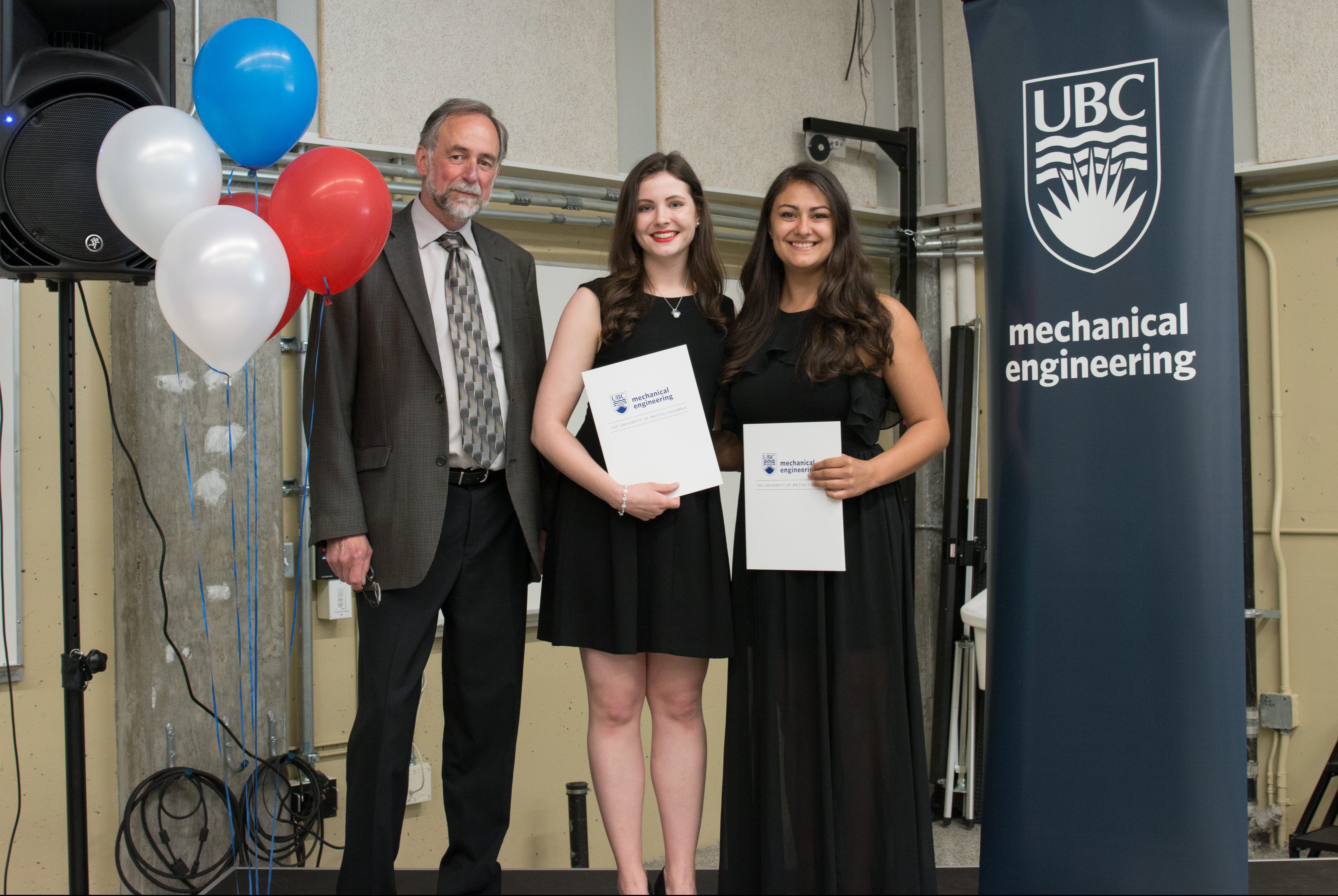
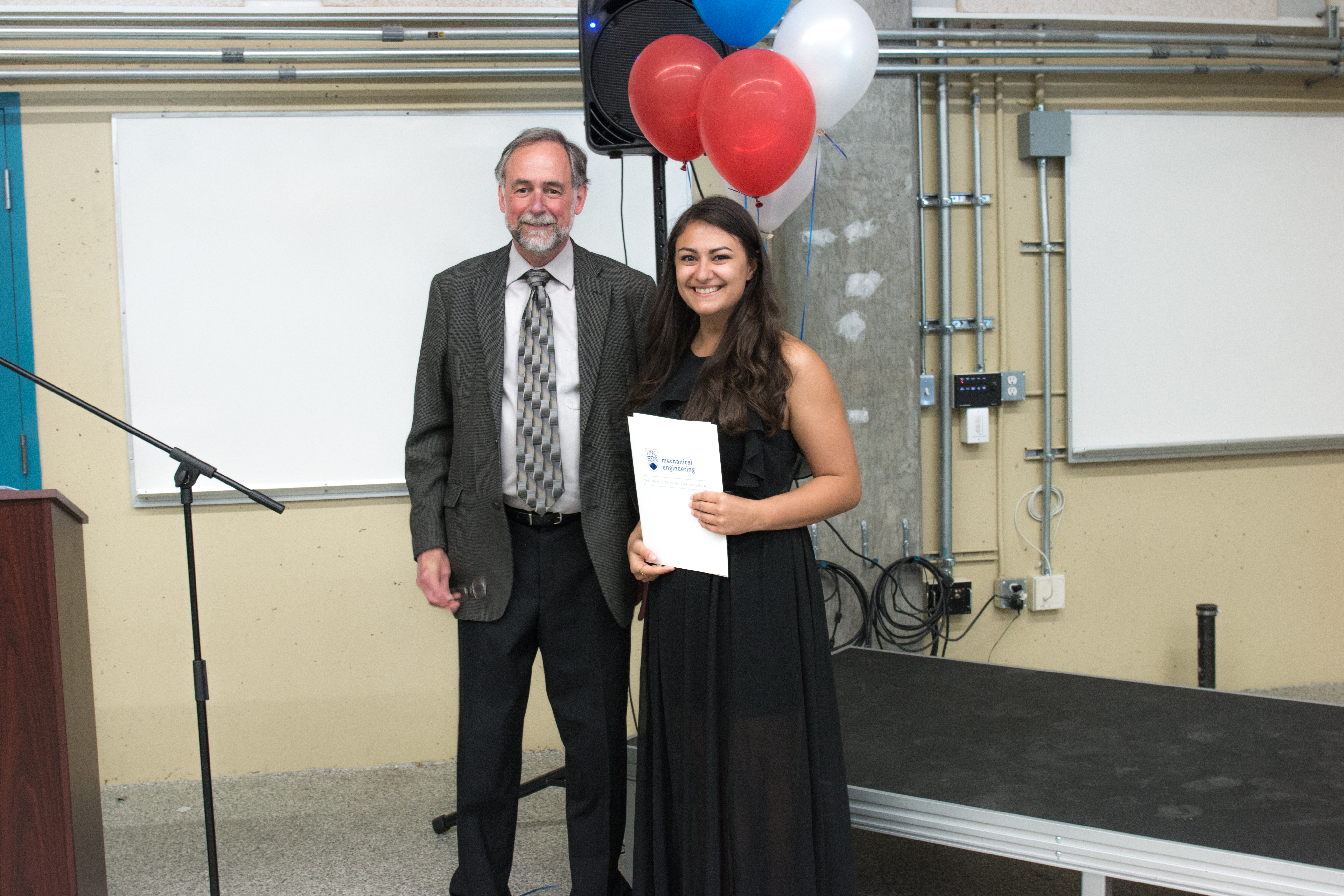
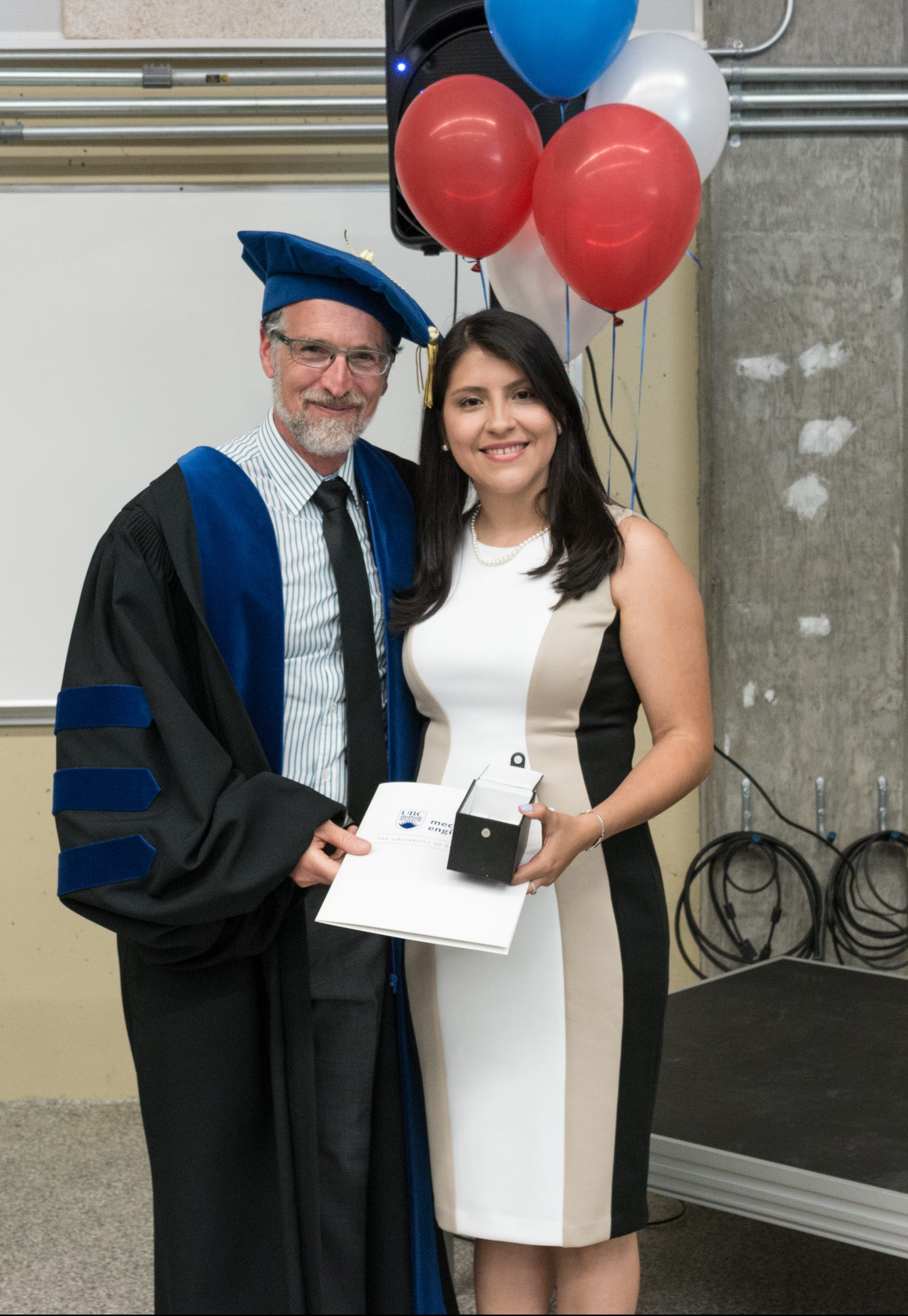
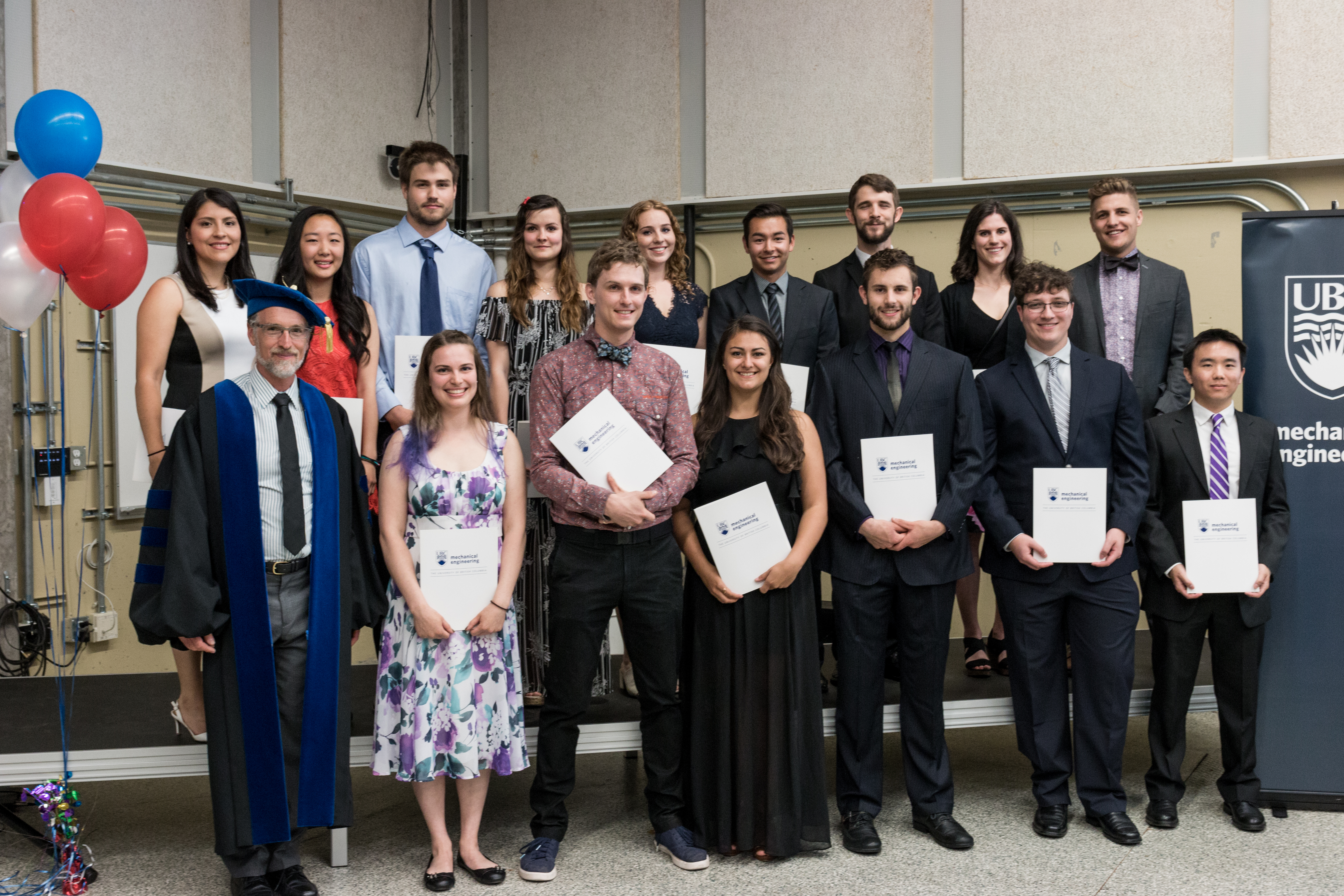
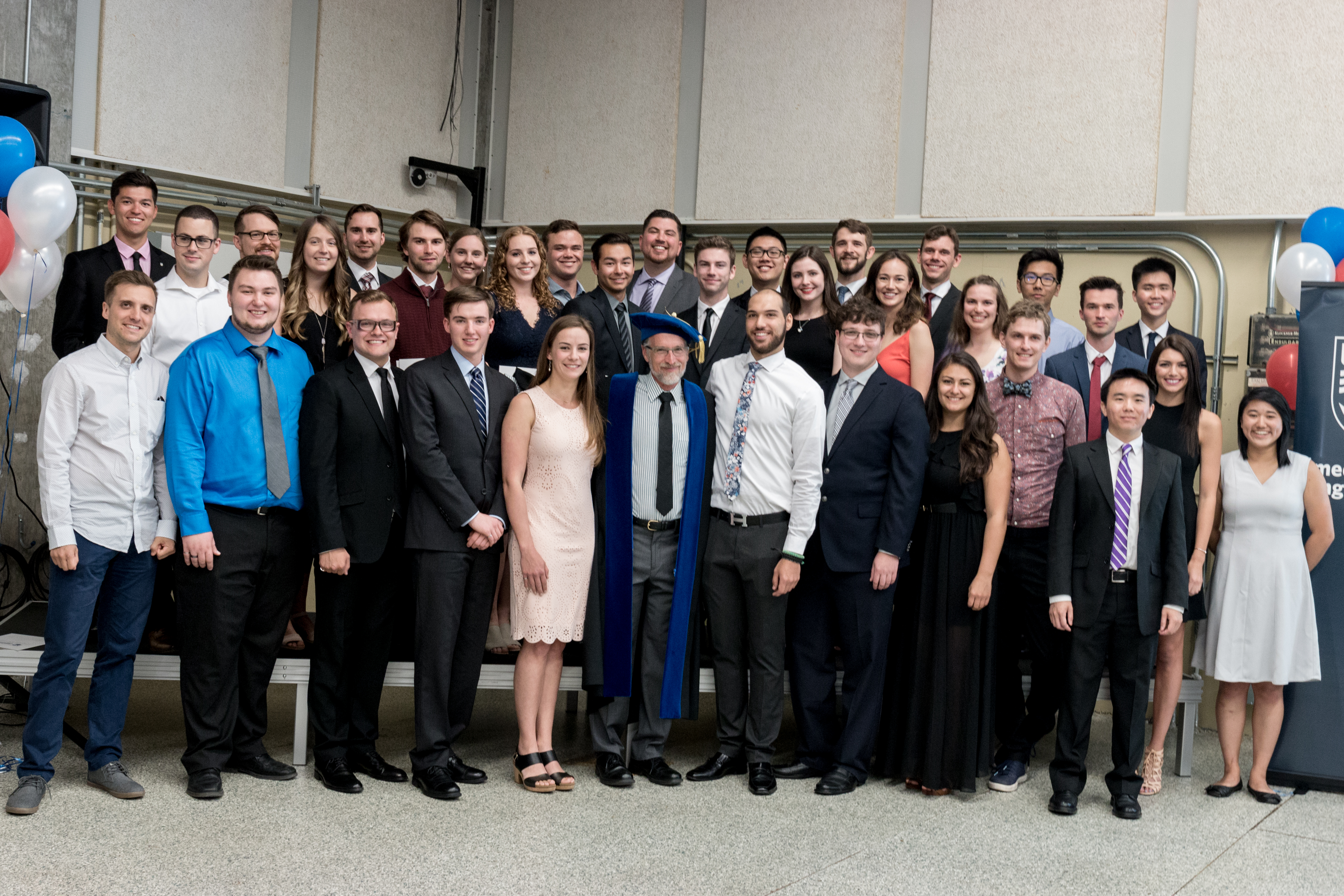
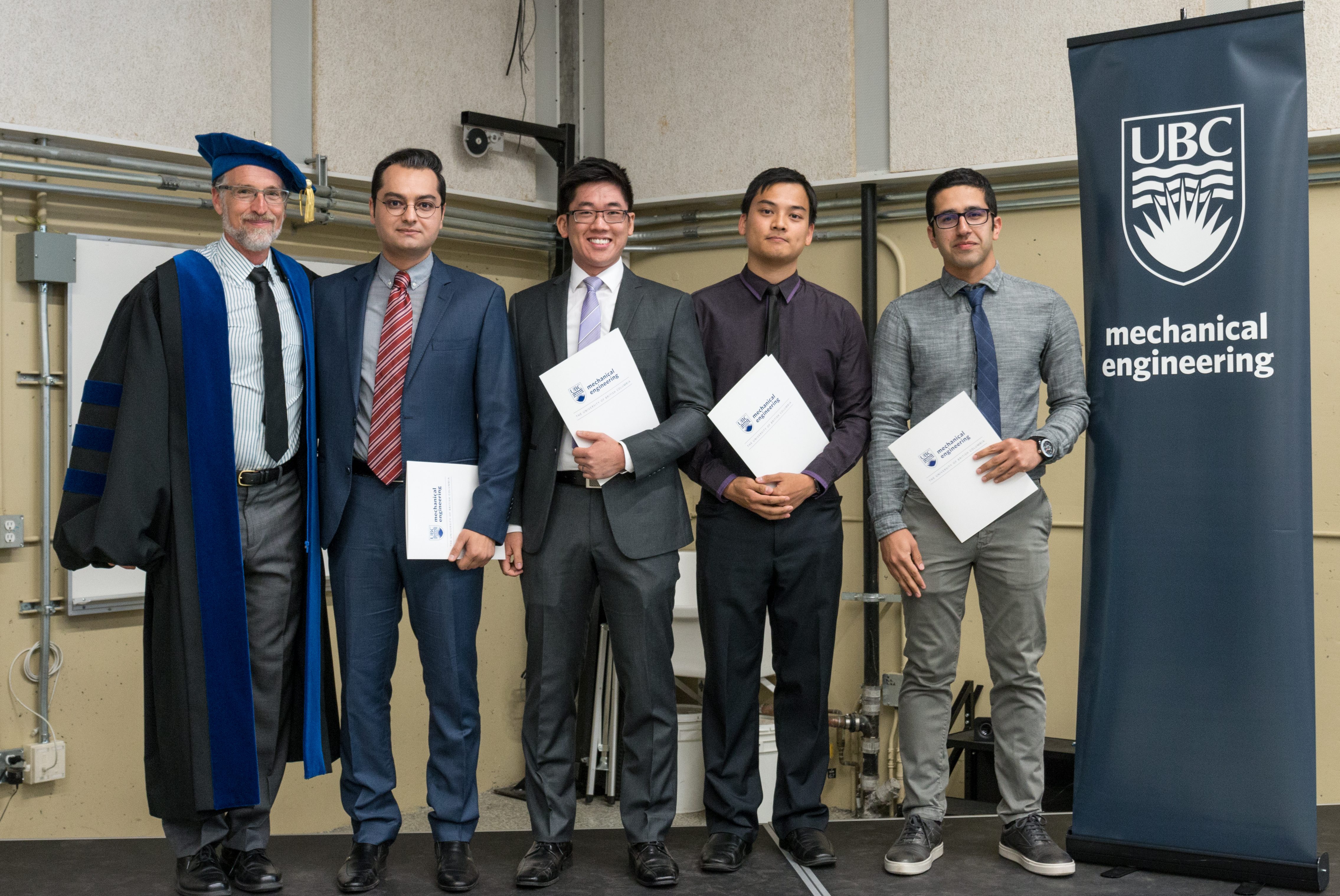
Congratulations May 2018 Grads!

Please join us in congratulating our most recent graduating class, who crossed the stage on May 30, 2018!

A special congratulations also goes out to all of our award winners, who have made outstanding academic and/or leadership achievements during the course of their program. See below for this year’s winners.

Major Awards

Letson Prizes

Awarded to the Head of the graduating class for each Option.

Awarded to:

  • Benjamin Thorne (General Option)
  • Christopher Bhatla (Biomedical Option)
  • Zhaoshuo Li (Mechatronics Option)
  • Erin Geiger (Thermofluids Option)

Canadian Society for Mechanical Engineering Gold Medal

For overall outstanding achievement.

Awarded to: David Luo

APEG Achievement Award

Given to one graduating student in each Department who shows great promise.

Awarded to: Benjamin Thorne

Capstone Design Awards

Recognizes outstanding accomplishments in Engineering Design.

Best MECH Capstone Team for Excellence in Design Execution

Awarded to: Team #9 (sponsored by Ian Frigaard’s lab) for the design of a large laboratory apparatus to study eccentric annular flow in pipes.

“Team 9 greatly exceeded the expected scope of a capstone project and completed the design of a system that will be used for, possibly, decades to come in Prof. Frigaard’s lab.” – Dr. Mike Van der Loos

Team members:

  • Bryan Cadman
  • Jared Formosa
  • Charles Karassowitsch
  • Terrace Schulz
  • Mark Speed

Best MECH Capstone Team for Excellence in Design Process Application

Awarded to: Team #20, for their design of an automated livestock feed measurement system for PICSL.

“The team very faithfully and meticulously followed the design process we have been developing and iterating over the past years, and through this rich exploration of the design space, developed, fabricated and tested a prototype that is maximally and provably responsive to the needs of the users (the cattle as well as the farmers).” – Dr. Mike Van der Loos

Team members:

  • Menghan Ma
  • Jessie Massong
  • Jasmine Nikkari
  • Khashina Tonks-Turcotte
  • Stephen Wright

Highest Overall Grade in Capstone Design

Awarded to: Khashina Tonks-Turcotte

Leadership Awards

Outstanding Student Leader Award

Recognizes the top undergraduate student who has demonstrated strong leadership skills and made outstanding contributions to the Department and Faculty, specifically in the realms of student affairs, design competition teams, professional association student chapters, and other related activities.

Awarded to: Diana Nino

“This year, Diana served as the President of Club Mech. She has demonstrated exemplary leadership skills in organizing events for students and making sure the MECH student body was well represented. Throughout her degree, she has continually given her time and effort to contribute to the betterment of our Department, the University, and the student engineering community as a whole.” – Dr. Sheldon Green

Leadership Awards

Recognizes students who have continually excelled in being effective leaders among their peers and in their communities.

  • Yu-Ting Cheng
  • James Cronkite
  • Claire Gregoire
  • Georgia Grzybowski
  • Blake Henderson
  • Simon Honigmann
  • Amara Kraft
  • Madeleine Melcer
  • Arthi Muniyappan
  • Pranav Shrestha
  • Taylor Simpson
  • Adrian Spira
  • Tynan Stack
  • Oliver Terry
  • Khashina Tonks-Turcotte
  • Angus Wong

Academic Achievement Awards

Degree with Distinction (Undergraduate)

Recognizes undergraduate students who achieved an overall first-class average in second- through fourth-year courses. 

  • Atif Ali
  • Michael Andersen
  • Connor Arnett
  • Sydney Begin
  • Christopher Bhatla
  • Bryan Cadman
  • Riley Cahill
  • Seamus Clark
  • Zachary Cunningham
  • Charles Dick
  • Keenan Findlay
  • Yasaman Foolad
  • Jared Formosa
  • Erin Geiger
  • Georgia Grzybowski
  • Blake Henderson
  • Christopher Hii
  • Simon Honigmann
  • Kevin Hunt
  • Charles Karassowitsch
  • Alexander Kay
  • Tristan Kimberley
  • Nathaneil Kingston
  • Myung Lee
  • Zhaoshuo Li
  • Jiaqi Lu
  • Zhao Wei Lu
  • David Luo
  • Kenneth Martens
  • Jessie Massong
  • Madeleine Melcer
  • Jasmine Nikkari
  • Cole Paterson
  • Preshon Pillay
  • Sarah Romani
  • Terrace Schulz
  • Rachit Sharma
  • Amandeep Singh
  • Michael Sleeman
  • Brianna Snell
  • Sahand Sohirad
  • Mark Speed
  • Adrian Spira
  • Yuping Tao
  • Oliver Terry
  • Benjamin Thorne
  • Khashina Tonks-Turcotte
  • Lok Tsu
  • Gavin Vale
  • Zhuo Wang
  • Angus Wong
  • Enoch Wong
  • Karen Woodward
  • Stephen Wright
  • Logan Wriglesworth
  • Minghua Wu
  • Jack Yang
  • Sun Jun Yoo

Graduate Academic Achievement

Recognizes graduate students who have achieved an overall average throughout their program of above 90%.

  • Masoud Hejazi
  • Abbas Hosseini
  • Matthew Pan
  • Pranav Shrestha
  • Yingqiang Weng
  • Kai Kin Yan
  • Behzad Zakani