Researchers awarded BC Knowledge Development funding

Researchers awarded BC Knowledge Development funding

Two projects lead by faculty from the Department of Mechanical Engineering have been awarded funding from the BC Knowledge Development Fund. The main investment in research infrastructure offered by the Province, “the BCKDF is pivotal to the development of vital research infrastructure, allowing institutions to attract a critical mass of researchers, skilled technicians, and research users.”

Investigating the neurophysiological effects and accumulation of subconcussive sports head impacts

Principal Investigator: Dr. Lyndia Wu

This project investigates the effects of mild head impact and impact accumulation on brain activity, as these can contribute to brain injury even without a concussion. The knowledge gained in this study will contribute to the health of players involved in contact and collision sports, especially children and youth.

Rapid Air Improvement Network (RAIN)
Principal Investigators: Dr. Steven Rogak, Dr. Naomi Zimmerman
Co-investigators: Dr. Amanda Giang, Dr. Patrick Kirchen and Dr. Adam Rysanek, as well as faculty from Chemistry, Geography, Medicine, and the School of Population and Public Health.

RAIN integrates engineering, architecture, policy and air pollution science to study the health and climate impacts of air emissions in BC. The project will develop and test mitigation measures for emissions, which can then be applied beyond the campus.

Both projects have received funding for infrastructure that will support their research goals and contribute to expanding research capabilities at UBC’s Vancouver campus, as well as create health, economic, and environmental benefits for the province.
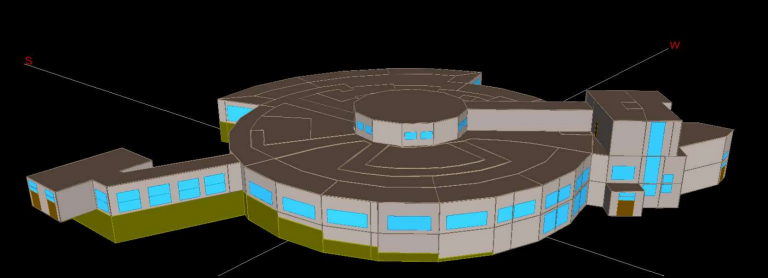
High-speed bearingless motors research receives Canada Foundation for Innovation infrastructure funding

Dr. Minkyun Noh has received funding from the Canada Foundation for Innovation John R. Evans Leaders Fund for his project Control and Instrumentation Infrastructure for High-speed Bearingless Motors Research.

UBC Thunderbots take top spot at international robot soccer competition

The UBC Thunderbots have placed first in their division at the RoboCup, an annual robot soccer competition for university students around the world.

It is the UBC design team’s second RoboCup victory in a row, having topped the same event category — the Lower Tournament of RoboCup’s Small Size League — in 2019. (The 2020 competition was cancelled due to the COVID-19 pandemic.)

“Despite the challenges of the past year, including not being able to meet in person since March of 2020, we were fortunate to achieve another win,” says Chantal Sousa, a fourth-year integrated engineering student and the team captain. “I’m so pleased with what we’ve accomplished, and grateful to be able to participate in this wonderful competition again.”

Doctoral Student wins Prestigious Vanier Scholarship

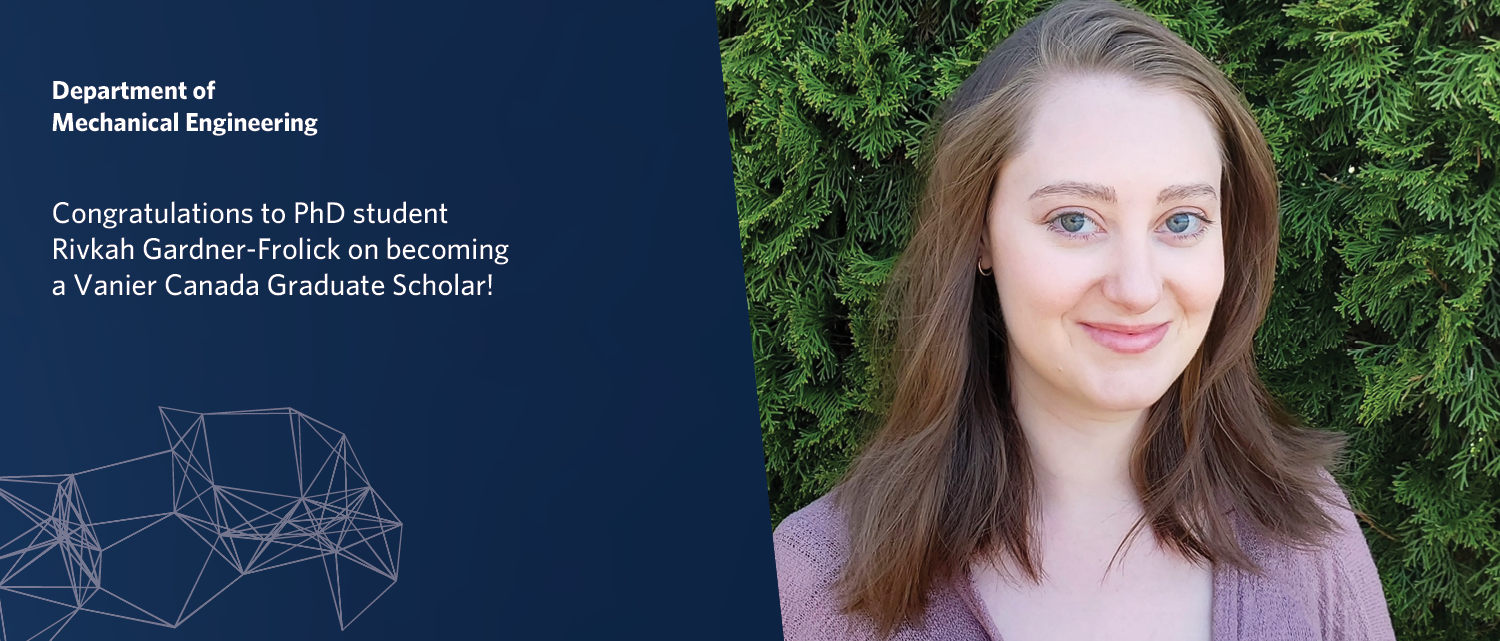
Vanier Scholar Rivkah Gardner-Frolick

Mechanical Engineering PhD student Rivkah Gardner-Frolick has won one of Canada’s top scholarships, the Vanier Canada Graduate Scholarship. This scholarship awards selected students across the country $50,000 per year for three years of doctoral studies, and is based off the students’ academic excellence, research potential and leadership. The award was created to “attract and retain world-class doctoral students and establish Canada as a global centre of excellence in research and higher learning.”

As a new Vanier Scholar, Gardner-Frolick will be researching industrial air pollution, and how air quality modelling can inform policy making and the pursuit of environmental justice – identifying where and how air pollution disproportionally affects members of disadvantaged groups by looking at environmental data alongside community demographic information like race, income, and education. Her project will develop tools that can be leveraged to expand knowledge of how Canadian communities are affected by air pollution, involving an analysis of industrial facilities across the country, a regional study, and a local citizen scientist project that aims to include affected communities in environmental justice research.

As part of the Lab for Environmental Assessment and Policy, she is jointly supervised by Assistant Professor Amanda Giang from the Department of Mechanical Engineering and the Institute for Resources, Environment and Sustainability (IRES) and Dr. David Boyd, Associate Professor with IRES. Dr. Giang’s research work is at the nexus of air quality science and policy development, applying engineering tools like simulation, statistical and qualitative methods to further our understanding of the impact of technology on health and the environment.  Dr. Boyd is an international expert on environmental law and policy, and is a United Nations Special Rapporteur human rights and the environment.

As a leader seeking to empower others, Gardner-Frolick has mentored undergraduate and graduate students at her former alma maters and UBC, volunteered as a Team Lead for NGO Engineers Without Borders for a water distribution project in Nicaragua, and currently serves on the executive committee of the Mechanical Engineering Graduate Association (MEGA). She is also the graduate student representative on the Department of Mechanical Engineering Sustainability Committee.

Prior to winning the Vanier Scholarship, Gardner-Frolick has been awarded UBC’s Four Year Fellowship, the Martha Salcudean Memorial Award in Mechanical Engineering, and the BC Air Quality Robert Caton Scholarship.


Media Mention: Dr. Naomi Zimmerman on the poor air quality of wildfire season and how to stay safe

CBC: As more than 200 wildfires continue to burn in British Columbia, experts are advising residents to start preparing for wildfire smoke and poor air quality.

Air quality warnings are already in place for most of B.C.’s southern Interior, and fire risk in the province is very high.

The warnings come after a record-breaking heat wave elevated the wildfire risks far beyond normal for most of Western Canada.

Naomi Zimmerman, assistant professor of mechanical engineering at the University of B.C., says residents shouldn’t wait for an air quality warning to start getting prepared for smoky skies.

Media Mention: Dr. Walter Mérida on standards for renewable cities

VANCOUVER SUN: As much of the world switches over to electric transportation, the “What about this?” and “What about that?” questions are popping up from those people who are saying, “Not possible.” On the other side of that discussion is UBC Prof. Walter Mérida, who prefers to ask “What if?”, as in: “What if there was a way to integrate all of our disparate urban infrastructure systems to create a cohesive, comprehensive, and connected platform — driven by low or no-carbon technologies?”

Top Finish for UBC AeroDesign at the 2021 SAE Aero Design Knowledge Competition

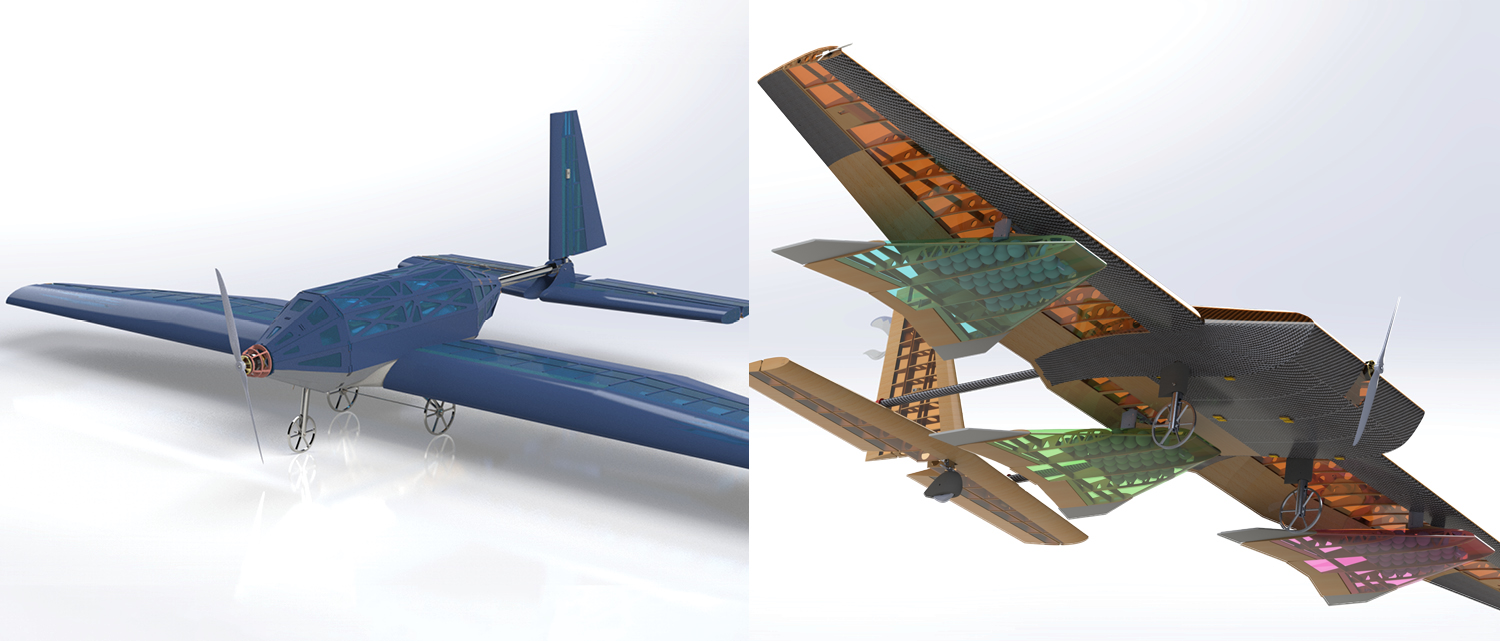
Render of Wailord (left), Mantine and Remoraids (right)


Amid a challenging design year affected by pandemic restrictions, globally displaced members, and another virtual academic session, UBC AeroDesign has once again demonstrated its resiliency and technical aptitude at the 2021 SAE Aero Design Knowledge competition held earlier this March. For competition, the team designed two aircraft which were submitted through technical design reports and presentations.

UBC AeroDesign received the following results:

  • Regular Class: 1st place design, 5th place presentation
  • Advanced Class: 9th place design, 2nd place presentation

Led by team captain and Mechanical Engineering undergraduate Phoebe Cheung, the over fifty member team pursued two unique designs:

Wailord, the 2021 Regular Class aircraft, featured a 120-inch span low-wing configuration and was subjected to a 100-foot runway limitation and 1000 watt power restriction. The goal was to minimize empty aircraft weight while maximizing payload capacity. Wailord was designed to carry two soccer balls and 18.3 lbs. of static payload.

Mantine, the 2021 Advanced Class aircraft, incorporated a blended-wing body and was subjected to a lower power restriction of 750 watts, but was permitted to use fibre-reinforced composite material. The mission was to simulate the colonization of Mars. With a 132-inch wing span, Mantine was designed to release payload mid-flight (in the form of Nerf Howler balls and water bottles) and colonists (represented by ping-pong balls). The ping pong balls would be transported to the ground in the team’s 2021 flying-wing autonomous glider, Remoraid, which releases from the main aircraft during flight.

At the SAE Aero Design Knowledge Competition, the Regular Class technical presentation was delivered by Mechanical Engineering student Vincent Liu and Civil Engineering student Marco Leung, while the Advanced Class presentation was given by Cheung and Engineering Physics student Sean Lan.

The aircraft were designed with manufacturability in mind, in order to apply the team’s ideas to a physical prototype when they are able to do in-person work in upcoming seasons.

UBC AeroDesign’s work was made possible by support from their 2020-21 sponsors, including the Department of Mechanical Engineering and the Faculty of Applied Science, as well as the guidance of their faculty advisor Dr. Carl Ollivier-Gooch.

New paper solves the soft solid puncture problem

When Assistant Professor Mattia Bacca is trying to figure out a mechanical engineering problem, he inquires into how the natural world has already solved it. Bioinspired engineering is an approach that examines abilities plants and animals have evolved over millions of years, like the way a gecko can cling to a surface with the pads on its toes, or an ant can cut through a leaf many times its size. Dr. Bacca and PhD candidate Stefano Fregonese have recently published a paper answering the previously unsolved question of how the mechanics of piercing works on soft materials – like skin – by looking at the way nature has approached the issue.

“Cutting is ubiquitous in our survival and daily lives,” Bacca explains. “When we chew food, we cut tissue to make it digestible. Almost every species in the animal kingdom evolved with the ability to cut tissue to feed and defend, hence have acquired remarkable morphological and physical features to allow this process efficiently.”

Despite its long existence in the natural world, the mechanisms involved in cutting soft tissue have only gained attention in engineering over the last several decades, initially with investigations into the properties of rubber. Previous approaches determined the force needed to insert a needle in tissue after its initial puncture, using physical experiments that couldn’t fully measure the deformations and complex failure mechanisms involved in breaking through the surface of a soft material.  Fregonese and Bacca’s research took this inquiry further by creating a mechanical theory that determines the critical force required for needle insertion – the pivotal phenomenon of puncture.  Their work provides a simple semi-analytical model to describe the process, from dimensional arguments and finite element analysis.

Their results come from various inquiries into animal solutions to this problem. At first, Fregonese joined Dr. Bacca’s Micro & Nano Mechanics Lab for a project related to the mechanics of adhesion in animals like geckos. Exploring overlaps with this area and the problem of cutting, they began to investigate fundamentals of cutting and its link to the morphological evolution of animals, with an international collaboration studying leafcutter ants with animal biomechanics expert Dr. David Labonte (Imperial College), and muscle physiology expert Dr. Natalie Holt (Univerisity of California). Collaborating with UBC Okanagan’s Dr. Kevin Golovin and Mechanical Engineering colleague Dr. Gwynn Elfring to research the interaction between ballistics and gels also contributed to their understanding.

Their theoretical model may help engineers developing various applications such as protective equipment, automation processes involving food, and the emerging technology of robotic surgery. “Piercing soft solids: A mechanical theory for needle insertion,” published in Journal of the Mechanics and Physics of Solids is available at https://doi.org/10.1016/j.jmps.2021.104497.

This research was supported by the Department of National Defense of Canada, the Natural Sciences and Engineering Research Council of Canada, and by the Human Frontiers in Science Program.

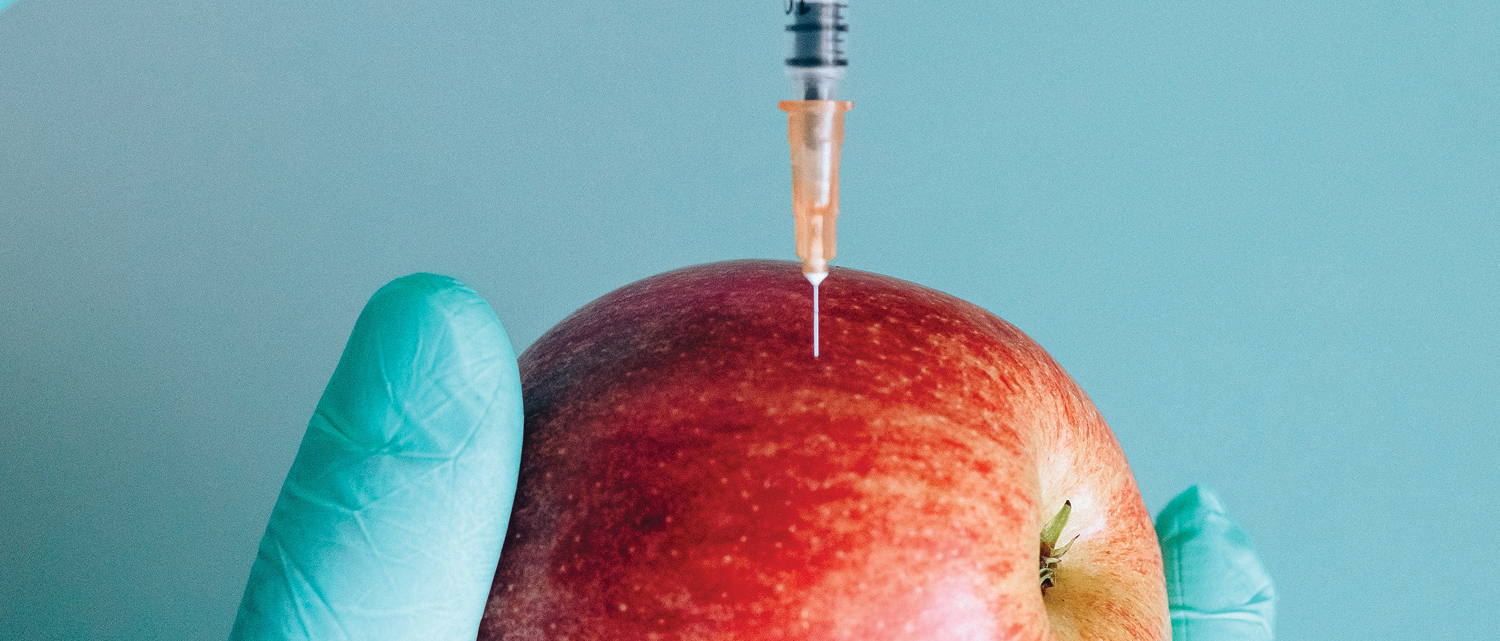
Photo by Nataliya Vaitkevich from Pexels.